Free Things To Do In Kotor And Montenegro
Kotor gives away a surprising amount for nothing: its medieval street grid, its waterfront, its viewpoints and a stack of pay-what-you-want walking tours. This guide separates the genuinely free from the sights that charge once you arrive.
Short answer
The genuinely free things in Kotor are the Old Town streets and squares, the waterfront promenade, the viewpoints reached on foot and the pay-what-you-want GuruWalk tours. The Kotor walls cost EUR 15 per visitor, national park entry runs EUR 3 to 5, and boat trips to the bay islands are paid tours from $33 per person.
Kotor's reputation as a cruise and festival town makes people assume it is expensive. In practice the town hands out its best material for nothing. The complete medieval street grid inside the walls is free to wander at any hour, the waterfront stretches for kilometres without a ticket booth, and a cluster of licensed local guides run pay-what-you-want walks several times a day in high season. The catch is that a handful of famous sights charge, and the charges sit right where a free day out naturally leads you. This guide walks through what costs nothing, what costs a little, and how to build a full day around the free half of the equation. For the wider picture of the coast and the mountains, our things to do in Montenegro guide covers the paid side of the country.
What Is Genuinely Free Inside Kotor Old Town?
Almost everything you can reach on foot inside the walls is free: the squares, the gates, the lanes, the churches you can step into outside service times and the full length of the waterfront. Only two things charge, the City Walls and San Giovanni Fortress at EUR 15 per non-resident visitor, and the paid museum interiors. The streets themselves, the Sea Gate, the Main Square and the cat-haunted alleys never cost a cent.
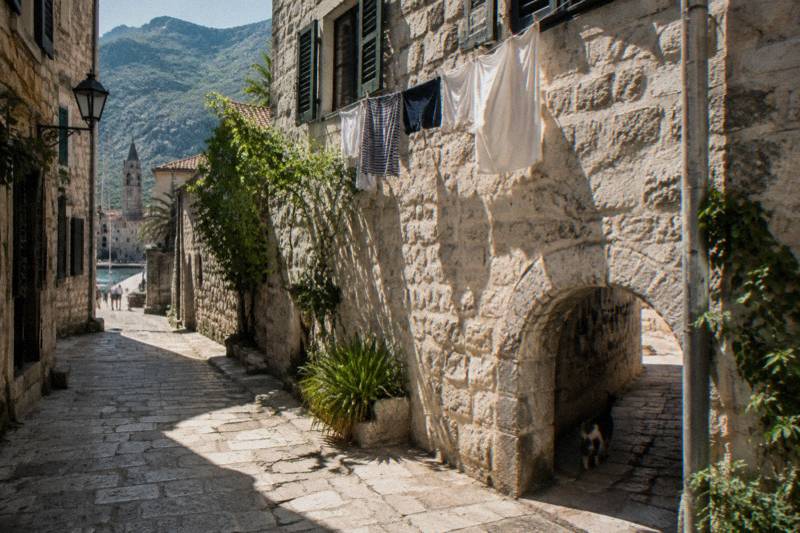
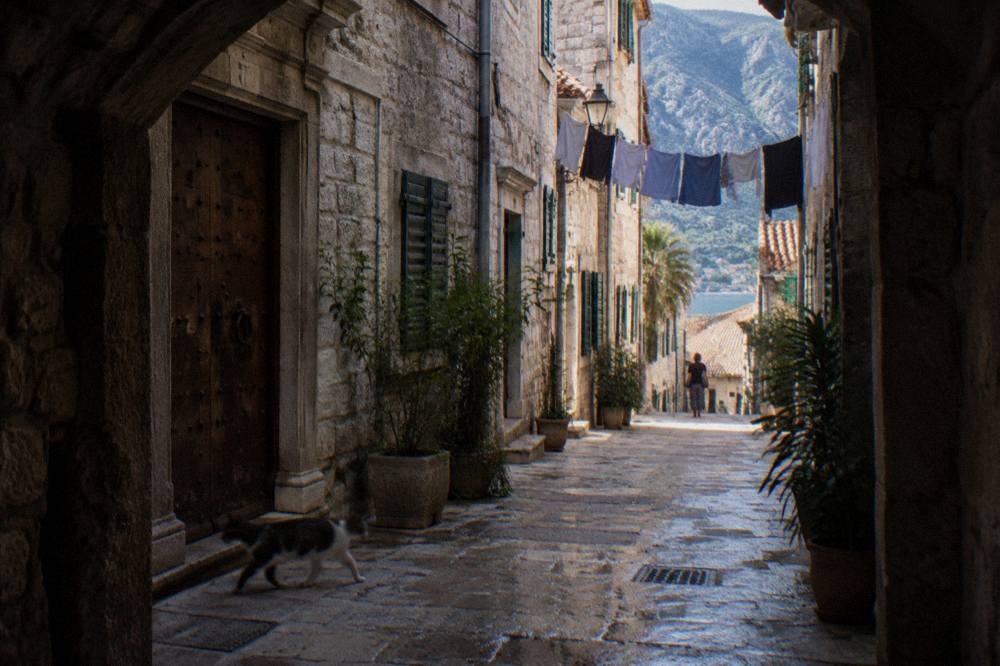
The Old Town is small enough that you can cross it in ten minutes and still spend three hours lost in it. Start at the Sea Gate on the waterfront side, the main entrance the cruise crowds pour through, then let the grid do the work. The lanes behind the Cathedral of Saint Tryphon narrow into stairways that climb toward the walls, and most visitors turn back at the first flight. Those who keep going find quiet terraces, laundry lines and centuries-old doorways without another tourist in frame. There is no ticket, no queue and no closing time for any of it.
The free stuff has a rhythm. Morning light hits the Main Square before the day-trippers arrive from the port, roughly a five to ten minute flat walk from where ships berth. By late morning the lanes fill; by early evening they empty again and the stones give back the heat of the day. Anyone planning around a ship call should read our Kotor cruise port guide for how the crowds actually move through the day.
Here is the honest breakdown of what the Old Town gives away and what it sells:
| Spot | What you get | Cost |
|---|---|---|
| Sea Gate and Main Square | The main entrance, clock tower, cafes | Free |
| Full street grid inside the walls | Medieval lanes, squares, churches exteriors | Free |
| Waterfront promenade | Bay views the full length of the town | Free |
| City Walls and San Giovanni Fortress | The clifftop wall circuit above town | EUR 15 per visitor, children under 12 free |
| Cathedral and museum interiors | Reliquaries and treasury displays | Small entry fees on site |
The walls fee is the one that surprises people, because the climb looks like part of the town. It is not. The municipality introduced the EUR 15 charge for non-residents on 01/03/2025, with people registered as residents in Montenegro exempt, and it is collected at two checkpoints: the Parila entrance behind the church of St Ozana and the Skaljarska pjaca entrance. The official municipal notice sets seasonal hours, 07:00 to 20:00 from May through September. If the fee does not fit the budget, the free alternative is real: the Ladder of Kotor, the old mule trail that starts near the north wall, climbs the mountain behind the town and delivers a higher view than the fortress itself. Our Kotor fortress, ladder or cable car guide compares the three options in detail.
Are The Free Walking Tours In Kotor Actually Free?
Yes, in the pay-what-you-want sense: the Kotor walks listed on GuruWalk cost nothing to join and you tip the guide at the end, with no fixed amount. The same model runs in Budva, Podgorica and Cetinje. A tip is customary and guides depend on it, so a free walk is really a walk you price yourself, and the good ones earn far more than a fixed-fee tour would charge.
GuruWalk is the platform that lists the bulk of these walks in Montenegro, and in this one guide we name it honestly because it is the only place these pay-what-you-want tours are actually bookable. The standout in Kotor is "Uncover Kotor - Historical walking tour through the Bride of the Adriatic sea", rated 4.97 from 1,386 reviews and running an hour and a half in English. It is the most reviewed walk in the country and the closest thing Kotor has to a fixture. Around it sit several others: "Walking tour of Kotor with local insider" at 4.95 from 749 reviews, "Discover Kotor with a Local" at 4.93 from 248 reviews, and the shorter "Kotor free walking tour" at 4.87 from 403 reviews.
See this free tour on GuruWalk
The pattern holds down the coast and inland. Budva has "Free walking tour/ Through the spirit of Old Budva with an official guide" at 4.95 from 625 reviews, plus two smaller walks. Podgorica offers "Explore Podgorica's charm" at 4.94 from 402 reviews, a two hour and fifteen minute introduction to a capital most visitors skip. One walk on freetour.com, "Free Tour Kotor: History & Heritage Secrets", runs an hour and a half with 317 reviews; its score is on a ten-point scale, so treat it as a separate yardstick, not a star rating.
See this tip-based walk on freetour.com
| Town | Walk | Length | Rating and reviews |
|---|---|---|---|
| Kotor | Uncover Kotor, Bride of the Adriatic | 1h 30m | 4.97 from 1,386 reviews |
| Kotor | Local insider history walk | 1h 15m | 4.95 from 749 reviews |
| Budva | Old Budva with an official guide | 1h 15m | 4.95 from 625 reviews |
| Podgorica | Explore Podgorica's charm | 2h 15m | 4.94 from 402 reviews |
| Kotor | Kotor free walking tour | 1h 15m | 4.87 from 403 reviews |
Two honest caveats. First, no free walk exists in Montenegro outside Kotor, Budva, Podgorica and Cetinje; there is none for Herceg Novi, Tivat, Perast, Bar or Ulcinj, so do not plan around one. Second, these are history-and-legends walks, not deep architectural tours. If you want a licensed guide with a fixed itinerary and the space to ask anything, the paid side is short and cheap: the Old Town walking tour runs about an hour from $29 per person with a 4.8 rating from 392 reviews, and there is a longer 70-minute version from $28.
The trio above spans the three ways people actually spend money in Kotor after the free walk: a fixed group walking tour, a private guide, and a boat trip. None of them is needed to enjoy the town, but each solves a different problem, and the rest of this guide is about where the free day ends and those choices begin.
What Free Things Are There Beyond Kotor?
The whole of Perast's waterfront is free to walk, Budva's Old Town streets and walls cost nothing to enter, the Sveti Stefan viewpoint from the mainland is free, and the beaches carry free towel sections alongside paid sunbed sets. What charges in these towns is specific: Budva's Citadel, the organised Sveti Stefan island tours and the sunbed sets, which start around EUR 10 to 20 on the central beaches.
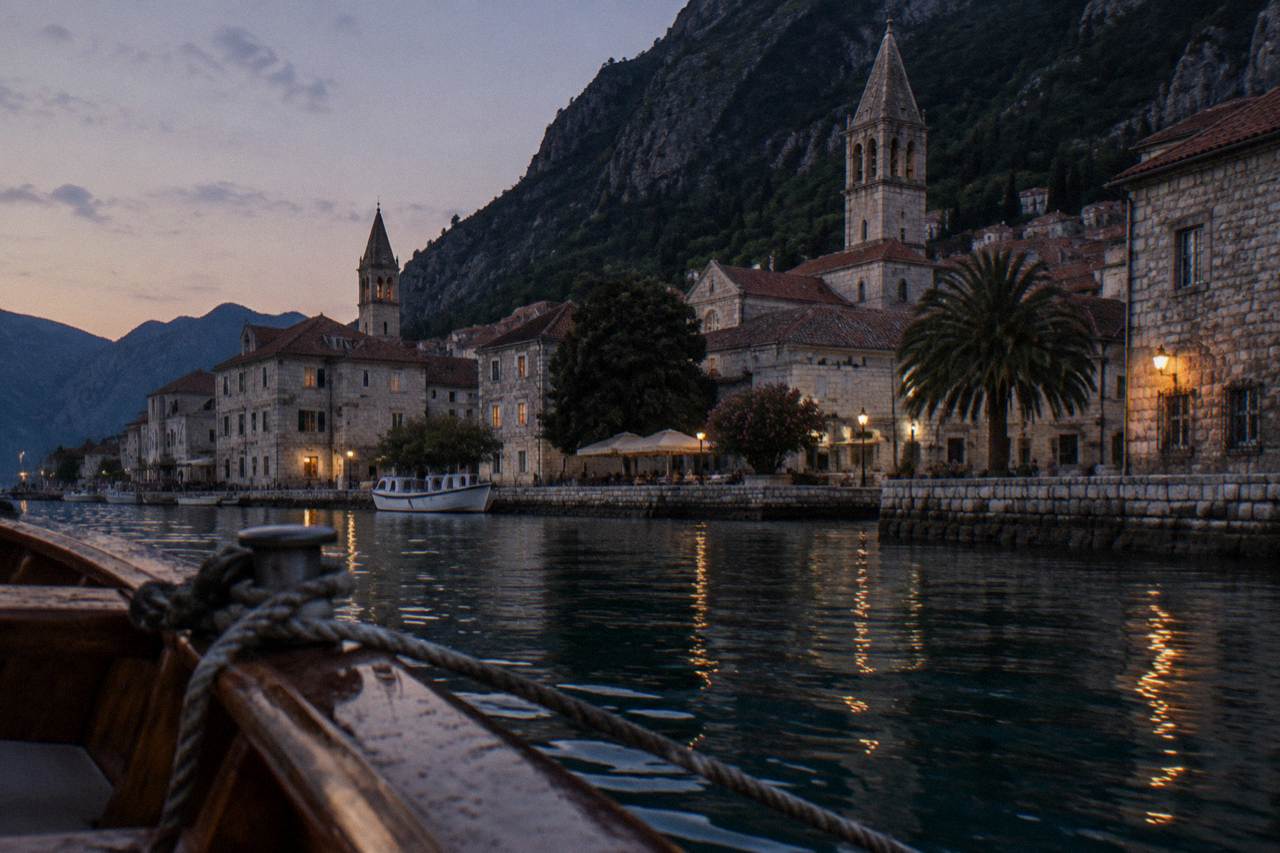
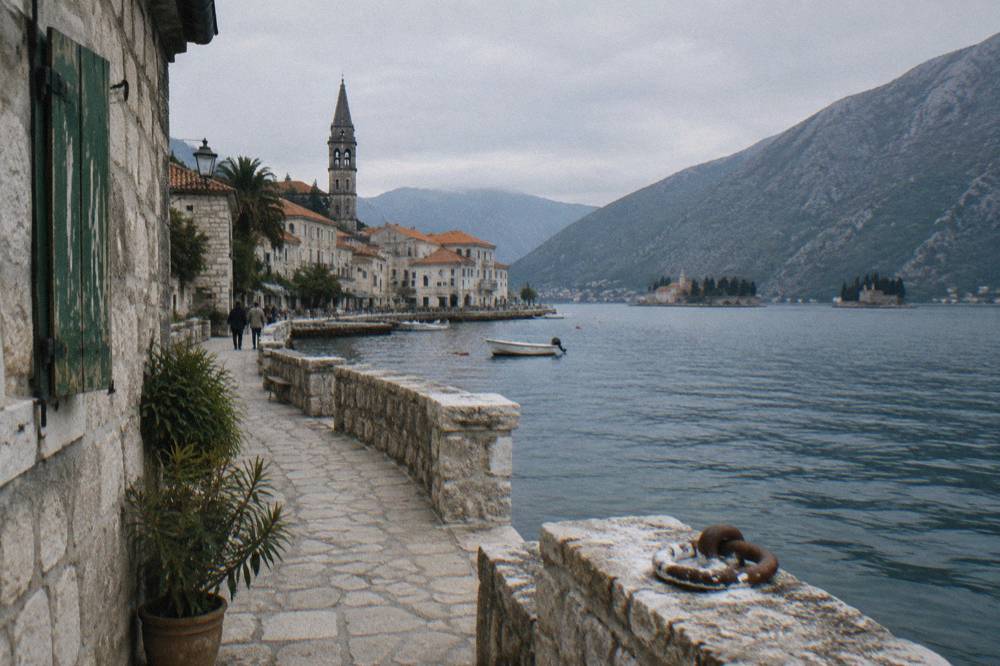
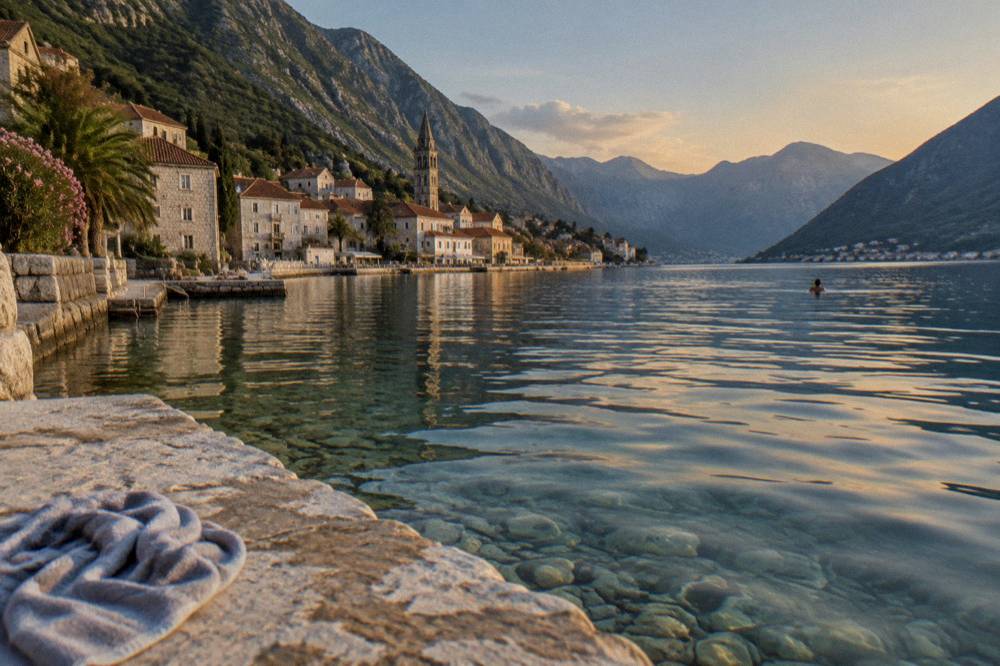
Perast is the easiest free half-day from Kotor. The town is one long waterfront street under baroque bell towers, and every metre of it is public. The famous view, the two islands of Our Lady of the Rocks and Saint George, is free from the shore; what costs money is the boat out to Our Lady of the Rocks, plus a small church and museum entry of roughly EUR 2 to 3 per person on the island itself. Our Kotor to Perast by boat or bus guide works through whether the crossing is worth paying for, and our guide to Our Lady of the Rocks and Perast covers the island itself.
Budva works the same way at a bigger scale. The Old Town streets and walls are free to enter at any time; only the Citadel and specific rampart sections charge. The Citadel fee is listed variously at EUR 3.50 and EUR 5 in different 2026 sources, so expect a few euros and check at the gate. The island of Sveti Stefan, the postcard view, is free from the mainland road and beach; the island itself is an Aman resort with no general public day access, only organised guided tours. The viewpoint costs nothing and delivers the exact photograph.
The beaches deserve honesty too. Free towel sections exist on the central beaches but are limited, and a set of two sunbeds with an umbrella starts around EUR 10 on Jaz and runs EUR 10 to 20 on Mogren and Slovenska in peak season. Swimming itself is free everywhere. Our Sveti Stefan and Budva Riviera guide maps the whole coastline, and the best day trips from Budva guide covers how to reach these spots without a car.
Which Free Sights Charge Once You Arrive?
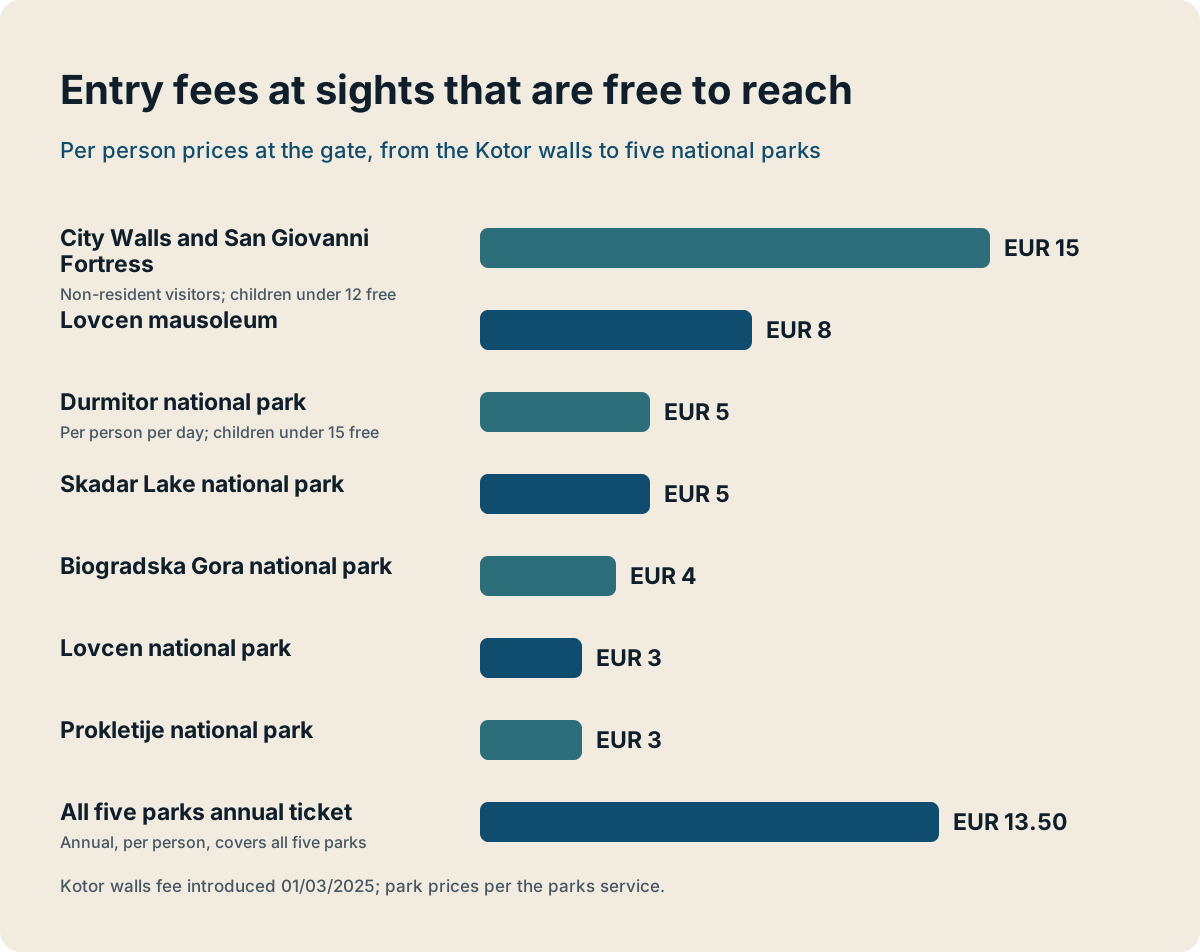
The pattern across Montenegro is that arrival is free and entry is not: the Kotor walls at EUR 15, national park entry at EUR 3 to 5 per person per day, the mausoleum at Lovcen at EUR 8, and the boat crossings to the bay islands. None of these fees is hidden, but each sits at the end of a free journey, so the day adds up only if you take every last step.
The national parks are the clearest case. Official entry per person per day is EUR 5 at Durmitor and Skadar Lake, EUR 4 at Biogradska Gora, and EUR 3 at Lovcen and Prokletije, with children under 15 free at the parks. The annual ticket covering all five parks is EUR 13.50 per person, which is the single best value in the country if you plan to visit even three of them; the parks service sells it at park points, the Podgorica office and online. At Lovcen, the Njegoš Mausoleum costs an additional EUR 8 for adults on top of park entry, and opens daily 9:00 to 18:00 from mid-April to mid-November.
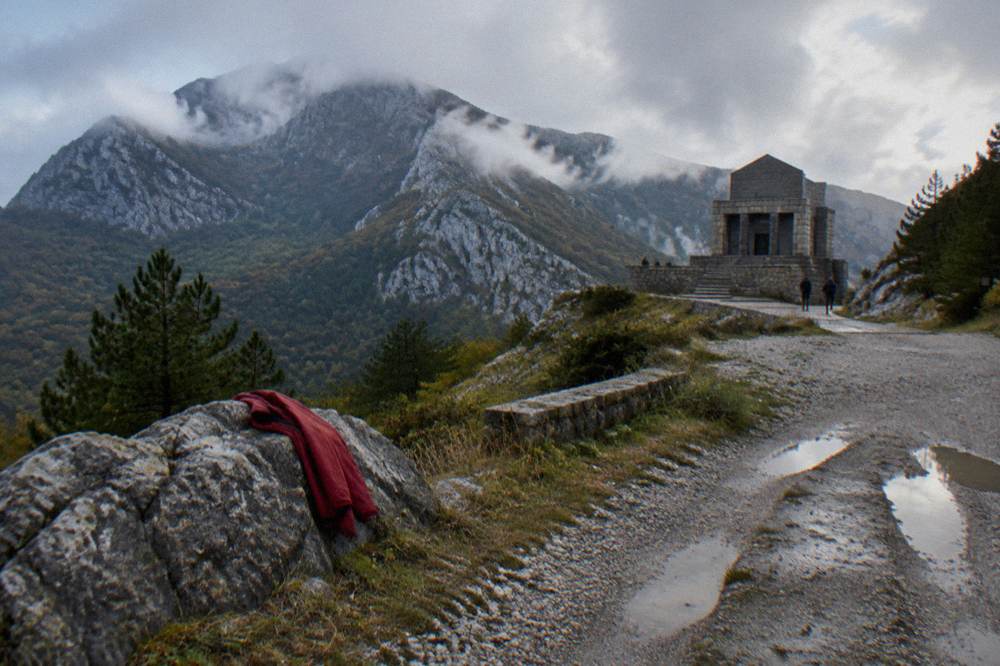
The drive to those parks is where the free part lives. The Kotor serpentine, the switchback road from Kotor up to Lovcen and Cetinje, is free to drive or to be driven up, and the viewpoints along it are the equal of anything the cable car sells. Seasonal one-way traffic rules apply on the serpentine from late May to mid-October, uphill in the morning window and downhill in the afternoon, so check the schedule before committing. The best time to visit Montenegro guide covers which months reward this kind of driving.
| Sight | Getting there | Entry fee |
|---|---|---|
| Kotor Old Town streets | Free, on foot | Free |
| Kotor City Walls | Free to reach | EUR 15 non-residents |
| Perast waterfront | Free to walk | Free |
| Our Lady of the Rocks | Boat crossing paid | About EUR 2 to 3 church and museum |
| Lovcen National Park | Free to drive to | EUR 3, mausoleum EUR 8 extra |
| Durmitor National Park | Free to drive to | EUR 5, children under 15 free |
| Skadar Lake National Park | Free to drive to | EUR 5 |
The walls fee is the one worth a second look, because the municipal notice that set it also set the exemptions: registered Montenegro residents pay nothing. The fee has applied since 01/03/2025 and is paid at the two official checkpoints. Nothing about the free street grid changes because of it; the walls are a separate product bolted onto a free town. Anyone weighing the walls against the Ladder of Kotor should note the ladder is longer, steeper, free and delivers the higher panorama.
Where Can You Swim, Hike Or Watch The Bay For Free?
Swimming in the bay is free from every public stretch of shore, the Ladder of Kotor is a free mountain trail that starts minutes from the Old Town, and the coastal path network around the bay costs nothing to walk. What is never free is the water itself: boat trips are paid products, from $33 per person for a two-hour speedboat to Perast up to private charters in the hundreds.
The bay rewards the slow and the early. The swimming spots within walking distance of Kotor's gates are small stone and concrete ledges rather than beaches, and they are free. The water is the same water the boats cross. For the honest picture of where swimming is safe and pleasant, our can you swim in the Bay of Kotor post covers the spots, and the free things angle continues in our things to do in Kotor guide, which lists the paid and free attractions side by side.
The Ladder of Kotor is the single best free activity in the country for anyone with half a day and decent shoes. The old mule track zigzags up the mountain behind the town, and from its upper reaches the whole bay opens up: the red roofs of the Old Town, the two Perast islands, the straits beyond. No figure for its length or step count is reliably published, so treat any number you see online with suspicion; the walk is simply long, exposed and worth it. Go early, carry water, and read our is the Ladder of Kotor worth it post before committing.
The paid water is a separate decision. A two-hour speedboat to Perast runs from $33 per person, and the full Blue Cave circuit, the cave swim, the submarine tunnels, Mamula and Our Lady of the Rocks, runs roughly three hours from $38 to $57 per person depending on operator and boat. The listing that covers the most ground for the money is the Blue Cave, Mamula and Perast swim tour at 4.8 from 1,651 reviews, from $44 per person, but the honest framing is that everything it visits is also visible for free from the shore, minus the swim inside the cave. Our is a boat tour in Kotor worth it post puts actual numbers on that trade.
One regulation worth knowing before any cave trip: a navigation rule in force since late May 2026 bans motorised vessels from entering the Blue Cave itself. Boats now anchor 10 to 20 metres outside and guests swim in, with operators providing life jackets and kickboards. That changes what the tour feels like, and it is the kind of detail that separates a listing that has been maintained from one that has not. The Blue Cave sea conditions guide covers the rest.
How Does A Free Day Compare With A Paid Tour Day?
A free day in Kotor delivers the streets, the waterfront, one pay-what-you-want walk and either the Ladder or a long promenade, which is a full and genuinely good day. A paid day adds a licensed guide's depth, the walls circuit, or the water. The two are not rivals; the free day is the foundation, and most visitors add exactly one paid product on top of it rather than a stack.
The numbers make the case plainly. The free walking tours cost a tip, say the price of a coffee each. The paid Old Town walking tour costs from $29 per person for about an hour with a 4.8 rating from 392 reviews. The private Rick Steves recommended walk, a 5 from 74 reviews, runs an hour and a half from $63 per person and is the one to pick if the guide matters more than the route. The boat tours start at $33. So the realistic spend for a visitor who does the free day properly and adds one paid product is between $30 and $60, not the hundreds a full tour stack implies.
| Day plan | What it includes | Realistic cost |
|---|---|---|
| Pure free day | Old Town, promenade, pay-what-you-want walk tip, Ladder of Kotor | A tip and water |
| Free day plus walls | Everything above plus the City Walls circuit | EUR 15 |
| Free day plus guided walk | Everything above plus the paid Old Town tour | From $29 per person |
| Free day plus boat trip | Everything above plus a bay speedboat tour | From $33 per person |
The choice between the group walk and the private one is really a choice about questions. A group tour answers the questions everyone asks. A private guide answers yours. The private walk recommended by Rick Steves is run by Miro & Sons Montenegro Tours, a family operation, and the same outfit runs a three-hour Kotor food tour at 4.9 from 60 reviews from $160 per person, which is the splurge version of the same idea. For the fuller comparison of group against private formats across the country, our private or group tour in Montenegro guide goes deep.
The budget question is really a sequencing question. Do the free day first: the streets at dawn, the walk at ten, the promenade after lunch, the Ladder if the legs allow. Then decide, with the town actually under your feet, whether the walls, a guide or the water is the one thing worth paying for. Most people who follow that order choose well, because they know by then what they actually want to see more of.
Can You Build A Whole Free Week Across Montenegro?
Yes, with planning: Kotor and Budva old towns, the Perast and Herceg Novi waterfronts, the Sveti Stefan viewpoint, the Ladder of Kotor, the serpentine viewpoints and the free walk schedules in four towns add up to a week of genuinely free sightseeing. The gaps are the parks, the walls, the islands and the caves, and a free week simply routes around them rather than through them.
The realistic free week looks like this. Two days in Kotor: the Old Town, the pay-what-you-want walks, the Ladder, the promenade to Dobrota. A day in Perast on the bus, walking the waterfront and photographing the islands from shore. Two days in Budva: the Old Town, the free walk, the beaches' free towel sections, the Sveti Stefan viewpoint from the road. A day in Podgorica or Cetinje using the free walks there, which are the least-known free products in the country. That is seven days, and the only compulsory spend is food, lodging and buses.
What that week deliberately skips is the paid spine of Montenegro: the national parks, the walls, the cave, the islands, the monastery tours. Some of those are worth the money, and our Montenegro trip cost guide prices the full version honestly. But the free week is not a consolation prize. It is the town-and-coast version of the country, and for a lot of travellers it is the better one.
The honest summary is that Montenegro Tours exists because the paid side of this country is genuinely good, and the free side is good enough that you should only pay for what you actually want. The walls are worth EUR 15 to most people. The parks are worth their fees to almost everyone who drives that far. The boat trips are worth it on a calm day. The rest, the streets, the waterfronts, the walks, the viewpoints, the ladder, is the country giving itself away, and there is a lot of it.
Common Questions About Free Things To Do In Kotor
Is Kotor Old Town free to enter?
Yes, completely. The streets, squares, gates and church exteriors cost nothing and are open at any hour. Only the City Walls and San Giovanni Fortress charge, EUR 15 per non-resident visitor, paid at the two official checkpoints.
Are the free walking tours in Kotor really free?
They are pay-what-you-want: free to join, with a tip to the guide at the end. The best-reviewed Kotor walk on GuruWalk runs an hour and a half at 4.97 from 1,386 reviews. A tip is customary and the guides depend on it, so treat it as a tour you price yourself.
Can you walk the Kotor walls for free?
No. The walls have carried a EUR 15 fee for non-residents since 01/03/2025, with registered Montenegro residents exempt and children under 12 free. The free alternative with an even higher view is the Ladder of Kotor, the old mule trail that climbs the mountain behind the town.
What is the best free viewpoint in Kotor?
The upper reaches of the Ladder of Kotor, which looks down on the whole bay, the Old Town and the Perast islands. Inside the town itself, the terraces on the lanes climbing toward the walls cost nothing and clear the rooftops.
Is Perast free to visit?
Walking Perast's waterfront and its baroque street is free, and the view of the two islands from the shore costs nothing. The paid parts are the boat crossing to Our Lady of the Rocks and the small church and museum entry on the island, roughly EUR 2 to 3 per person.
Do free walks exist outside Kotor?
Yes, but only in Budva, Podgorica and Cetinje besides Kotor. There is no free walk listed for Herceg Novi, Tivat, Perast, Bar or Ulcinj, so plan those towns on your own feet or with a paid guide.