Is The Ladder Of Kotor Worth It?
A straight answer on whether the Ladder of Kotor hike is worth your time and the EUR 15 walls fee, plus how the trail works, when to go, and how it compares with the cable car.
Is The Ladder Of Kotor Worth It?
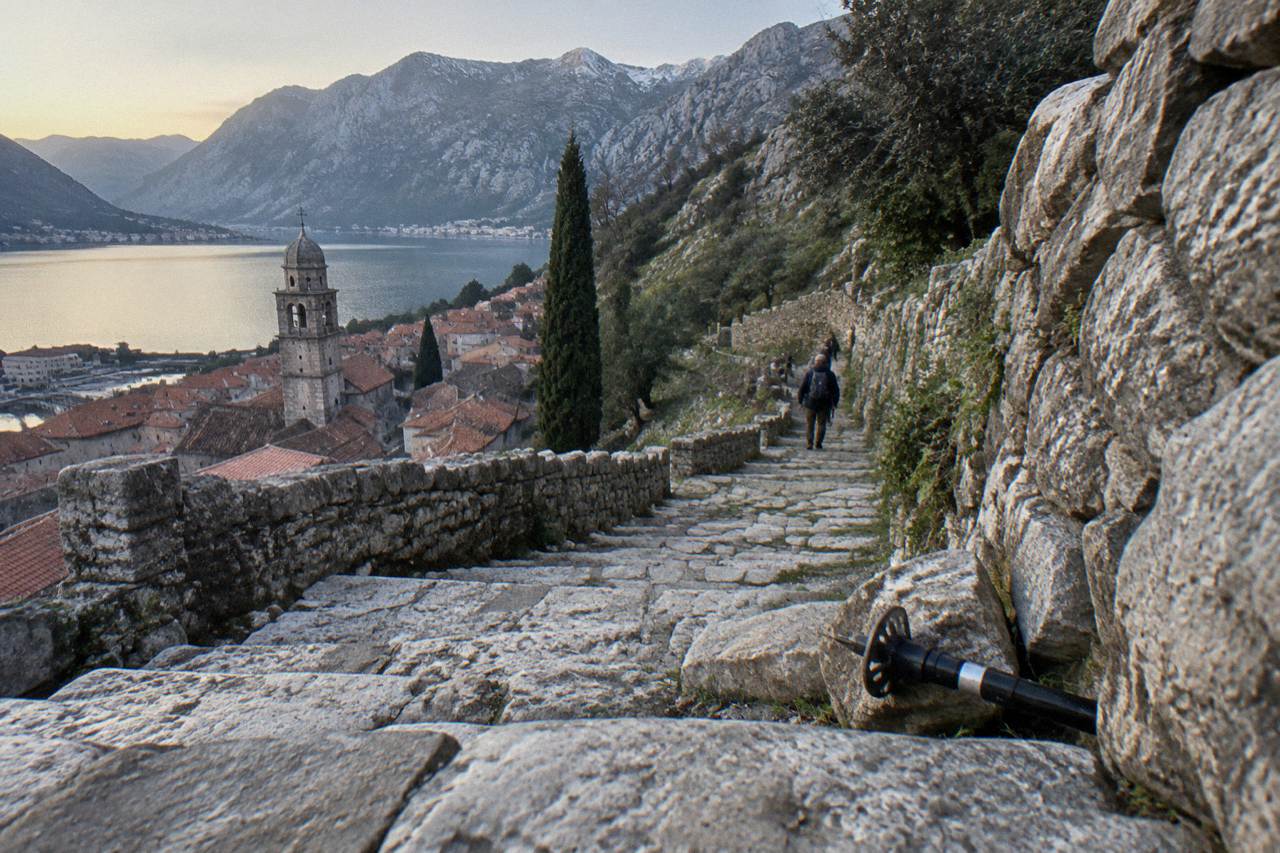
Yes, for most visitors the Ladder of Kotor is worth it, with one honest condition attached: it is a real mountain walk, not a stroll, and the reward is the single best view of the Bay of Kotor available on foot from town. Standard access runs through the paid City Walls complex, though unofficial unmarked paths exist, where the entrance fee has been EUR 15 per non-resident visitor since 1 March 2025.
That condition shapes the whole decision. If you are happy to pay the walls fee, which also gets you the ramparts circuit and St John Fortress that most visitors come for anyway, the Ladder is one of the strongest things you can do with a day in Kotor. The trail leaves the upper walls near the fortress and continues up the mountainside on the line of a path that locals used for centuries before any road existed, threading toward the village area above the bay.
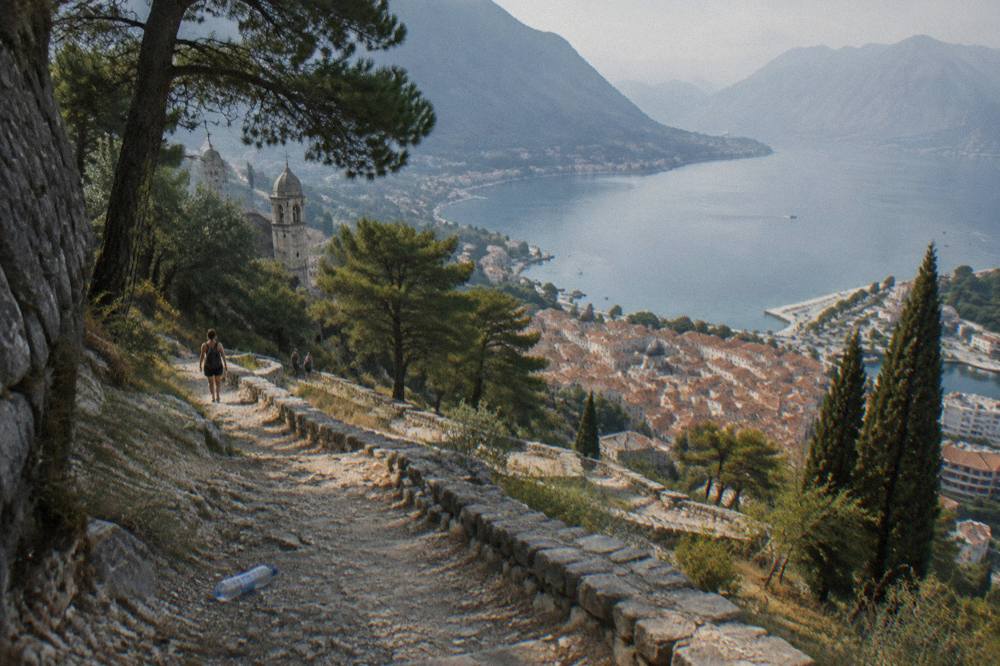
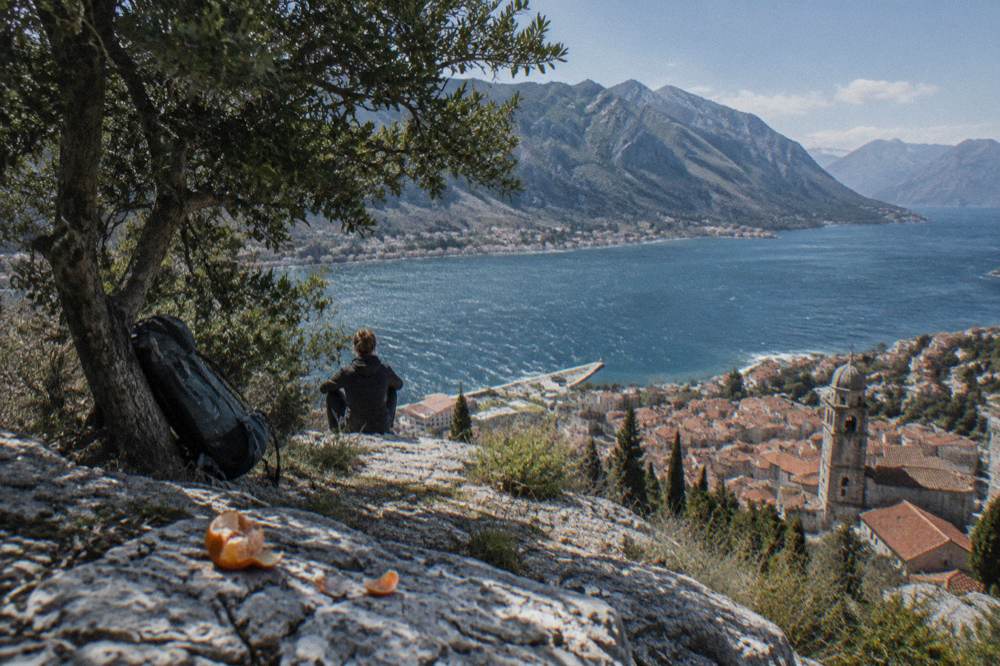
What you get for the climb is a sequence of viewpoints that keep improving as you ascend. The terracotta roofs of the Old Town shrink into a grid, the bay opens out toward Perast and the open water beyond, and the cruise ships and tender boats below become small white shapes. There is no step count or official climb time published for the Ladder, and this site does not print invented figures, so plan by effort rather than by numbers: people of average fitness who walk regularly manage it with rest stops, and anyone who struggles on stairs should treat the ramparts alone as their ceiling.
The honest counterargument is time. On a short port call, the Ladder competes directly with the walls, the Old Town lanes, and a boat trip, and many cruise visitors do better with a structured plan such as the one in our six hours in Kotor from a cruise ship guide. If you have a full day or are staying overnight in town, the calculus flips and the morning climb becomes the obvious anchor of the day.
There is also a slower, quieter side to the experience that photographs do not capture. The upper path passes close to the old chapel and the village terraces where a handful of people still keep land, and on weekday mornings it is common to share the trail with local walkers and their dogs rather than with crowds. Visitors who reach the upper sections often describe the silence as the surprise of the day: twenty minutes of climbing puts you far enough above town that the cruise ship announcements and tender engines drop away entirely, leaving only wind and occasional sheep bells from the slopes above.
For visitors who prefer to understand the town before climbing above it, the Kotor Old Town walking tour runs about one hour from $29 per person, rated 4.8 from 392 reviews, and finishes close to the walls entrances, which makes it a natural pairing with an afternoon ascent.
How Hard Is The Ladder Of Kotor Hike?
The Ladder is a sustained uphill walk on stone and packed earth, moderately hard rather than technical, and the difficulty comes from continuous ascent and exposure rather than from any scrambling. There is no published step count or official duration, and heat, footwear and how far up the walls you already walked that day all matter more than raw fitness. Most people in reasonable shape complete the popular upper section with rest breaks.
Two things make it feel harder than the map suggests. The first is that the standard route includes the ramparts climb before the Ladder proper begins, so your legs are already working when the trail proper starts. The second is sun exposure: large parts of the path have no shade, and summer temperatures in the bay regularly push walkers to start at dawn or skip the climb entirely in the middle of the day. Shoulder season mornings are the comfortable window.
There is no lift, no shortcut and no water point on the mountain, so whatever you carry is what you have. The trail surface is uneven stone in places, worn by generations of feet and rain, and good shoes matter more than they do on the walls. The what to wear and bring on Montenegro tours guide covers packing for exactly this kind of terrain and heat.
Pacing advice from local operators is consistent: go slower than feels necessary for the first stretch, because the grade eases and stiffens in waves rather than climbing steadily. A common mistake among cruise visitors is treating the first rampart staircases as a warm-up and arriving at the actual trailhead already tired, with the steepest ground still ahead. Building in a ten minute break at the fortress to drink, eat something and let the legs recover costs nothing and changes the second half of the climb completely.
Wondering if the effort matches what a guided experience offers instead? A guided walk costs little more than the walls fee alone.
Is a guided walk better than going alone on the walls?
A guide does not climb the Ladder with you, but a good Old Town walk reframes what you see from the top. The Kotor Old Town walking tour from $29 per person, rated 4.8 from 392 reviews, covers the town in about an hour and ends within walking distance of the walls entrances, so many visitors book it first, climb after, and treat the guide's history as the narration for the view.
Do You Have To Pay The Walls Fee To Hike The Ladder?
On the standard route, yes. The Ladder is reached from the upper section of the City Walls, and the walls are a paid monument: EUR 15 per non-resident adult since 1 March 2025, free for children under 12, with Montenegro residents exempt at the checkpoint. The fee is paid in cash or card at either official entrance before you start climbing.
The two entrances matter for planning. Point I sits at Parila, behind the church of St Ozana on the east side of the Old Town, and point II sits at Skaljarska pjaca on the north side. Which one you use barely affects the Ladder itself, since both routes converge inside the walls circuit before the trail continues upward, but the Parila side is the more common starting line for the ascent.
| Season | Walls opening hours | Fee |
|---|---|---|
| 1 March to 30 April | 08:00 to 18:00 | EUR 15, non-residents |
| 1 May to 30 September | 07:00 to 20:00 | EUR 15, non-residents |
| 1 October to 30 November | 08:00 to 17:00 | EUR 15, non-residents |
The fee is written into the municipal notice published by Kotor Municipality (the original announcement carries the rates, hours and both entrance points). Some walkers look for a free way up the mountain that avoids the walls entirely, and unofficial side paths exist on the slope above town, but this site does not recommend them: they are unmarked, unpatrolled, and in summer they cross dry, loose ground where the wildfire risk that has marked recent seasons is real. Pay the fee, use the maintained route, and treat the ramparts portion as part of the value.
One practical note: the fee buys the whole walls complex, not just the Ladder access, so the honest comparison is not "EUR 15 for a hike" but "EUR 15 for the ramparts, St John Fortress and the trailhead". Visitors who only wanted the hike and skip the ramparts walk are leaving most of what they paid for on the table.
What Time Of Day Is Best For The Ladder?
Early morning, clearly. The walls open at 07:00 in the peak season window from 1 May to 30 September, and starting in the first two hours after opening buys you shade on part of the ascent, cooler stone underfoot, thinner crowds on the ramparts, and the best light for photographs across the bay. By early afternoon in July and August the exposed sections are punishing.
The second-best window is late afternoon, entering no later than about three hours before the 20:00 close in summer, which turns the climb into a sunset operation with the descent in daylight or by headlamp. That carries its own caution: the stone is uneven, and coming down in the dark without a light is how ankles get hurt. Morning walkers finish the whole thing in daylight without thinking about it. The full index of guides sits on Montenegro Tours.
Crowds follow the cruise calendar. Kotor's port handles a heavy summer schedule, and on days with several ships in port the lower ramparts fill from mid-morning onward, which is a scheduling problem our Kotor cruise port guide unpacks in detail. Off-ship walkers who start at 07:30 are usually up and past the busy section before the first tender crowds reach the walls gate.
Season matters as much as hour. In May, June, late September and October the temperatures are kinder, the trail is quieter, and the same climb that drains people in August feels like an ordinary hill walk. Winter access depends on conditions, snow and ice can sit on the upper slope long after the town is warm, and the walls' reduced hours from October shrink the practical day, so check before planning a cold-season ascent.
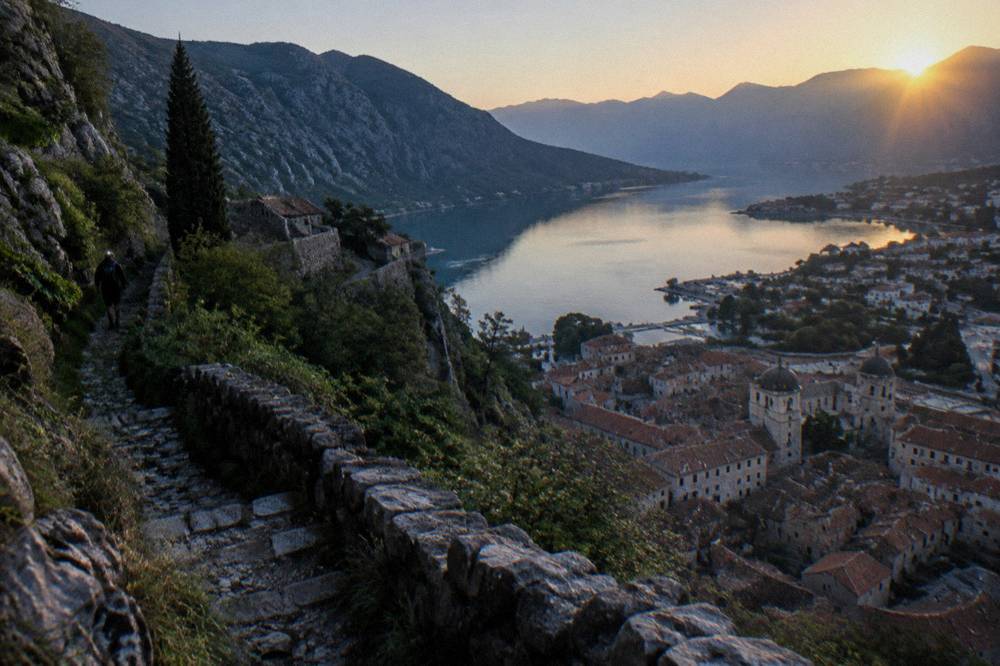
Photographers should think about direction as well as timing. The bay and Old Town sit to the west and northwest of the trail, so morning light comes from behind you as you climb and falls across the rooftops and water, while the afternoon sun sits over the open sea and can flatten the same view. If the photograph is the point of the walk, the 07:00 to 09:30 window in summer delivers the strongest combination of color, shadow and comfortable temperatures.
What Should You Wear And Bring?
Treat the Ladder like a short mountain hike, not a town stroll: closed shoes with grip, a hat, sunscreen, and more water than feels reasonable, at least a litre per person in warm months, with nothing to refill from on the trail. Light layers work better than a single heavy top, because the summit areas can be windy even when the town below is hot.
Footwear is the item that decides whether the day ends well. Flip-flops and smooth-soled sneakers are the two most common bad choices on the ramparts, and both are worse on the Ladder's worn stone. A trail shoe or any sturdy walking shoe with tread is enough; boots are optional rather than needed. Bring a small snack, because there is nothing to buy once you leave the Old Town, and a charged phone for photos and for the map if you decide to extend toward the village paths above.
The walls fee is payable at the entrance, and while cards are accepted at the checkpoints, carrying some cash in euros is the resilient habit across Montenegro, where small counters occasionally favor it. Modest practicality applies to clothing too: you are walking above a working town with churches in it, and a light cover-up is useful if you plan to step into anything after the descent.
A few small additions earn their place in the pack. A phone power bank matters more than people expect, because the combination of photos, mapping and a screen at full brightness in sun drains batteries fast. Trekking poles help on the descent for anyone with knee trouble. And a paper ticket or a photo of it is worth keeping, since checkpoint staff can ask for proof of payment at more than one point inside the complex.
Ladder Of Kotor Or Cable Car?
They answer different appetites. The Ladder is effort, history and a ground-level relationship with the mountain, costing the EUR 15 walls fee and your legs. The Kotor cable car is altitude without effort, lifting passengers from near the town to the Lovcen side in minutes, and the choice between them is really a choice between earning the view and renting it. Both can be done, on separate days, by visitors with three or more days in the area.
The cable car has become one of the busiest visitor assets in the country, carrying more than 430,000 passengers in 2025, with about 95 percent of users foreign visitors (the concession figures were reported in full here). Its operating hours and ticket prices shift between peak and post-season windows, so check the operator's current pricing before planning around a number. What it cannot give you is the slow reveal of the Ladder, where each turn of the path changes the picture.
| Ladder of Kotor | City Walls only | Cable Car | |
|---|---|---|---|
| Effort | High, sustained ascent | Moderate stairs | None |
| Cost | EUR 15 walls fee | EUR 15 walls fee | On the operator's listing |
| Time needed | Half a morning or more | 1 to 2 hours | Under 2 hours round trip |
| Best view | Bay and Old Town from the slope | Old Town rooftops from the fortress | High panorama toward Lovcen |
| Who it suits | Fit walkers, photographers | Everyone | Families, limited time, hot days |
There is also a third way up the mountain that the car replaced in daily life: the old serpentine road, with its seasonal one-way traffic windows in the late May to mid October period, uphill traffic permitted in the morning block and downhill in the afternoon. That road is a driving experience rather than a walk, and our Kotor fortress, ladder or cable car guide compares all three options side by side for visitors weighing them properly.
Families should read the table with an honest eye on the children. The cable car takes strollers, toddlers and grandparents without question, while the Ladder demands steady feet and a child who genuinely likes walking; carrying a tired four-year-old down a mountain path is a memory nobody wants. Conversely, teenagers who would shrug at a gondola ride often remember the climb as the best thing they did all week. The two options are not rivals so much as tools for different groups and different days.
For many travelers the real contest is not Ladder versus cable car but Ladder versus everything else a short stay allows. The trio of tours below covers the Old Town options that pair best with a morning on the mountain, from a $28 group walk to a private tour recommended by a well-known travel writer.
Can You Combine The Ladder With A Kotor Tour?
Yes, and the pairing is the smart way to spend one full day: book a guided Old Town walk for late morning after an early climb, or reverse it and take the tour first so the guide's stories give the view from the top some context. The walks are short, one to one and a half hours, and all three Old Town walking tours on this site depart from inside or beside the walls, minutes from both fee entrances. If you're still shaping the rest of your day, our guide to how long a full circuit of the Old Town takes helps you budget the hours between the climb and the tour.
The value walk is the standard Kotor Old Town walking tour, about one hour from $29 per person with a licensed local operator, rated 4.8 from 392 reviews. It is a group format, so it suits travelers who want the highlights and the legends without a custom itinerary, and its short length leaves the whole afternoon for the ramparts and the Ladder. For a view of how the town reads at street level first, our how long it takes to walk around Kotor Old Town piece sets out the timing.
The step-up option is the private walk recommended by Rick Steves, from $63 per person, a 1.5 hour private format rated 5.0 from 74 reviews, a small pool but a flawless one, run by a family operator in Kotor. Private means you can ask the guide to tilt the hour toward Venetian defenses, earthquakes, or daily life, and then take that frame up the mountain with you.
There is also a food-led variant worth knowing about for the afternoon after the descent. Kotor's small-group food walks run about three hours and end in the lanes closest to the walls, which turns a climbing morning into a full eating-and-walking day without any transport at all. It is the version of the pairing that suits visitors whose legs did the talking before lunch and whose appetite wants to do it after.
Visitors with a full week rather than a day can go further afield once the Ladder is ticked off. The best day trips from Kotor guide lines up the bay boat trips, Perast and the northern mountains, and it is the natural next read after this one.
Common Questions About The Ladder Of Kotor
Is The Ladder Of Kotor Worth It?
For most visitors with reasonable fitness and at least half a day, yes. The trail gives the best on-foot view of the Bay of Kotor available from town, and it costs nothing beyond the EUR 15 walls fee you would likely pay anyway. Visitors short on time, energy or heat tolerance get a strong experience from the walls alone.
How much does it cost to hike the Ladder of Kotor?
The trail itself is free. Access runs through the City Walls complex, where the fee has been EUR 15 per non-resident adult since 1 March 2025, with children under 12 free and Montenegro residents exempt.
How long does the Ladder of Kotor take?
No official duration or step count is published, and estimates vary widely with fitness and how far up you go. Plan a half morning for the popular upper section including the ramparts, and treat any specific figure in a guidebook as one walker's experience rather than a rule.
Is the Ladder of Kotor dangerous?
It is a mountain path, not a paved attraction: uneven stone, exposure to sun and wind, and no railings on the upper slope. With proper shoes, water and daylight it is within the ability of average walkers. Unofficial shortcuts off the maintained route are not recommended.
Can you do the Ladder of Kotor from a cruise ship?
Only on port calls of roughly six hours or more, and only with an early start. The walls open at 07:00 in summer, and the climb plus a look around the Old Town fits a full-day call comfortably but crowds a short one.