Is Perast Worth Visiting?
A verdict on Perast: what the town offers, how to get there from Kotor by boat or bus, what Our Lady of the Rocks costs, and when the visit earns its time.
Is Perast Worth Visiting?
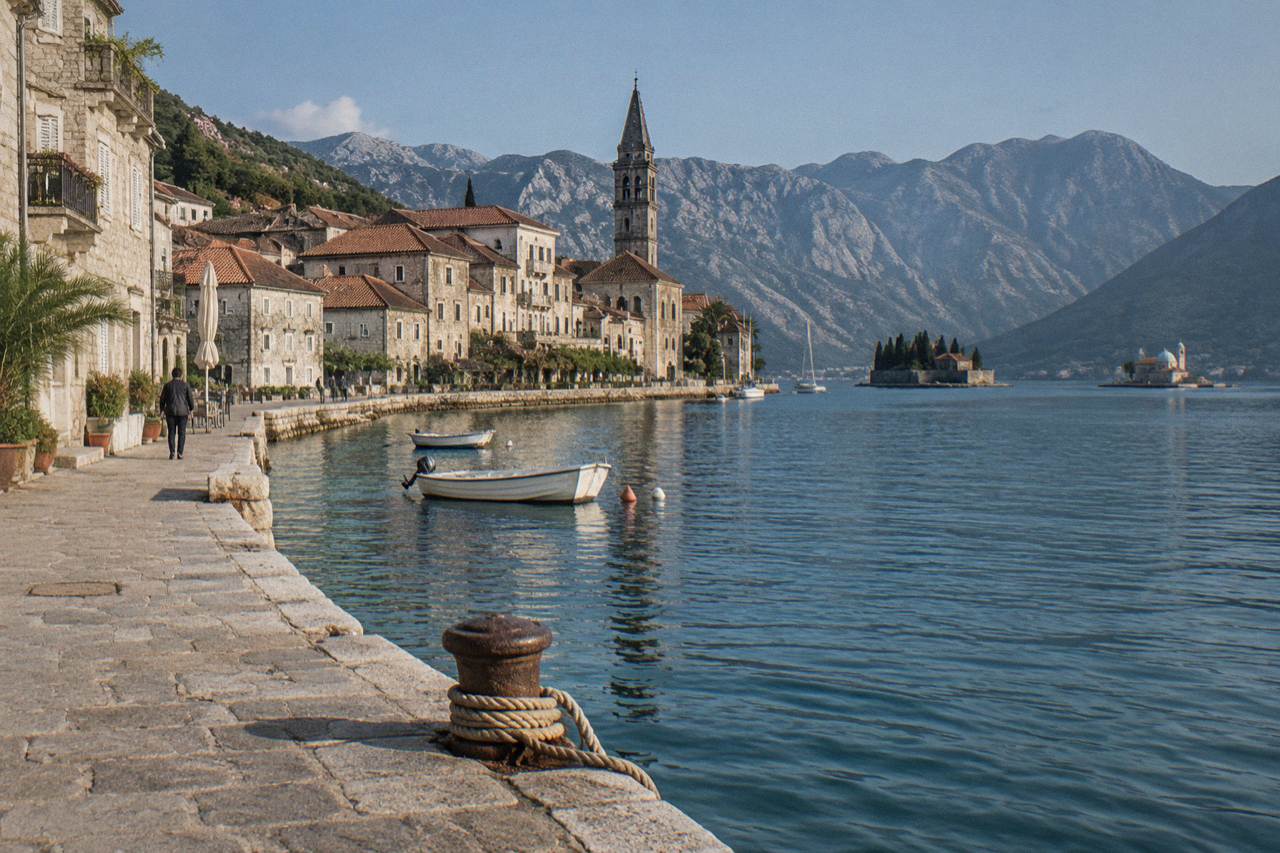
Yes, for almost every traveller, Perast earns a half-day. A single waterfront street of old stone palaces, two island churches a short boat ride away, and mountain walls rising directly behind the town concentrate more per square metre than anywhere else on the bay. The honest caveats are crowds in July and August, a thin beach offer, and a visit that can feel rushed if you arrive midday with a tour group.
Perast sits about halfway up the Bay of Kotor, on the narrow stretch of shore below the Verige strait. For centuries it was the home port of the Venetian and later Russian navies' local officers and merchant captains, and the families who profited from that built palaces along the water, plus defensive bell towers, and endowment churches. When the navy left, the town shrank, which is why the architecture survived so completely. Today the permanent population is small, a few hundred people, and the economy runs almost entirely on visitors arriving by road and by boat. If you're weighing Perast against other stops along the coast, our comparison of the prettiest towns in Montenegro can help you decide where to spend your time.
The comparison that matters is with Kotor itself. Kotor gives you a walled medieval old town, cruise crowds, and a strenuous walls climb, and it rewards a full day. Perast gives you a single promenade, a slower rhythm, and the islands. Visitors who do both consistently treat Perast as the quieter half of the day, and that division of labour works well in practice.
The verdict depends a little on how you arrive. Coming independently, by bus or by car, you control the timing and can have the promenade close to yourself in the early morning. Coming on a shared boat tour, you get the islands included and the crossing over the bay as part of the experience, but your time on shore is set by the skipper. Both work; they are simply different products.
For a sense of the options, three listings frame the choice: the 2-hour speedboat from Kotor that pairs Perast with Our Lady of the Rocks, the longer 3-hour trip that adds the Blue Cave and a wartime submarine base, and a small-group day trip from Dubrovnik with an optional boat ride for visitors basing themselves in Croatia.
If your question is whether Perast deserves a slot in a short Montenegro itinerary, the answer is yes, ahead of several larger stops. If your question is whether it deserves an overnight, that depends on taste: the town empties beautifully in the evening, but the restaurant and accommodation offer is limited compared with Kotor or Budva. For that trade-off, the comparison piece on Kotor versus Perast as a base goes deeper.
What Makes Perast Different From Other Bay Towns?
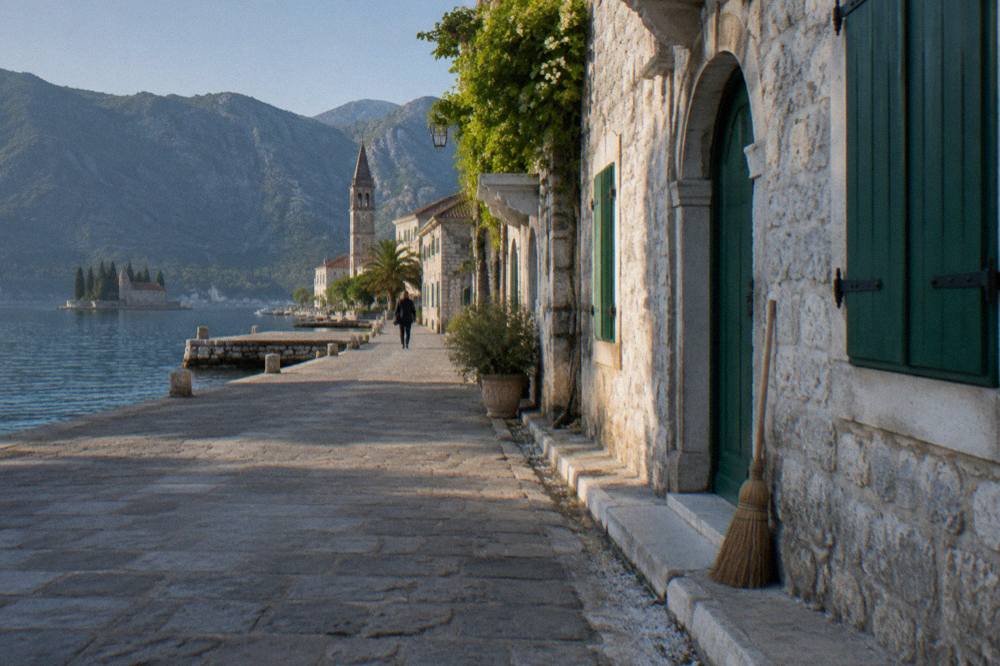
Scale and completeness. Perast is not a ruined old town or a rebuilt one; it is a largely intact baroque captains' town running along one pedestrianised shoreline for about a kilometre, with no modern construction breaking the facade line. That combination, uniform architecture, a compact walkable length, and the two islands framed directly offshore, exists nowhere else on the bay in the same way.
The town's built fabric is its attraction. The bell tower of St Nicholas' church rises above the roofline, and the church museum beside it holds religious art and votive silver worked by local craftsmen. Along the shore, palace facades carry the coats of arms of the families that built them, several now restored, a few still bearing scars from past conflicts. The museum of Perast, in the Bujovi Palace, explains the maritime history that produced all of this, and it is the one indoor stop that genuinely rewards an hour.
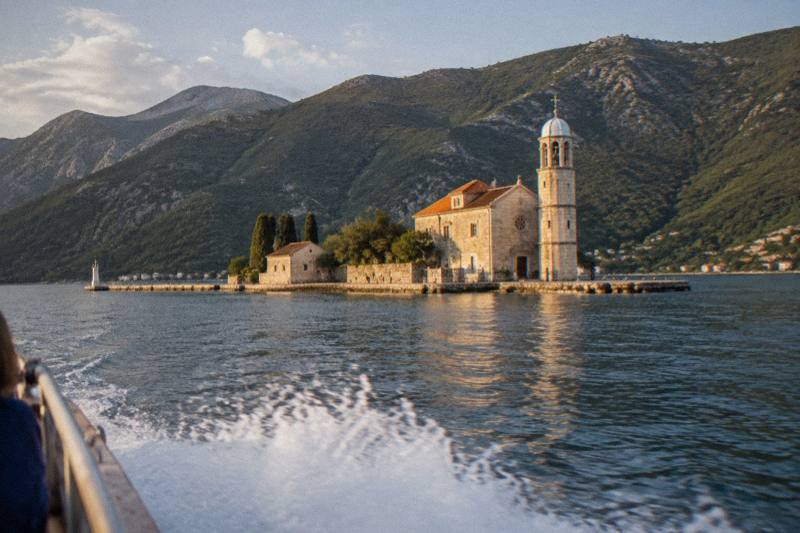
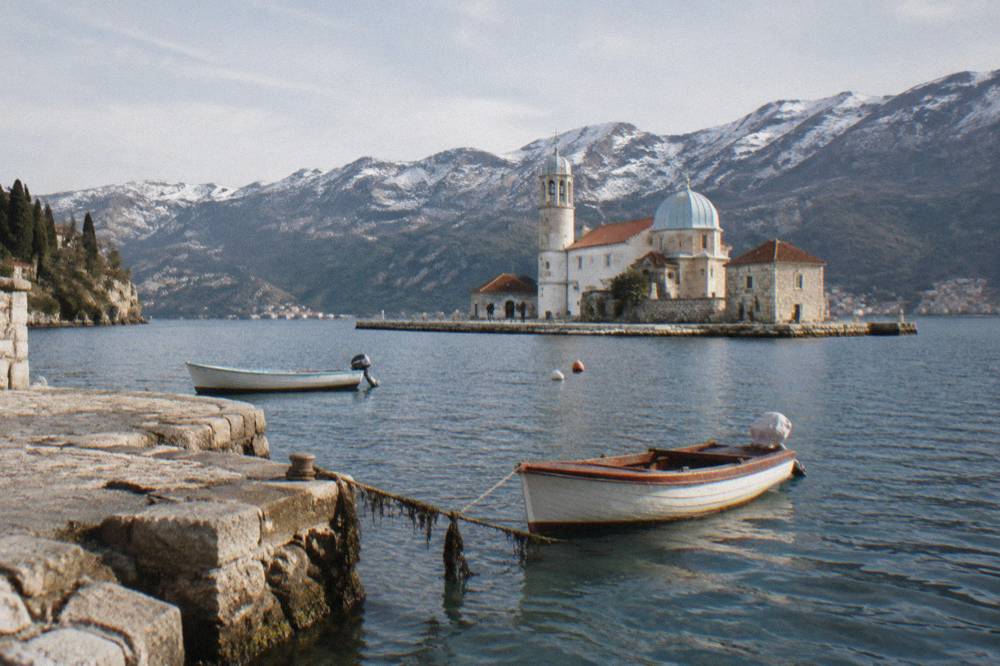
Then there are the islands. Our Lady of the Rocks, the artificial island built over centuries by local boats dumping rocks, sits a few minutes offshore with its church and museum. Saint George, the natural island beside it, holds an old monastery and the town cemetery, and it is closed to casual visitors; boats pass it but do not land. The view of the pair, with the mountains behind, is the single most photographed composition on the bay.
What Perast does not offer matters too. There is no substantial beach inside the town, no nightlife to speak of, and only a handful of streets behind the waterfront worth exploring. Visitors expecting a second Kotor, with lanes to get lost in, are sometimes disappointed. Visitors expecting a stage-set promenade with two islands in front of it are not.
The honest framing is this: Perast is a look-and-linger place, not a do-things place. You walk the shore, you take the boat to the island, you eat fish or sit with a drink facing the water, and you leave. That is the whole product, and for most people it is enough, because the setting carries it.
How Do You Get To Perast From Kotor?
Two practical ways: a bus along the coastal road, cheap and frequent through the day, or a boat. The bus drops you at the edge of town for the short walk to the promenade, and no fare or timetable figure belongs here because neither is fixed, so check locally or at the Kotor bus station. The boat option ranges from a 2-hour shared speedboat tour from $33 per person to private charters priced per boat.
The bus is the budget answer. Local services run the Kotor to Perast to Risan route along the two-lane shore road, and in summer they fill with day-trippers. The ride hugs the water the whole way, and the arrival is unglamorous: the stop is on the main road, from which you descend to the waterfront street in a minute or two. Buy tickets at the station or from the driver, and confirm return times when you board out, because evening frequencies thin out.
The boat is the experience answer. Shared speedboat tours leave from Kotor's City Park dock, about 200 metres from the Main Gate of the Old Town and a short walk from the cruise port, according to the operator's own listing text. A 2-hour format typically runs the crossing, a stop at Our Lady of the Rocks, and shore time or a slow pass at Perast itself. The featured 2-hour speedboat tour on this site, operated by Montenegro Submarine and Speedboat Tours, is rated 4.7 from 1,129 reviews and starts from $33 per person. If you're weighing whether a boat day makes sense for your port stop, the guide to choosing an excursion in Kotor covers when the Old Town alone is enough.
One caution on driving: parking in Perast is limited to a small number of lots and roadside strips at the town's edges, and in peak season cars are turned away or queued back toward the main road. The full comparison of the two routes, with what each costs in time and effort, is laid out in the guide to getting from Kotor to Perast by boat or bus.
A third route exists for cruise passengers and short-stay visitors: tours that combine Perast with something else. A Kotor old town walk in the morning and a Perast speedboat in the afternoon is the classic cruise-day pairing, and several shore excursion listings on this site follow exactly that pattern. If your ship docks at Kotor, the port sits minutes from both the old town gates and the boat departure point, which is why the pairing works so well; the Kotor cruise port guide covers the layout.
| Way to reach Perast | Rough cost basis | What you control | Best for |
|---|---|---|---|
| Local bus from Kotor | Fare paid locally, not fixed | Your own schedule all day | Budget travellers, long stays |
| Shared speedboat tour | From $33 per person, 2 hours | Nothing, the skipper sets timing | Short visits, cruise passengers |
| Private boat charter | From $389 per group for up to 9 | Route, timing, swim stops | Families, small groups |
| Rental car | Car cost plus limited parking | Timing, but parking is scarce | Itineraries continuing to Risan |
What Is Our Lady Of The Rocks And Can You Visit It?
Yes, you can land on it. Our Lady of the Rocks is a man-made island holding a church and a small museum, reached only by boat from Perast's waterfront. The boat crossing is paid separately from the church and museum entry, which runs roughly 2 to 3 euros per person, and modest dress applies inside the church. Saint George, the neighbouring island, is not open to visitors.
The island's origin story is the town's central legend: local tradition holds that sailors found an icon of the Virgin on a rock in the shallows, and the community then spent centuries sinking stones and old boats around the spot until an island formed. Whether or not the detail is exact, the seabed around the island genuinely is a man-made mound, and locals still add a stone each year in a ceremonial row out on 22 July.
Inside the church, the ceiling is covered in paintings by Tripo Kokolja, a Perast native, and the museum beside it holds a notable collection of votive silver and, curiously, an embroidered panel worked by a local woman over decades using silk and, by tradition, her own hair. The visit is short; most people spend 20 to 40 minutes on the island including the crossing.
The practical mechanics are simple. Small boats run the crossing from the Perast waterfront on a rotation, and tour boats from Kotor include a landing stop in their itinerary. Church and museum entry is paid at the on-site desk, cash or card, and children under six are often free. Shoulders and knees need covering, the standard rule at Orthodox and Catholic sites across the country, the same dress logic explained in detail for the region's monasteries.
For most visitors the island is the point of the whole Perast detour, and it is worth being clear about expectations: this is a small, dense, devotional site, not an attraction with activities. You look, you learn a little, you photograph the two islands from the water on the way back. The full picture of the island and town by boat is in the site's guide to Our Lady of the Rocks and Perast.
One regulatory note that affects some visitors' wider plans: since a maritime safety regulation published in late May 2026, motorised vessels are banned from entering the Blue Cave further out on the peninsula, and boats anchor 10 to 20 metres outside while guests swim in, per the operator guidance on the new rule. That does not affect Our Lady of the Rocks, but it explains why Blue Cave combination tours describe a swim entry rather than a drive-in.
How Much Time Do You Need In Perast?
Two to three hours on shore plus the island crossing covers Perast properly for most visitors: one slow pass of the promenade, the island boat, one church or museum stop, and a drink or a meal facing the water. Less than ninety minutes turns the visit into a photo stop. A full day is only worth it if you plan to linger over long meals, swim from a rented spot, or use Perast as a base for the whole bay.
The town's walkable length is short, and that bounds the honest time estimate. The promenade runs roughly a kilometre end to end, and the lanes behind it add little walking distance. What expands the visit is the island crossing, which runs about an hour door to door with waiting time, and the museums, which each take 30 to 60 minutes if you actually read things.
Where timing really matters is the shape of the day. Boat tours from Kotor and Dubrovnik day trips converge on Perast between late morning and mid-afternoon, and the promenade is at its most crowded then. Arriving before 10:00 or after 16:00 changes the experience noticeably: the same stones, a fraction of the people. Cruise passengers can check the day's ship count, since three ships in port at once reliably produces wall-to-wall groups; the schedule context is covered in the cruise ports guide.
| Visit length | What fits | Who it suits |
|---|---|---|
| 60 to 90 minutes | Promenade walk, photos, no island | Pass-through itineraries, tight cruise days |
| 2 to 3 hours | Promenade, island crossing, one museum, a drink | Most independent visitors |
| Half day | All of the above plus a proper meal and swim time | Couples, photographers |
| Full day or overnight | Everything at rest, plus evening and dawn on the shore | Slow travellers, the bay-focused |
Is Perast Worth It On A Day Trip From Dubrovnik?
Yes, and for many Croatia-based visitors it is the single stop that justifies the whole Montenegro day trip. The standard day-trip route from Dubrovnik crosses the border, runs the bay road, and stops at Perast and Kotor; of those two, Perast is the one that looks nothing like anything on the Dalmatian coast, which is exactly why it earns the seat time.
The logistics shape the experience. A Dubrovnik day trip is an 11-hour format on this site's listings, with the border crossing at Debeli Brijeg and back consuming a real slice of the day, particularly since biometric registration under the EU Entry/Exit System applies on the Croatian side for non-EU travellers, as the EEAS explains for Western Balkans visitors. Within that frame, Perast functions as the mid-route stop, typically 45 minutes to an hour on a coach tour, or longer on small-group formats with an optional boat ride to the island.
The small-group option deserves the mention. One listing on this site, operated by Amico Tours with hotel pickup in Dubrovnik, runs an 11-hour small-group day trip rated 4.7 from 333 reviews, from $132 per person, and pairs the coast stops with an optional boat ride. Small-group formats cost more than the big-coach versions, which start from $56 per person, but they buy flexibility at Perast that a 50-seat coach physically cannot offer.
The honest trade-off for Dubrovnik-based visitors: you will see Perast at peak crowd hours, because the border and the road dictate a mid-day arrival, and you will see it briefly. Some travellers conclude that a day trip samples Montenegro rather than visiting it, and they are right. But as a sample, Perast plus Kotor is a strong one, and the alternative, skipping the bay entirely from a Dubrovnik stay, means missing the most distinctive landscape within reach. The fuller argument, including whether to drive it yourself instead, is in the day trip from Dubrovnik verdict.
When Is The Best Time Of Day To Visit Perast?
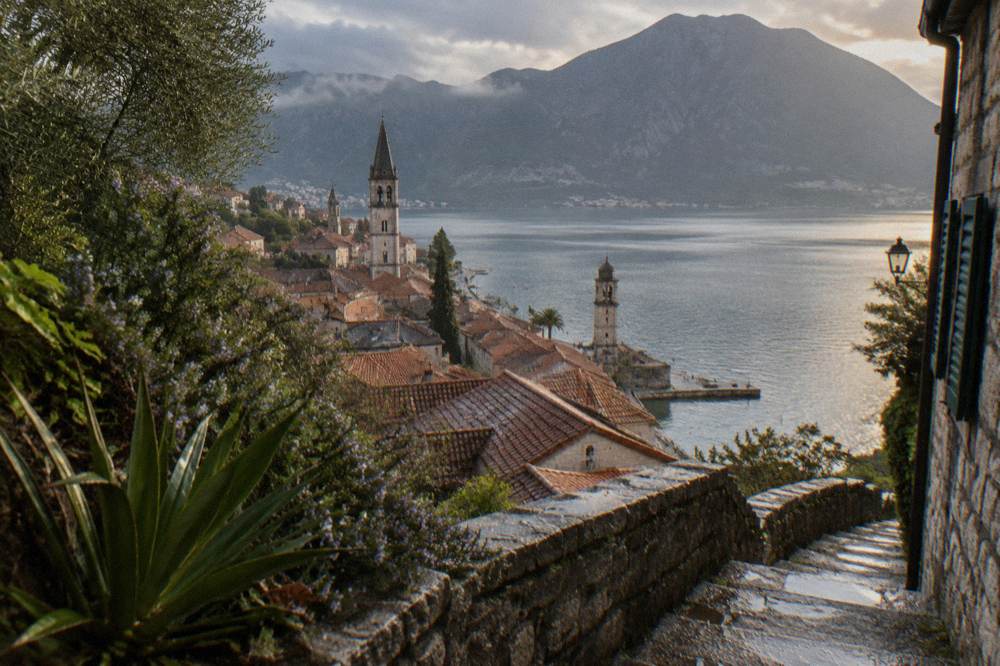
Early morning or late afternoon. Before 10:00 the promenade is quiet, the light comes low across the water, and the first island boats run with empty benches. After 16:00 the tour traffic drains away and the town returns to its residents. Between roughly 11:00 and 15:00 in July and August, Perast is at its most crowded, and the narrow shore street can feel like a corridor rather than a promenade.
The crowd pattern is driven by two external clocks. The first is the boat tour schedule out of Kotor: departures cluster around 09:00, midday, and early afternoon, so arrivals in Perast cluster 60 to 90 minutes after each. The second is the Dubrovnik coach traffic, which lands mid-day by road-logic. Neither clock cares about your preferences, but both are predictable, which means you can plan around them rather than being surprised.
Light matters as much as crowds. Photographers generally prefer the morning for shots from the waterfront across to the islands, with the sun behind the camera and the mountain faces lit. Late afternoon reverses the exposure and puts the islands partly in silhouette, which suits some compositions and ruins others. Mid-day light is flat and hard, the least flattering hour for the classic island view.
Season shifts the whole equation. In shoulder months, May, early June, late September, and October, crowd pressure drops sharply even at mid-day, and the town reads as what it is, a working small place with a spectacular address. The trade is weather risk: wind on the bay, the bura and the scirocco, can cancel or shorten boat runs in any month, and no operator guarantees the crossing. When wind cancels an island landing, Perast itself remains visitable by road, so the trip is rarely a total loss.
One more timing note worth knowing: Kotor's city walls now carry a 15 euro fee for non-residents, in force since 1 March 2025 per the municipality's own notice. Visitors combining Kotor and Perast on one day sometimes drop the walls climb on cost grounds and give that hour to Perast instead, which for a first visit is a defensible trade.
What Does It Cost To Visit Perast?
The town itself costs nothing to enter and walk, which surprises people expecting a ticketed old town. The real costs are the island crossing and entry, roughly 2 to 3 euros for the church and museum plus the boat fare, transport to get there, and food. A bus-and-walk visit can be done on pocket change beyond the fare; a private boat version runs to hundreds of dollars per group.
Breaking that down honestly: Perast has no gate, no walls fee, no entry ticket. The municipal charges that exist in the bay apply elsewhere, the Kotor walls being the obvious example at 15 euros. In Perast, your first spending decision is the island boat, and your second is lunch. Restaurants on the waterfront price for the view, and a fish lunch for two with wine lands at the upper end of the bay's restaurant range; the streets one row back are cheaper.
Transport is the variable with the widest spread. The bus fare is modest and paid locally, with no reliable fixed figure to print. Shared boat tours from Kotor start from $33 per person on this site's roster for the 2-hour Perast and island format. Private charters run from $389 per group for up to nine guests on a 3-hour Blue Cave and Perast itinerary, or from $342 per group for up to eight with another operator. Those per-group prices are the whole boat, not per person, and should not be divided.
For budgeting a whole Montenegro trip rather than one stop, the site's cost guide does the fuller arithmetic, including how tour prices distribute across boat, land, and multi-day formats. The short version for Perast specifically: it is one of the cheapest meaningful stops on the coast if you arrive by bus, and one of the more expensive if you arrive by private boat, and both are legitimate choices. If you're still weighing which format suits you, the side-by-side comparison of Montenegro seaside tours lines up boat trips, Perast stops, and multi-day coastal packages so you can judge the value directly.
What Are The Downsides Of Perast?
Three honest ones. Peak-season crowding on a physically narrow shoreline, a limited beach and activity offer for anyone who wants more than strolling and eating, and dependence on boats and weather, since the island, the main sight, is unreachable when wind stops the crossings. None of these sinks the visit; all of them shape when and how you should do it.
The crowding point deserves specificity rather than hand-waving. Perast's waterfront is a single street, and in July and August the combined flow of coach groups, boat tours, and independent visitors funnels along it. You cannot escape the crowd by walking a street over, because there is functionally only one street. The countermeasures are timing, arrive early or late, or season, come in shoulder months.
The limited-offer point matters for families and active travellers. Children tolerate a promenade and an island church for about an hour; there is no playground, no substantial beach, and no rental infrastructure comparable to Budva. Active travellers will find more satisfaction in the kayak and stand-up paddleboard tours operating on the bay, several of which pass Perast's shoreline, or in the region's bigger draws like rafting on the Tara. Perast rewards looking, not doing.
The weather dependency is structural. Everything that makes Perast distinctive, the islands, the crossing, the water view, sits at the mercy of wind. The bura and the scirocco each cancel boat runs on their own schedule, and no listing sells a guarantee of the crossing or of conditions inside the bay. If your entire Perast plan is the island, have a road-based fallback: the town itself, the museums, and lunch all survive a cancelled crossing. Wildlife here follows the same rule of no promises, and our guide to dolphin sightings in the Bay of Kotor explains what is actually known and when the odds are best.
A final small friction: Perast has no large car park, and in peak season drivers are regularly turned away. The bus, a tour, or a boat sidesteps the problem entirely, which is a quiet argument for the formats this site lists over the self-drive version of the trip.
The Verdict On Perast
Perast is worth visiting for the large majority of travellers who pass anywhere near the Bay of Kotor, and it earns roughly half a day. Its strengths, architectural completeness, the two islands, and a waterfront setting with no equal on the coast, are structural and permanent. Its weaknesses, crowds, thin activities, and weather-dependent boats, are all manageable with timing, and none of them changes the underlying answer.
Who should skip it? Travellers who dislike strolling as a primary activity, anyone whose whole trip falls in a windy window that kills the boat crossings, and visitors with only a single morning in Montenegro who would rather spend it inside Kotor's walls. That is a short list. Everyone else, couples, photographers, cruise passengers with an afternoon free, Croatia-based day-trippers, will get value from the stop.
The format choice follows from your constraints. Independent and slow: take the bus, arrive before the boats, and linger over lunch. Time-poor: take the 2-hour speedboat from Kotor and let the skipper compress the bay for you. Based in Dubrovnik: take the small-group day trip and accept the mid-day arrival as the price of the seat time. Each of those formats is bookable through the listings on this site, and each turns the same verdict into a working plan.
For everything the bay offers beyond Perast itself, from the Blue Cave to private charters, the site's guide to the best day trips from Kotor lays out the options, and the seasonal picture is covered in the best time to visit Montenegro. Montenegro Tours keeps the whole roster, and the pairing below pulls the three listings most relevant to a Perast-first plan.
Common Questions About Perast
Is Perast Worth Visiting?
Yes, for most travellers. Perast concentrates an intact baroque waterfront, two island churches, and the bay's most photogenic setting into a half-day visit. The caveats are July and August crowds, limited activities beyond strolling and eating, and island crossings that wind can cancel.
How Do I Get From Kotor To Perast?
By local bus along the shore road, with fares and timetables checked locally, or by boat. Shared speedboat tours from Kotor's City Park dock start from $33 per person for a 2-hour format covering Perast and Our Lady of the Rocks.
Can You Go On Our Lady Of The Rocks?
Yes. Boats cross from Perast's waterfront to the island, and the church and museum charge roughly 2 to 3 euros per person at the desk. The neighbouring island of Saint George is closed to visitors.
How Much Time Do You Need In Perast?
Two to three hours covers the promenade, the island crossing, and a museum or church stop, with time for a drink. Under ninety minutes reduces the town to a photo stop; a full day suits only travellers planning long meals and slow hours.
Is Perast Better In The Morning Or Afternoon?
Early morning or late afternoon. Tour boats and coach traffic peak between roughly 11:00 and 15:00 in high season, filling the single waterfront street. Morning light also photographs the islands better from the shore.
Can You Visit Perast Without A Tour?
Yes. The bus from Kotor runs there, the town has no entry fee, and the island boats sell crossings from the Perast waterfront directly. A tour mainly buys the crossing over the bay by speedboat and fixed timing.