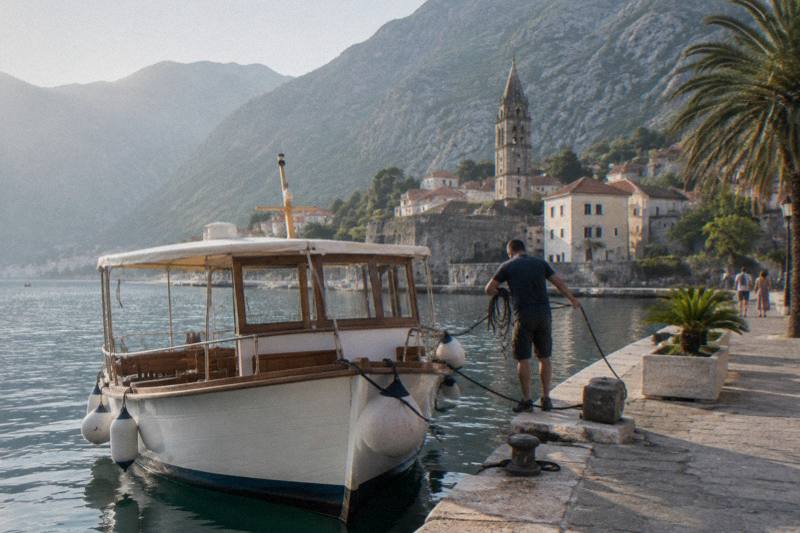
Can You Swim In The Bay Of Kotor?
Yes, you can swim in the Bay of Kotor: swim stops are built into most speedboat tours, kayak trips and private charters. Here is where, when and how the swimming actually works.
Can You Swim In The Bay Of Kotor?
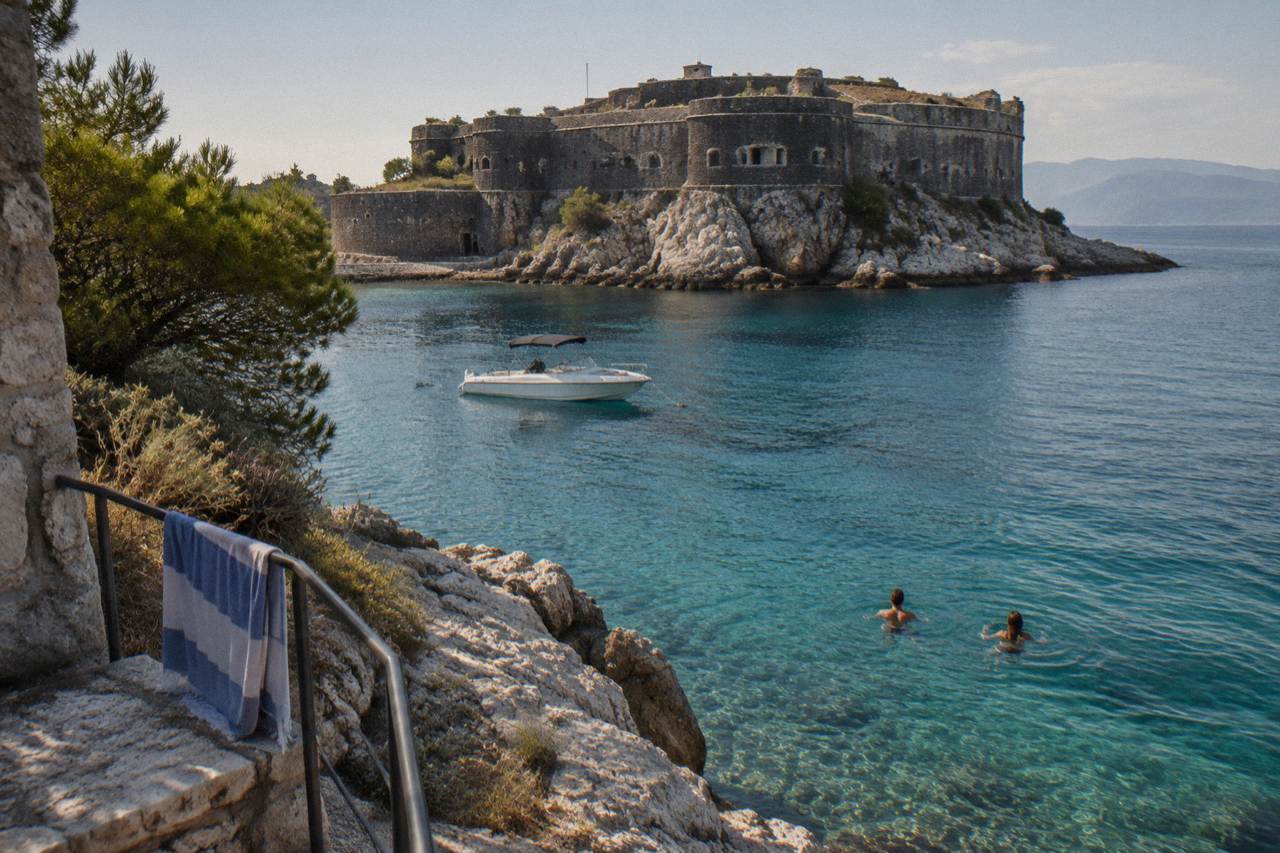
Yes, and swimming is one of the main reasons people book a boat trip here. Most speedboat tours from Kotor build in at least one swim stop, typically a 20 to 30 minute pause in a cove or cave where the crew anchors and guests get into the water. The catch is the weather: the bay's winds, the bura and the scirocco, can cancel or move a swim stop on any given day, so the tour, not the destination, is what makes the swimming reliable.
The question sounds simple, but it splits into three real ones people ask before booking: is the bay swimmable at all, where exactly do you get in the water, and what kind of trip gets you the best swim. The short answers are yes, in coves and caves reached mostly by boat, and usually a speedboat tour with a planned swim stop or a kayak tour along the shoreline.
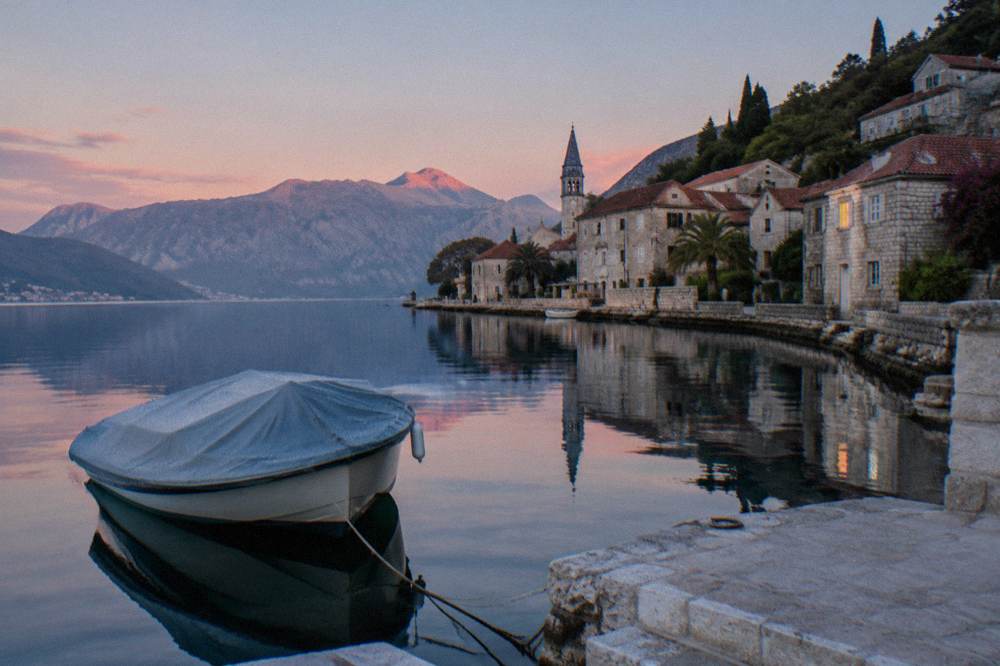
The Bay of Kotor, or Boka, is a fjord-like inlet of the Adriatic with steep mountains on three sides and open sea at its mouth. That geography shapes everything about swimming here. The water is calm on most summer mornings, the shoreline is rocky rather than sandy, and the most memorable swims happen in places you cannot walk to: the Blue Cave on the Lustica peninsula, coves below the cliffs, and quiet corners near Mamula island. The Blue Cave, Submarine Base and Our Lady of the Rocks tour from Aquaholic Speedboat Tours Kotor, from $43 per person and rated 4.8 from 5,099 reviews, is the standard example of the format: a roughly 3 hour loop from Kotor with the cave swim as the centerpiece stop when conditions allow. It is the featured tour across Montenegro Tours for this question, and for good reason.
Where Exactly Do People Swim In The Bay Of Kotor?
The swim stops cluster on the outer bay and the Lustica peninsula, not in the inner bay near the towns. Tours from Kotor typically run out past Perast and the Verige strait toward the open-sea side, where the Blue Cave and a string of rocky coves sit. In the inner bay, swimming happens off small pebble patches and concrete jetties rather than beaches, which is why nearly every serious swim here is part of a boat or kayak trip.
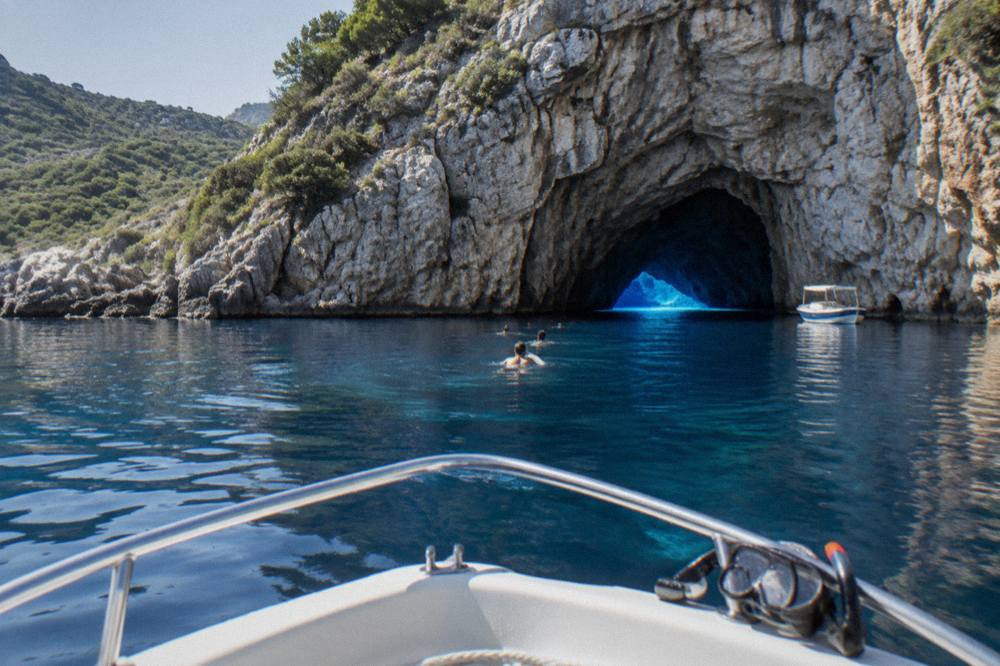
The Blue Cave, Plava spilja, is the famous one. It is a sea cave on the Lustica peninsula whose water glows blue when sunlight reflects through the submerged entrance. Since a navigation regulation published in the Official Gazette in late May 2026, motorized vessels are banned from entering the cave interior; boats anchor 10 to 20 meters outside and guests swim in, with operators providing life jackets and kickboards for the approach. The listing text for several Kotor tours states this plainly: the speedboat does not enter, guests reach the cave by swimming. That rule has effectively turned the Blue Cave into a swim stop by law, which is worth knowing before you book, because it means the cave visit depends on you being willing and able to get in the water.
Beyond the cave, tours stop in coves along Lustica's coast, below the islet of Mamula with its 19th century fortress, and occasionally in quiet corners of the outer bay. Inside the bay near Perast and Kotor itself, the swimming is real but more casual: locals jump off jetties, and a few small pebble spots serve as beaches. The water is deep quickly, the shore is rock, and there is no long shallow shelf like on a sandy beach.
| Swim location | How you get there | What the swim is like |
|---|---|---|
| Blue Cave, Lustica peninsula | Speedboat tour from Kotor, swim in from anchor | Open-water swim of a short distance, cave interior, buoyant deep water |
| Lustica coves | Boat tour or private charter | Sheltered rocky coves, calm in normal summer weather |
| Mamula island area | Boat tours passing the islet | Deep water below the fortress, usually a brief stop |
| Perast shoreline | Boat tour stop or walk from Perast | Small pebble patches, shallow near shore |
| Kotor and Dobrota jetties | On foot | Locals' swimming spots, deep water off concrete platforms |
Is The Water In The Bay Of Kotor Clean Enough To Swim In?
This site makes no water-quality claim, and no listing on the roster sells one. What can be said is factual: the Boka is a normal Adriatic bathing environment in which swimming is an organized, mainstream tourist activity, and the swim stops operators use are the ones their crews judge acceptable on the day. For certified water quality, official bathing-water reports are the right source, not a tour description.
The honest framing matters here. Tour listings describe swim stops, not laboratory results. Montenegro's coast is monitored under standard bathing-water programs, and anyone who wants the data can look at official monitoring results for the Kotor municipality rather than relying on marketing copy. What the listings do tell you is practical: tours that swim in the Blue Cave provide life jackets and kickboards, the water at the cave is deep, and the swim is a short distance from the anchored boat to the cave mouth. If a reader's real question is "will I enjoy getting in," the better indicators are sea state, wind and the season, all covered below, plus our page on Blue Cave sea conditions and timing.
One more practical note: the inner bay is a working body of water. Kotor is an active cruise and cargo port, Perast is busy with small boats in summer, and the Verige strait carries ferry traffic. That is another reason swimmers in the know favor the outer bay and the Lustica side, reached by tour, over the water directly off Kotor's waterfront.
When Is The Swimming Season In The Bay Of Kotor?
The practical swim season for tours runs roughly May to October, matching the boat-tour season, with July and August as the core months when nearly every departure includes its swim stop. Outside that window boats still run on good days, but swim stops become conditional, and by late autumn and winter the bay is a sailing and sightseeing destination rather than a swimming one. Tour listings carry current dates, so check the listing for the season's start and end.
Seasonality on the Boka is driven less by heat than by wind. Summer brings stable high-pressure weather and calm mornings, which is when cave swims and cove stops happen on schedule. From spring and through autumn the two regional winds matter: the bura, a gusty northeast wind that funnels down from the mountains, and the scirocco, a steadier southeasterly that pushes swell into the bay. Both are recurring Adriatic patterns, stronger outside peak summer, and either can cancel a Blue Cave swim or a whole departure. Operators state this openly and reroute to sheltered stops or refund per their cancellation terms; see the listing's policy before booking.
A seasonal pattern worth knowing: the same winds that cancel swims also clear the calendar and leave the bay quieter. On windy days tours cluster in the inner bay and the Our Lady of the Rocks stop, so a "cancelled swim" often still produces a full sightseeing trip. Travelers who treat the swim as the whole point of the day should build in a spare day in Kotor rather than expecting a same-day retry.
| Period | Swimming in the bay |
|---|---|
| May to June | Tour season underway, swim stops running, water fresh, occasional unsettled days |
| July to August | Core swim months, calm mornings typical, busiest boats and towns |
| September to early October | Warm sea, thinner crowds, first autumn systems can interrupt stops |
| Late October to April | Sightseeing season; swim stops rare and conditional, check the listing |
Which Tours From Kotor Actually Include A Swim Stop?
Nearly every Blue Cave tour from Kotor does, because the 2026 rule means the cave is reached by swimming. The roster's bay boat tours, from $33 to $57 per person for shared speedboats, all list swim stops or swim-in cave access; the differences are duration, group size and what else the route includes, such as Mamula, the submarine tunnels and Our Lady of the Rocks. Private charters add flexibility on where and how long you swim.
The featured tour on this page, the Blue Cave, Submarine Base and Our Lady of the Rocks tour by Aquaholic Speedboat Tours Kotor, is the benchmark: roughly 3 hours, from $43 per person, 4.8 from 5,099 reviews, departing Kotor. Its closest rival, the Blue Cave swim tour by Montenegro Submarine and Speed Boat Tours, is about 3 to 3.5 hours from $40 per person, rated 4.7 from 4,903 reviews, and names the swim in its own title. A longer option, the full tour with war tunnels by Hawai Boat Tours, runs 3 to 7 hours from $38 per person, 4.7 from 2,533 reviews, and can pair the cave swim with more coastline.
Pickup is worth flagging honestly: for most of these Kotor departures, pickup is not part of the listing, and the boats leave from the Kotor waterfront. One verified detail from operator pages: the Perast speedboat departure point is City Park, about 200 meters from the Main Gate of the Old Town, a short flat walk from the Port of Kotor. Cruise passengers can read our Kotor cruise port guide for the walk from ship to dock.
Can You Swim In The Bay Of Kotor From The Shore, Without A Boat?
Yes, but modestly. The shoreline inside the bay is steep and rocky, so shore swimming means small pebble patches, concrete jetties and a few informal spots around Kotor, Dobrota, Perast and Muo rather than beaches. It is a legitimate way to swim, free, and pleasant on a calm morning, but it gives you none of the cave and cove swims that define the Boka, and you should swim only where locals do, off designated platforms.
Around Kotor itself, the swimming spots are practical rather than picturesque. Concrete platforms and jetties along the Dobrota stretch of shore are where families swim in summer, and the water deepens within a few strokes. In Perast there are narrow pebble corners either side of the waterfront. None of this is a beach day in the sand-and-sunbed sense; for that, most travelers take a bus or taxi to the Budva riviera. If your base is Kotor and your time is short, a morning dip off a jetty plus an afternoon boat tour is a realistic and popular combination.
Two safety points apply to shore swimming anywhere in the bay. Boat traffic is constant in summer, so swim only from spots clearly used for swimming and never across channels. And the water is deep quickly, which is fine for confident swimmers but deserves caution with children; a cove reached by kayak or tour boat is often the easier family swim than the rocks off Kotor.
Is Kayaking A Good Way To Swim In The Bay Of Kotor?
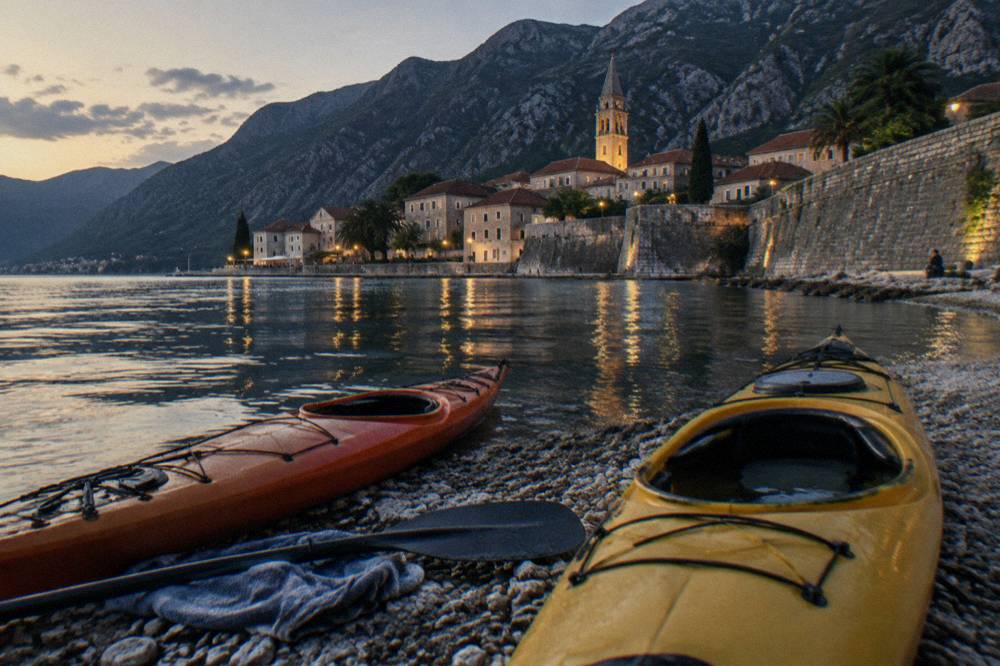
Kayaking is arguably the best way, because under the 2026 navigation rule only non-motorized craft may enter the Blue Cave interior, so kayakers can glide inside where motorboats cannot follow. A kayak tour also lets you stop and swim at will along the shore, and the roster's guided trips from Kotor and Budva cost $40 to $136 per person, combining paddling with cliff jumping and snorkel-style pauses.
The Kotor Bay kayak tour by KBT Active Tours, about 3.5 hours from $40 per person and rated 4.8 from 137 reviews, includes cliff jumping and swim pauses along the shoreline west of the Old Town. On the open-sea side of Lustica, the Blue Cave kayak and snorkel adventure by Montenegro+, about 5 hours from $136 per person with pickup per the listing and rated 4.7 from 96 reviews, is the trip that exploits the new rule directly: kayaks are among the only craft allowed inside the cave, and this tour paddles out to it. It departs from Kotor at Skaljari. Once you've paddled the bay, our guide to what Montenegro is best known for covers the canyons, mountains, and cliff monasteries waiting further inland.
For a budget middle ground, the Budva paddle board or kayak cave tour by EDDY, 3 hours from $50 per person and rated 4.8 from 835 reviews, runs coastal cave swims from the Budva side. Our comparison of private versus group touring helps if you are deciding whether a shared kayak group or a private guide fits your trip better.
What Is The Blue Cave Swim Actually Like?
It is a short open-water swim from an anchored speedboat into a sea cave whose water glows blue in the right light. Boats anchor 10 to 20 meters from the entrance, crew hand out life jackets and kickboards, and you swim in and float inside for a few minutes before swimming back. It is the single most booked swim in Montenegro, and since the motorized-entry ban it is the only way anyone sees the cave interior.
Set expectations honestly. The cave is a chamber, not a cathedral; the visit inside is measured in minutes because boats rotate through. The swim itself is a short distance in deep water, which is why operators provide flotation. Sea state decides quality: on a calm day with sun at the right angle the blue effect is striking, on a grey or choppy day the cave is still worth the stop but less luminous, and on a rough day the stop is skipped. No tour sells a guarantee, and the honest listings say so. Our longer treatment is in can you swim in the Blue Cave, which covers the same water from the cave's side.
What to bring is simple: a swimsuit worn under clothes, a towel, water shoes if you dislike rocks, and dry protection for a phone. Tour boats carry minimal storage. If the cave stop is cancelled for wind, most operators substitute sheltered swim stops in the bay and the Our Lady of the Rocks visit still happens; the exact rebooking and refund terms are on each listing, and that is where to check them rather than in any guide, including this one.
Can You Swim At Our Lady Of The Rocks Or Near Perast?
Not at the island itself. Our Lady of the Rocks is a church islet with a small museum, and visits are about the church, the museum and the view, with a separate small entry fee for those, typically a few euros, paid on site. Swimming happens in the water around Perast's shoreline instead, and some tours add a brief swim stop in the straits near the town when the outer bay is too rough for the cave.
The distinction matters because many travelers assume the two Perast islands are beach stops. They are not; Gospa od Skrpjela is a built islet with a paved landing, and St George opposite is closed to visitors. Boats dock, guests walk the island, and the swim, if there is one, happens elsewhere on the route. Perast the town does have its narrow pebble patches, and a walk-plus-swim morning in Perast before a boat afternoon is a common pattern; our guide to Kotor to Perast by boat or bus lays out both ways of getting there.
The nearby swim alternative that tours use is the stretch of water between Perast and the Verige strait, which is sheltered from open-sea swell. On days when the Lustica side is blown out, this is where the swim stop lands. It is a lesser-known pattern worth knowing: if your priority is the cave specifically, book early in your stay so a weather retry is possible, and if your priority is simply swimming in the bay, any departure day works because the inner-bay fallback stop still delivers a swim.
What Should You Know About Wind, Swell And Cancellations?
Boat trips in the bay are cancelled or rerouted for wind and swell, plainly and often, and the two winds responsible are the bura and the scirocco. The bura is a gusty northeast wind strongest outside summer; the scirocco is a steadier southeasterly that raises swell, more common in spring and autumn. Either can end a Blue Cave swim, move a stop inside the bay, or cancel a departure outright, with refunds or rebooking per the listing's terms.
This is not fine print; it is the main variable in your swim. The Blue Cave sits on the open-sea side of Lustica, exposed to swell in a way the inner bay is not, so it is the first stop cut and the last restored. Morning departures generally have the calmest water, which is why the standard tour schedule clusters around 09:00, 12:00 and 15:00 departures. If your stay is short, book the earliest slot on your first full day and keep an afternoon or next-morning slot in reserve. Guests with cruise-ship time constraints should read our page on whether you need an excursion in Kotor, which weighs independent walking time against a timed boat departure.
| Condition | Typical effect on swimming |
|---|---|
| Calm summer morning | Full route runs, Blue Cave swim stop as scheduled |
| Afternoon breeze | Cave usually still possible, choppier swim, more spray |
| Scirocco swell | Outer-bay stops cut, swim moved to sheltered inner-bay water |
| Bura gusts | Departure may cancel or shorten entirely, per the listing's terms |
| Off-season rough day | Sightseeing-only routes; treat any swim as a bonus |
Do Private Boat Tours Give You More Swim Time?
Yes, and that is their main selling point for swimmers. On the roster, private options from Kotor include a boat for up to 9 guests from $389 per group, a Hawaii Boat Tours Kotor private Blue Cave trip from $342 per group for up to 8, and a flexible VIP charter from $169 per person as labelled. A private skipper adapts the route to the day's wind and lingers where the group wants a longer swim, which shared tours cannot do.
The price gap is real but the arithmetic changes with group size. A $389 per group boat split across seven or eight people lands close to shared-tour pricing, with the route and pace under your control. The trade-offs are equally plain: private boats still obey the same navigation rules, so no private speedboat enters the Blue Cave either, swim-in access is universal, and private trips cancel for the same winds. Our guide to choosing a Montenegro tour operator covers how to read a listing for insurance, registration and the professionalism markers that matter more at sea than on land.
For swimmers specifically, the decision comes down to time in the water. Shared 3 hour tours give you one swim stop of roughly 20 to 30 minutes. A private 3 or 4 hour charter can give you two or three stops, a longer cave pause and a cove the skipper knows is sheltered that day. If swimming is the headline reason for the trip, that flexibility is what the premium buys.
Common Questions About Swimming In The Bay Of Kotor
Can You Swim In The Bay Of Kotor?
Yes. Swimming is a standard part of Bay of Kotor boat tours, most of which include a planned swim stop at the Blue Cave or a cove, plus informal swimming from jetties and pebble spots around the towns. The 2026 navigation rule means the Blue Cave is reached by swimming from an anchored boat, so a willingness to get in the water is part of the experience.
Is swimming in the Blue Cave guaranteed on a tour?
No. Wind and swell decide on the day, and operators cancel or move the stop when the outer bay is rough, often substituting a sheltered swim stop inside the bay. Check the listing's cancellation and refund terms before booking.
Can you enter the Blue Cave by boat?
No. Motorized vessels are banned from entering the cave interior under a navigation safety regulation in force since late May 2026. Boats anchor 10 to 20 meters outside and guests swim in, with life jackets and kickboards provided.
Do you need to be a strong swimmer?
The standard cave swim is a short distance in deep water with flotation available, so most confident swimmers manage it. If you prefer not to swim in open water at all, a kayak tour or a shore swim off a jetty is the better fit.
Are there beaches for swimming in Kotor itself?
Not in the sandy-beach sense. The shoreline is rocky, so swimming in Kotor and Dobrota happens from concrete platforms, jetties and small pebble patches. Sandy beach days mean the Budva riviera.
What does a swim-stop boat tour from Kotor cost?
Shared speedboat tours on the roster run from $33 to $57 per person, with Blue Cave swim tours clustered at $38 to $45. Private options run from $342 to $389 per group depending on the boat and party size, as the listings label them.