What Is Montenegro Most Famous For?
Montenegro is famous for the Bay of Kotor, the Tara River canyon, dramatic mountains and cliff monasteries. Here is what each one actually delivers, with real tour prices.
What Is Montenegro Most Famous For?
Montenegro is most famous for four things: the Bay of Kotor, a drowned river valley walled in by mountains that cruise ships squeeze into; the Tara River canyon, 78 km long and up to 1,333 m deep; compact alpine national parks such as Durmitor; and Ostrog, a monastery built into a sheer cliff face. Each of these is bookable as a day tour, most from $25 to $120 per person, and each is reachable from the coast in a single long day.
That is a lot of recognition for a country this small, and the fame is recent in tourist terms. Two decades ago the bay was a quiet corner known mainly to yacht crews and overland travellers; today Kotor alone records cruise passenger traffic approaching 500,000 in the first eight months of a peak year. The scenery did not change. Access did.
This article walks through what each famous thing actually is, what it costs to see it, and which parts live up to the photographs. The short version: the bay and the canyon fully earn their reputations, the mountains are better than most visitors expect, and the monastery is unlike anything else in the region.
Why Is The Bay Of Kotor So Famous?
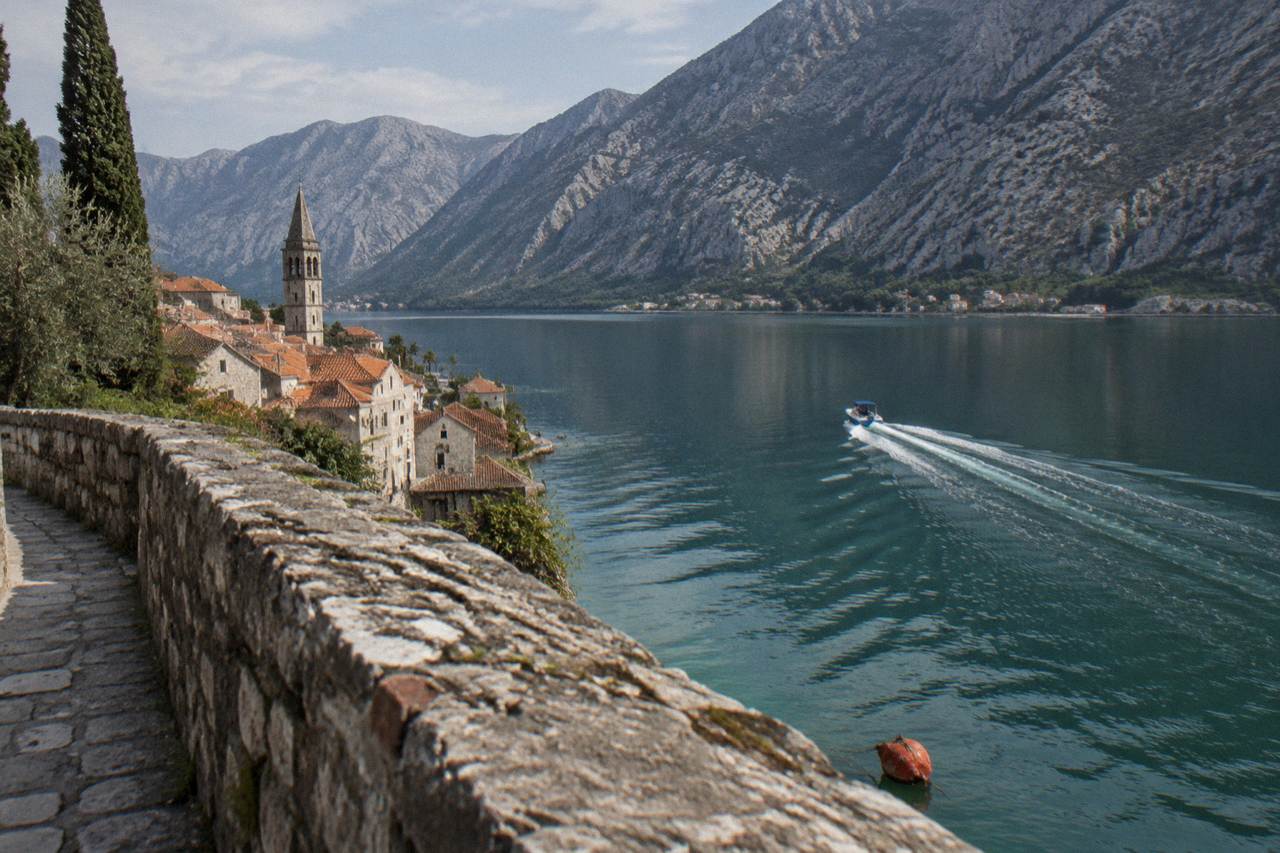
The Bay of Kotor is famous because it looks like a fjord but is technically a ria, a drowned river canyon, ringed by towering limestone mountains that drop almost directly into the water. Medieval walled towns sit on its shores, an artificial island with a church sits off Perast, and a submarine base and sea caves sit at its entrance. It is the single most visited place in the country. The bay's collection of small towns, Kotor, Perast, Risan and Herceg Novi, each sit within a short boat ride of each other, which is unusual; most coastlines this dramatic have no towns at all.
The bay's fame rests on the contrast. Kotor's Old Town is a compact grid of stone squares inside walls that climb the hillside to San Giovanni Fortress, and the entrance fee for the walls is EUR 15 per visitor, in effect since 01/03/2025, with Montenegrin residents exempt, per the municipality's own notice. Above the town, the mountains rise in near-vertical layers. The effect is what makes first-time visitors stop talking mid-sentence when a cruise ship rounds the Verige Strait at dawn.
The signature way to see the bay is by boat, and the roster of speedboat tours out of Kotor is deep. The Blue Cave, Submarine Base and Lady of the Rocks tour from Aquaholic Speedboat Tours Kotor runs roughly 3 hours from $43 per person and rates 4.8 from 5,099 reviews, a genuinely large review pool. A near-identical route from Montenegro Submarine and Speed Boat Tours runs from $40 per person at 4.7 from 4,903 reviews. Both bundle the bay's three headline stops, the Blue Cave, the Our Lady of the Rocks island church and the tunnels of a former submarine base, into one morning.
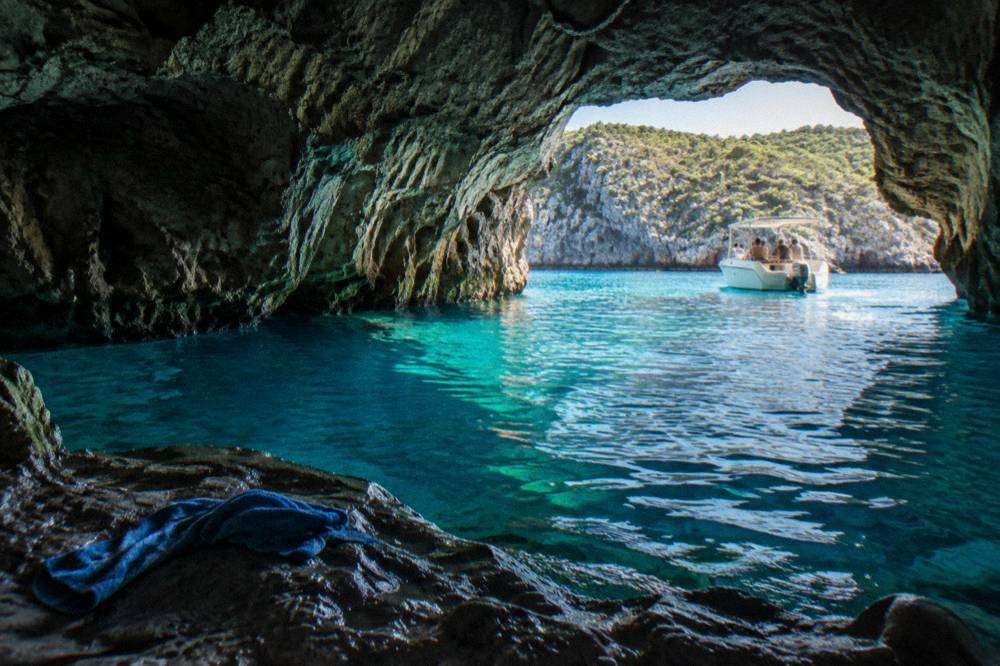
Two things temper expectations honestly. The Blue Cave swim depends entirely on sea state; boats do not enter the cave, guests swim in from an anchored boat, and trips are cancelled outright when the bura wind or swell makes the entrance unsafe. And the cave itself is a short experience, roughly 20 to 30 minutes, inside a longer boat day. The bay, not the cave, is the reason the trip works.
For readers weighing the bay against other coastal options, the things to do in Kotor guide breaks down how to split a visit between the walls, the water and the towns, and the Blue Cave Swim, Lady of the Rocks and submarine tunnels tour covers the near-identical route if the first departure sells out.
Is The Tara River Canyon Really Europe's Deepest?
Yes, by the figures that are actually measured: the Tara Canyon runs 78 km from the mouth of the Bistrica to Scepan Polje and reaches a greatest depth of 1,333 m between Obzor and Stuoc, which makes it the deepest river canyon in Europe. The Tara itself is Montenegro's longest mountain river at 144 km.. Those numbers come from the National Tourism Organisation of Montenegro, not from tour marketing copy.
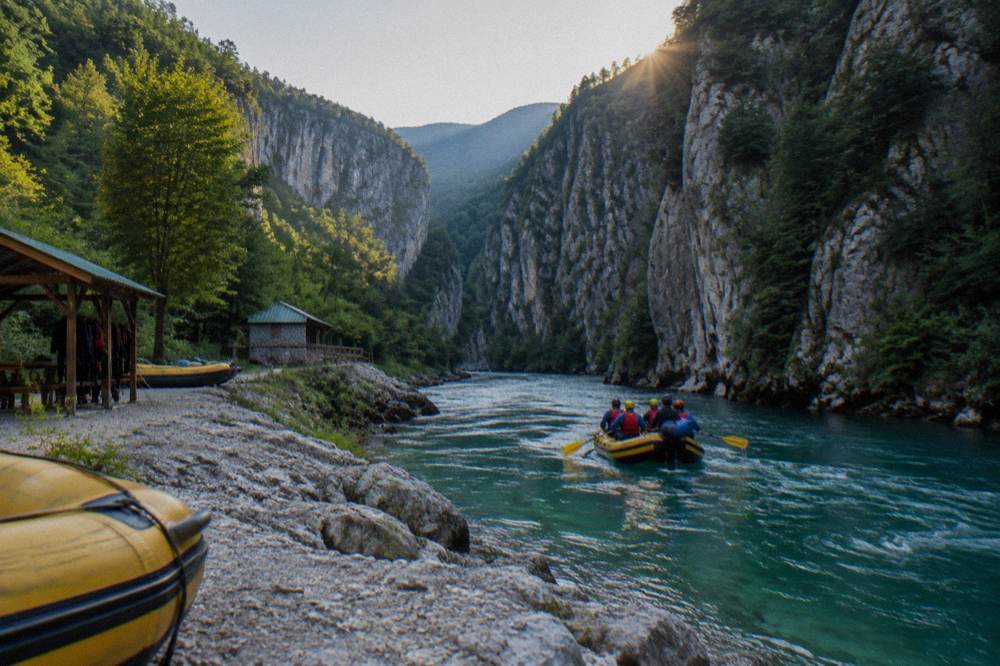
The canyon sits inside Durmitor National Park in the country's north, and it is the part of Montenegro that most surprises visitors who came for the coast. The river is drinkable along much of its length, a fact locals mention with pride, and the rafting season runs April to October, wildest during the April and May snowmelt when the rapids run at Class III with water near 10 to 14 degrees. By July and August the water drops and warms to around 20 degrees, which makes summer trips the beginner-friendly option.
The listings on this site cover the range. Rafting Tara North Challenge runs a 3-hour trip with park entry included from $95 per person, rating 4.8 from 388 reviews and departing from Zabljak. Rafting Republic Wild River offers a 4-hour canyon trip from $56 per person from Pljevlja at 4.8 from 138 reviews. At the far end, a full Black Lake and Tara Canyon day trip from Podgorica runs 11 hours for $277 per person with pickup stated on the listing, at 4.9 from 43 reviews, a small pool but consistently strong.
One honest note on expectations: the deepest sections of the canyon are seen from the river between rapids, at water level, where the walls rise almost vertically but the famous 1,333 m figure spans rim to river in places you view in sections rather than as one framed panorama. The Djurdjevica Tara Bridge, roughly 25 km from Zabljak and free to visit, is where the canyon delivers its postcard view, and a Tara Bridge zip line trip article covers how the two combine. The bridge crossing itself costs nothing; the zip line is a separate listing from $62 per person.
What Are Montenegro's Mountains And National Parks Known For?
Montenegro's mountains are known for packing five national parks into a country smaller than the state of Connecticut, with Durmitor's high alpine massif and Black Lake as the headline, plus Lovcen, Biogradska Gora, Skadar Lake and Prokletije. Entry is cheap by European standards, EUR 3 to 5 per person per day, and an annual pass covering all five parks costs EUR 13.50. The official national parks price list is the source for those figures, and children under 15 enter free.
What makes the parks famous among people who have actually been is proximity. Zabljak, the base town for Durmitor at 1,456 m elevation, sits within an 80 km scenic loop road, the Durmitor Ring, which passes the highest paved pass in the country, Sedlo. Black Lake, a glacial lake a short walk from Zabljak, is the single most photographed mountain spot in Montenegro. The lake circuit is flat and walkable, and the park's daily entry ticket includes the visitor centre and the educational paths.
If the canyon and the peaks together sound like your trip, one question settles it: would you rather ride the rapids or walk the lake? Both are bookable, most listings let you cancel free before the start, and you can reserve now and pay later on many of them.
| National park | Known for | Daily entry | Best fit |
|---|---|---|---|
| Durmitor | Black Lake, high peaks, Tara Canyon | EUR 5 | Hikers, rafters, 2+ days |
| Lovcen | Mausoleum at 1,657 m, serpentine road, Njegusi village | EUR 3 | A day trip from the coast |
| Skadar Lake | Pelicans, island monasteries, wine villages | EUR 5 | Boat trips, birdwatching |
| Biogradska Gora | One of Europe's last primeval forests | EUR 4 | A quiet half day |
| Prokletije | Albanian Alps, wildest and least visited | EUR 3 | Serious hikers |
Lovcen deserves its own mention because of how it is reached. The road from Kotor to Cetinje climbs the famous serpentine, a wall of tight switchbacks with the bay below, and seasonal one-way traffic windows apply from late May to mid October: uphill in the morning, downhill in the late afternoon. The alternative is the Kotor to Lovcen cable car, whose post-season adult return ticket is EUR 20 from 01/10/2026 per the operator. The park recorded over 123,000 adult visitors by end-July in a recent season, revenues up nearly 30 percent year on year, so the quiet-mountain reputation is starting to fray in August.
Why Is Ostrog Monastery Famous?
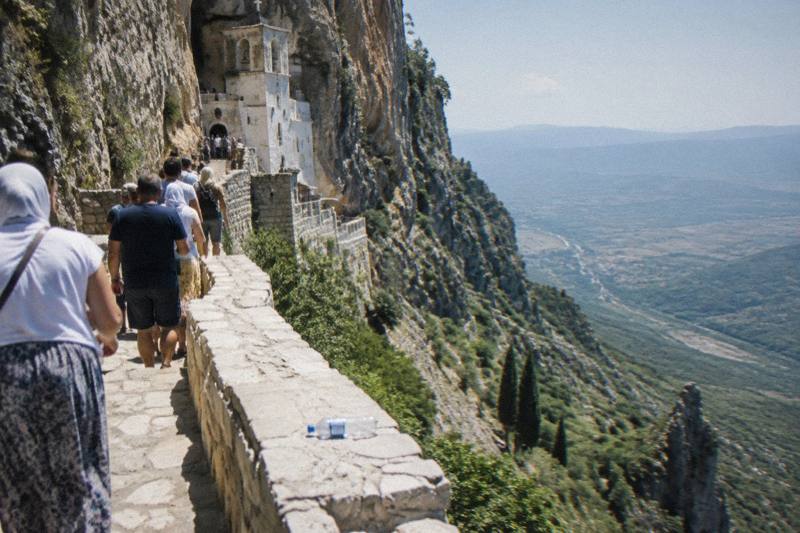
Ostrog Monastery is famous for being built into a sheer vertical cliff face high up a mountainside, the white buildings appearing to hang from the rock itself. It is the most important pilgrimage site in the Balkans, dedicated to Saint Basil of Ostrog, entry is free, and it draws visitors of all faiths year round. Tours from the coast run from $123 to $136 per person. The dress code is strict: shoulders and knees covered for everyone, with wraps sometimes available at the entrance.
The monastery is split into a Lower Monastery at road level and the Upper Monastery carved into the cliff, reached by a steep path or access road from the parking area. The setting is the reason photographs of Montenegro so often include it; there is nothing else in the region that looks remotely like it, and the approach, when the Upper Monastery first appears as a white smear on grey rock, is the moment most visitors remember.
Access is the practical catch. There is no direct public bus, so visitors arrive by rental car, taxi or organized tour. Two listings handle it from different starting points: Fine-Car Doo runs a 4-hour tour with pickup from Podgorica at $136 per person, 4.9 from 37 reviews, and Natour Montenegro covers Ostrog plus Zeta Nature Park in a 7-hour trip from $123 per person with a perfect 5.0 from a small pool of 27 reviews. Longer coast departures bundle Ostrog with Durmitor in 13-hour days from $119 to $120 per person.
What Is Montenegrin Food Famous For?
Montenegrin food is famous for its split personality: cured ham and cheese from the mountain villages around Njegusi, lake fish and river trout inland, and Adriatic seafood on the coast, with the Njegusi prsut ham and Kotor Bay mussels as the two names travellers actually remember. Food tours that assemble the highlights run from $97 to $217 per person, and a tasting stop often rides along on jeep and day tours. The cuisine is rustic rather than refined, and that is most of its appeal.
Njegusi, the mountain village on the road between Kotor and Cetinje, is the shorthand answer. Its smoked prsut and cheese appear on nearly every Montenegrin menu worth the name, and day tours that cross Lovcen almost always stop there. On the coast, mussels and oysters from the bay's fish farms around Perast and Dobrota are the local claim, served the same afternoon they are harvested. The wider set of guides lives on Montenegro Tours.
The food listings on this site cluster around Kotor. Miro and Sons, an operator recommended by Rick Steves, runs a 3-hour food tour at $160 per person, 4.9 from 60 reviews. GoBaloo's jeep tour to a hidden stone village with food tasting runs from $97 per person with pickup stated on the listing, 5.0 from 58 reviews. At the premium end, a private cooking class with lunch and an Old Town guided tour runs 4 hours for $217 per person, a perfect rating from 42 reviews.
Which Famous Towns Should You Not Miss?
Kotor, Perast, Budva and Cetinje are the four towns Montenegro is famous for, and they cover the full range: Kotor's walled medieval core, Perast's baroque waterfront and island church, Budva's resort energy and its genuinely ancient Old Town, and Cetinje's old royal capital status stuffed with museums. All four sit within 90 minutes of each other. Sveti Stefan, the islet-hotel near Budva, is the fifth name, famous as a photograph rather than a visit, since the island itself is an exclusive resort with no general day access, only organised guided tours.
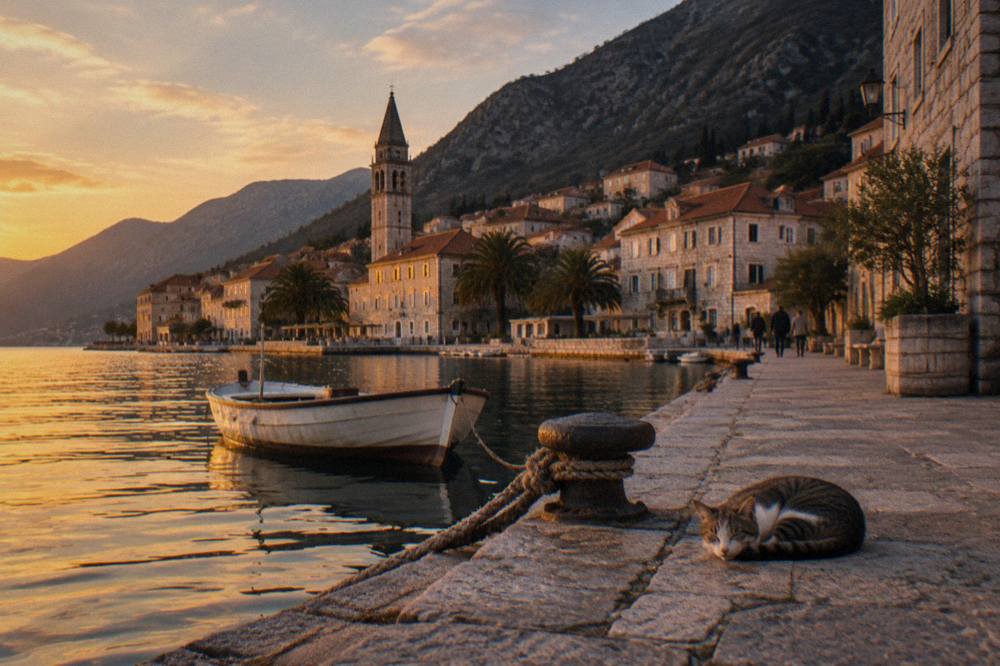
Kotor and Perast work as a pair, and most visitors do them in one day, often by boat. The Kotor to Perast comparison guide works through whether the boat or the bus serves you better; the short answer is that the boat stops at Our Lady of the Rocks, the artificial island whose church and museum charge roughly EUR 2 to 3 entry at the on-site desk, payable separately from any boat fare.
Budva is the country's tourism engine, and its Old Town is genuinely old, predating most Adriatic rivals. Its Citadel charges admission in the EUR 3.50 to 5 range depending on the season, and the town serves as the departure point for kayak and dive trips along the coast's caves. Cetinje, by contrast, is quiet: the former royal capital holds the national museum complex, whose collective ticket including the Njegos Mausoleum costs EUR 20, and it pairs naturally with Lovcen.
| Town | Famous for | Realistic time needed | Honest note |
|---|---|---|---|
| Kotor | Walls, medieval Old Town, cruise port | Half a day plus walls | Crowded on cruise days |
| Perast | Baroque waterfront, island church | 2 to 3 hours | Tiny, done by mid afternoon |
| Budva | Beaches, Old Town, nightlife | A day or a base | Busy in July and August |
| Cetinje | Museums, royal history | Half a day | Quiet, some museums close Mondays in parts of the season |
| Sveti Stefan | The postcard islet | A viewpoint stop | Island access is resort tours only |
When Is The Best Time To See The Famous Sights?
The best time to see Montenegro's famous sights is May, June, September and early October: sea and lake tours run at full schedule, the Tara has reliable water, national park trails are open, and the July-August cruise and beach crowds have not arrived or have left. July and August deliver the warmest water and the fullest schedules but also peak crowding in Kotor and Budva. Winter belongs to the mountains. The rafting season specifically runs April to October, wildest during the snowmelt.
The crowd mechanics are worth understanding before booking. From May to the end of September in a recent season, Port of Kotor recorded 380 scheduled cruise calls across 153 days, with at least three ships in port simultaneously on 78 of them. That means most summer days share Kotor's lanes with several thousand day visitors between roughly 9 am and 5 pm. Early morning and evening are still quiet, and the towns empty beautifully after the ships leave.
The seasons rotate the country's famous faces. Spring belongs to Skadar Lake, when the water is high, pelicans nest and the Crmnica wine villages hold their tastings. Summer is the bay and the beaches. Autumn is Durmitor and Lovcen, when the crowds thin, the cable car drops to post-season pricing and the Tara runs quiet with rising autumn levels. Winter is Zabljak, where the ski season typically runs from mid December to early April, snow permitting. The site's best time to visit guide works through the trade-offs month by month.
| Season | Best for | Watch out for |
|---|---|---|
| Spring | Skadar Lake, empty towns, green mountains | Boat schedule still building, cool sea |
| Summer | Bay boat tours, beaches, everything open | Cruise crowds, heat inland, full boats |
| Autumn | Durmitor, Lovcen, rafting with rain-fed water | Shorter days, some closures from late October |
| Winter | Zabljak skiing, Ostrog without crowds | Coastal boat trips largely stop, mountain roads |
Can You See The Famous Sights On One Trip?
Yes, comfortably in a week, tightly in four days. The Bay of Kotor sights need two days, the north needs two, and Ostrog or Cetinje add a half day each. A realistic first itinerary is two nights in Kotor for the bay and Perast, then two nights in Zabljak for Durmitor and the Tara, returning via Ostrog. Multi-day guided trips from $1,099 to $2,353 per person cover the same ground without a rental car. Distances are short; the whole country is driveable end to end in under four hours.
The do-it-yourself version is easy by Balkan standards. Roads are decent, signage is clear, and the one stretch that intimidates drivers, the Kotor serpentine, can be skipped using the cable car or the newer tunnel routes. Rental cars crossing into Croatia from Montenegro need a Green Card insurance certificate and explicit cross-border permission in the contract, which matters for anyone combining Dubrovnik with the bay; the site's Montenegro border crossing guide covers the paperwork.
For travellers who prefer a guided sweep, the multi-day listings run from G Adventures' 6-day medieval towns trip at $1,099 per person through an 8-day comfortable Heartland itinerary at $2,229 per person. These are small-pool or new listings, so read the itineraries closely rather than leaning on review volume: the G Adventures departure carries a single review, too few for any rating claim.
The one-week structure most first-timers land on is this: Day 1 and 2 in Kotor, walls plus a speedboat day on the bay; Day 3 Perast and Cetinje or Lovcen by car or tour; Day 4 drive north with an Ostrog stop; Day 5 and 6 Durmitor, Black Lake and a Tara rafting morning; Day 7 return to the coast. It covers all four of the country's famous things without a single bruising travel day.
Common Questions About Montenegro's Famous Sights
What Is Montenegro Most Famous For?
Montenegro is most famous for the Bay of Kotor, the Tara River canyon at 78 km long and up to 1,333 m deep, its compact mountain national parks, and the cliff-built Ostrog Monastery. Kotor's walled Old Town and the Perast island church are the two most photographed sights.
Is Montenegro Or Croatia More Famous?
Croatia is far more famous globally, with Dubrovnik and Split as household names. Montenegro's fame is newer and narrower, centred on the Bay of Kotor, but visitors often report the same scenery with thinner crowds and lower costs, which is why the Dubrovnik day-trip route across the border is itself a well-known excursion.
What Is The Most Beautiful Part Of Montenegro?
The Bay of Kotor at dawn from the water, and the Tara Canyon from Djurdjevica Bridge, are the two moments most consistently named. Both are accessible without heavy hiking: the bay by a 3-hour speedboat tour from $43 per person, the bridge free by car or on a Durmitor day tour.
Is Montenegro Famous For Anything Besides Scenery?
Yes: Njegusi smoked prsut and cheese, Kotor Bay mussels and oysters, the country's honey and rakija, and its history as a tiny kingdom and later socialist republic, preserved in Cetinje's royal museums. The five national parks and the pelican colonies of Skadar Lake add a wildlife claim.
How Many Days Do You Need For The Famous Sights?
Four days covers the bay, Perast, a rafting morning and Ostrog on a tight schedule. A week is comfortable and adds Cetinje, Lovcen and Black Lake. The Montenegro itinerary guide lays out day-by-day versions for both lengths.
Are The Famous Sights Crowded?
In July and August, yes, especially Kotor on multi-ship cruise days, when the Old Town lanes fill between late morning and late afternoon. May, June, September and early October see the same sights with a fraction of the foot traffic, and boats still run full schedules.