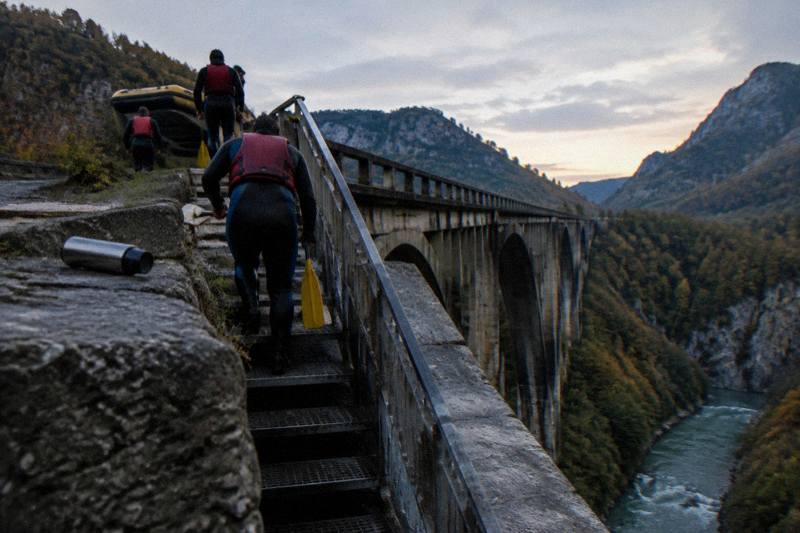
Is Tara Canyon Worth Visiting?
A straight verdict on Tara Canyon: the canyon's real dimensions, what a visit actually involves, rafting seasons and costs, and which tours deliver the most canyon for your day.
Is Tara Canyon Worth Visiting?
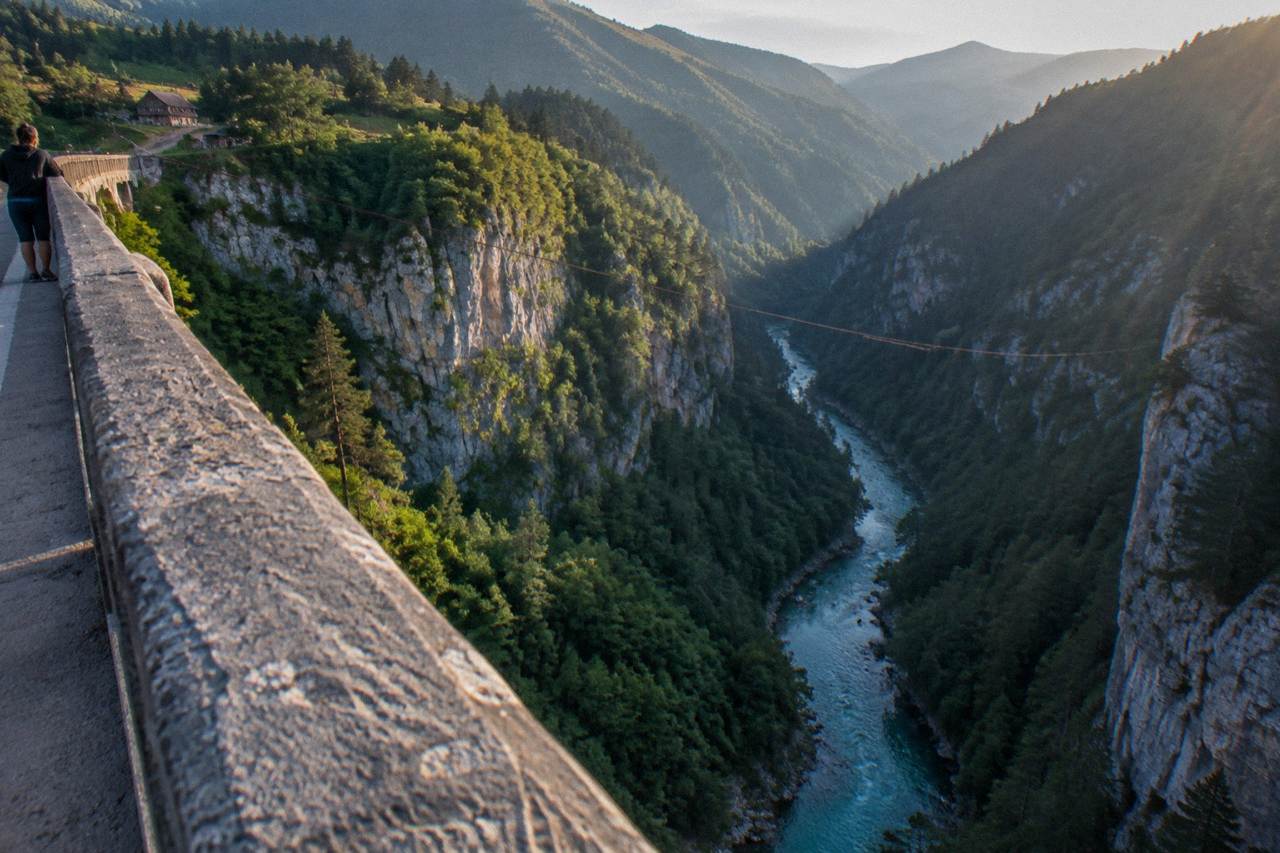
Yes, Tara Canyon is worth visiting, and the numbers explain why: the Tara is Montenegro's longest mountain river at 144 km, the canyon from the mouth of the Bistrica to Scepan Polje runs 78 km, and its greatest depth between Obzor and Stuoc reaches 1,333 m. That puts it among the deepest river canyons anywhere on Earth, carved into limestone in the country's mountain north.
The honest caveat is distance. The canyon sits in Durmitor country, well north of the coastal towns where most visitors base themselves. From Kotor or Budva you are signing up for a long day on winding roads before you ever see the water. Plenty of people do exactly that and report it as a highlight of their trip. Others arrive at Djurdjevica Tara Bridge, look down, take a photo and wonder what the fuss was about.
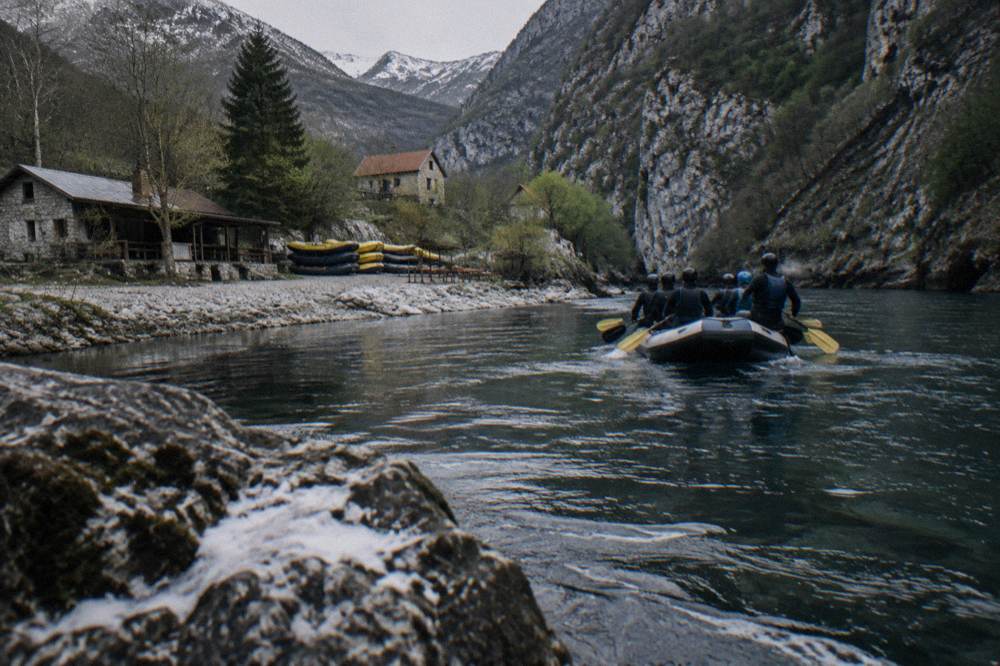
The difference between those two experiences is almost entirely about how you engage with the canyon. Seen from the bridge railing, it is a big view. Descended by raft, with 1,333 m of rock above you and ice-green water below, it becomes something you remember for years. The National Tourism Organisation of Montenegro describes the Tara as running its rafting season from April to October, wildest during the April and May snowmelt, and prices a one-day rafting trip at around EUR 70 per person as an official guide figure, though actual listings vary well above and below that mark.
This site's featured pick for the canyon is the Rafting with Park Entry trip operated by Rafting Tara North Challenge from Zabljak, roughly 3 hours, from $95 per person, holding a 4.8 rating from 388 reviews. It bundles Durmitor National Park entry, which matters because the daily park fee is EUR 5 per person on its own. You can compare it against the two strongest alternatives below.
If you are weighing this against other things to do in the country, the canyon competes with Bay of Kotor boat trips and southern lakes, and it wins on scale and loses on convenience. That trade-off, not the canyon itself, is what you are really deciding. Montenegro Tours covers the full range of the country's trips, from bay boats to mountain rafting, if you want to see the canyon in the context of everything else on offer.
What Makes Tara Canyon Special?
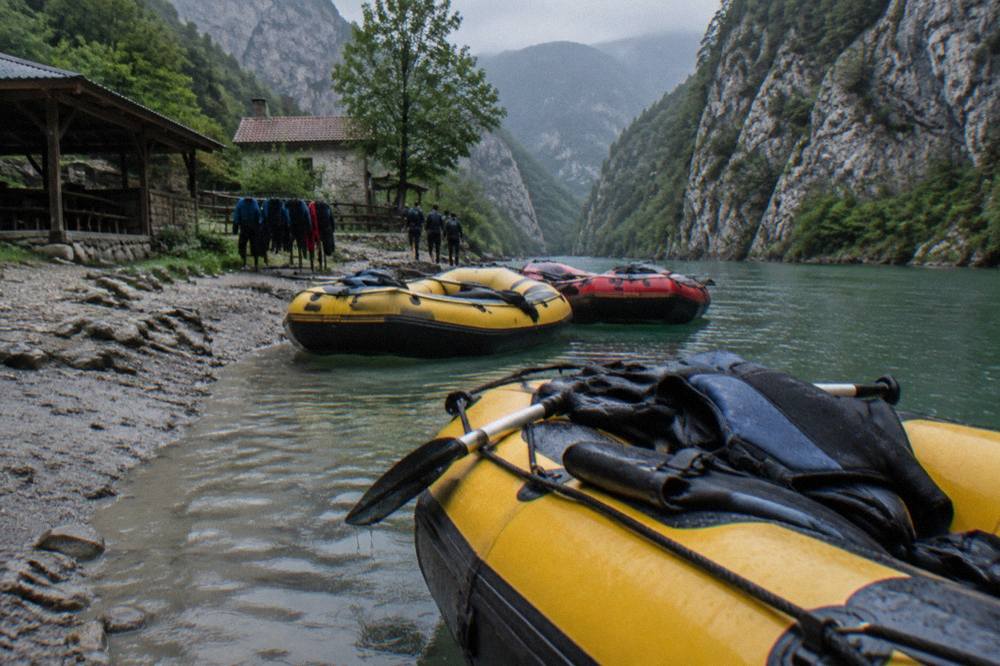
The canyon's scale is its whole case: a 78 km gorge with a maximum depth of 1,333 m, cut by a 144 km mountain river that stays raftable through summer because snowmelt and karst springs keep feeding it. The rock walls rise almost sheer in stretches, and the river's colour, a distinctive emerald from mineral content, is what most visitors mention first in reviews.
Depth is the headline figure, but the ecology matters too. The Tara drains the Durmitor massif, and its water is among the cleanest rivers in the region, which is why it earned the nickname of a "tear of Europe" in local tourism marketing. The canyon floor is narrower than the view from the rim suggests: from Djurdjevica Tara Bridge you look down roughly 150 m to the water, while the true depth figures come from sections between the peaks of Obzor and Stuoc, where the measurement runs from ridge to river.
The river is also a border for part of its course. The lower Tara forms the boundary between Montenegro and Bosnia and Herzegovina down to Scepan Polje, the traditional take-out point for rafting trips. Legally and practically, this is a cross-border river, and the rafting scene grew up around the put-ins and camps along both banks.
For geology-minded travellers, the canyon is a textbook limestone gorge: vertical walls, waterfalls hanging off the rims in spring, and caves pockmarking the cliffs. You do not need any of that vocabulary to be impressed. You just need to get below the rim, which is where the next question comes in.
Is The Canyon Worth It If You Don't Raft?
Yes, but with limits. Non-rafters get two genuine experiences: standing on Djurdjevica Tara Bridge, which is free to visit about 25 km from Zabljak, and driving sections of the roughly 80 km Durmitor Ring loop with its canyon overlooks. Both are real, and neither puts you inside the gorge, which is where the canyon's character actually lives.
The bridge deserves its fame. Djurdjevica Tara spans the gorge near its deepest road-accessible point, and the view down to the river is the single most photographed canyon scene in Montenegro. The zipline operators on the north side sell a different way of seeing it; this site lists a Tara Bridge Zip Line tour from $62 per person, rated 4.5 from 133 reviews. It runs across the gorge rather than down into it, so treat it as a thrill with a view, not canyon exploration. If the canyon leaves you wondering what else this small country delivers, our guide to what Montenegro is most famous for covers the Bay of Kotor, the mountains, and the cliff monasteries.
If you would rather keep wheels on the ground, the Durmitor Ring is the alternative. The national park's own price list offers an organised Ring tour by van at EUR 20 per person, entrance included, and jeep versions at higher rates from private operators. Sedlo Pass, one of the highest paved road points in the country, is the signature stop. For the full picture of combining canyon and mountain in one long day, the Durmitor and Tara day trip guide walks through the logistics.
The honest framing: as a viewpoint-only stop, Tara Canyon competes with every other big view in the Balkans. As a descended canyon, it is in a much smaller class. If your knees, schedule or swim confidence rule out rafting, go for the bridge and the Ring and enjoy them. Just know that the review ratings on rafting listings, 4.8 from 388 reviews on the featured trip here, reflect people who went down into the gorge.
How Deep Is Tara Canyon Compared To Others?
At 1,333 m at its deepest measured point, Tara Canyon is usually cited as the deepest canyon in Europe and among the deepest river canyons in the world. The comparison depends on how you measure: Tara's figure is ridge-to-river depth in one section, not an average along 78 km, so ranking arguments between famous canyons rarely compare like with like.
Other great canyons measure their extremes differently. The Grand Canyon in the United States is vastly wider and longer than Tara, and its own deepest points exceed Tara's, but its average depth along its full length is another matter entirely. The other names that always enter this conversation are the great gorges of Peru, Nepal and Namibia, each measured by different conventions. Tara's claim rests on that single verified 1,333 m measurement between the summits of Obzor and Stuoc above the river, a figure that appears on the National Tourism Organisation's own rafting page.
Within Europe, no competing canyon clearly beats it on depth. The famous gorges of France and Spain are scenic but shallower, which is why "deepest canyon in Europe" is a defensible label for Tara, and it is the label you will hear from every guide on the river.
Why does the ranking matter for your trip? Because depth is what creates the canyon's microclimate and its drama. In the gorge bottom, temperatures run cooler than the rim, walls shadow the water for much of the day, and the vegetation shifts from beech and pine above to riverine scrub below. When rafting reviews describe the water as bracing even in July, the depth and the snowmelt feed are the reason.
What Is The Best Time Of Year To See It?
May and June offer the strongest canyon experience: snowmelt swells the river, the rapids sit at their most powerful, and waterfalls hang off the rims. July and August bring lower, slower, warmer water that suits beginners and families. September and October trade thinner crowds for cooling air and rising levels as autumn rains return. The commercial rafting season generally runs May through October.
The trade-offs are real. High-water May trips are colder, roughly 10 to 14 degrees in the water, and operators require wetsuits; the rapids run stronger and the paddling is more demanding. Midsummer water is gentler and closer to 20 degrees, which is why families with children overwhelmingly book July and August. If your question is "will I enjoy this as a nervous first-timer," midsummer is the friendlier answer.
Shoulder-season visitors get a different reward. September and October bring autumn colour to the beech forests on the rims, and the canyon photographically is at its best. Water levels rise again with the rains, so trips get livelier than August without the April chill. The dedicated piece on the Tara rafting season and difficulty breaks the months down in more detail.
One planning note that surprises people: the canyon is high-altitude country. Zabljak sits at 1,456 m, and while its summer daytime highs average a pleasant 21 to 22 degrees, evenings are genuinely cold. Pack layers even when the coast is sweltering. The what to wear on Montenegro tours guide covers this properly.
How Much Does A Tara Canyon Trip Cost?
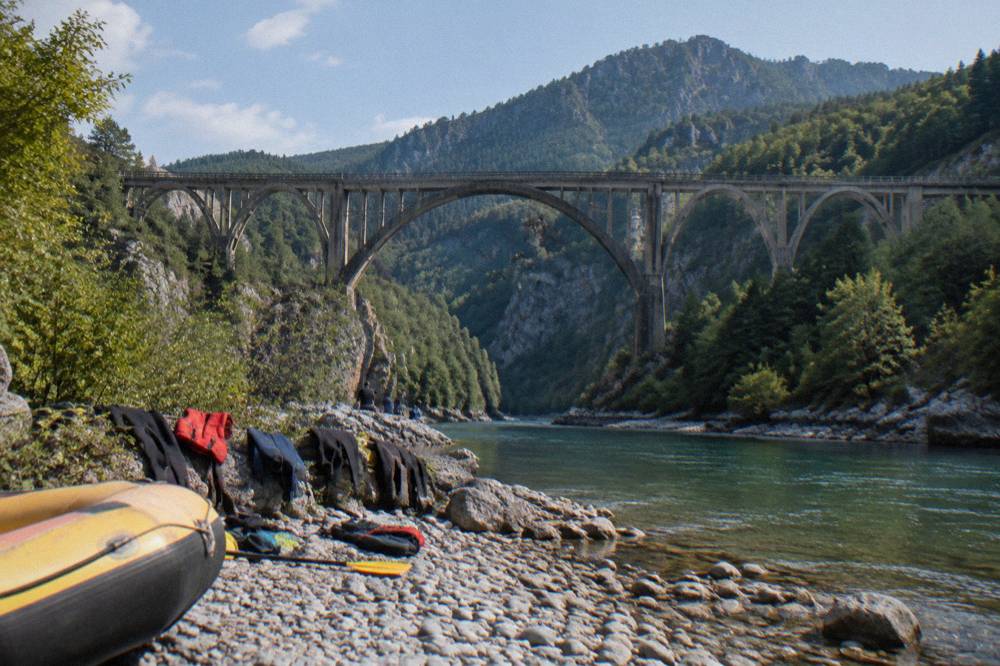
Roster listings for the canyon run from $56 per person for a roughly 4-hour one-day rafting trip to $277 for an 11-hour combined Black Lake and Tara Canyon tour from Podgorica. The mid-range anchor is around $95 per person for a 3-hour trip with Durmitor park entry included. Add EUR 5 per person for park entry on tours that do not bundle it.
The spread reflects what is included more than quality. The cheapest listing, Tara Canyon Rafting from $56 per person rated 4.8 from 138 reviews, departs from Pljevlja and keeps the day tight at about 4 hours. The featured Rafting with Park Entry trip at $95 absorbs the park fee and runs from Zabljak. At the top of the range, the 11-hour Black Lake and Tara Canyon tour from Podgorica at $277 includes pickup per the listing and stitches a full northern loop into one day.
| Tour | Duration | Price | Rating | Departs |
|---|---|---|---|---|
| Tara Canyon Rafting (Rafting Republic Wild River) | ~4 hours | from $56 per person | 4.8 from 138 reviews | Pljevlja |
| Rafting with Park Entry (Rafting Tara North Challenge) | ~3 hours | from $95 per person | 4.8 from 388 reviews | Zabljak |
| Whole-Day Rafting with Lunch (Rafting Tara North Challenge) | ~7 hours | from $202 per person | 4.8 from only 12 reviews so far | Zabljak |
| Tara Packrafting (Tara Expeditions) | ~4 hours | from $189 per person | 4.8 from 37 reviews | Zabljak |
| Black Lake and Tara Canyon (Mont Travelers) | ~11 hours | from $277 per person | 4.9 from 43 reviews | Podgorica |
Two budget notes beyond the ticket. Wetsuit and equipment rental is included in the standard listings, but check whether the listing says so rather than assuming. And the official guide price of around EUR 70 for a one-day trip, published by the national tourism organisation, sits below several listings on the market, so treat any listing price as its own fact, not as the official rate. For the fuller cost breakdown, the article on how much a Tara rafting trip costs goes line by line.
A different species of trip altogether is the packrafting option: a roughly 4-hour trip at $189 per person, rated 4.8 from 37 reviews, a small pool but a consistently positive one, in which you paddle your own inflatable raft rather than sharing a big boat with a guide. It suits confident swimmers who want solitude over sociability.
Is The Long Drive From The Coast Worth It?
For most coastal-based travellers, yes, but only as a planned day, not a whim. The canyon sits roughly three hours of mountain driving each way from the Bay of Kotor, so a self-driven day is possible in midsummer light but punishing as a round trip. Organised day tours absorb the driving, with pickup confirmed on some listings, and stack a second sight into the same hours.
The arithmetic is the argument. If you drive yourself, you leave the coast early, spend the middle of the day on the water, and roll back late, having given six-plus hours to the road. An organised tour from Kotor, such as the 13-hour Durmitor, Tara and Ostrog trip at $120 per person rated 4.7 from 2,645 reviews, hands the wheel to someone who drives that road weekly and adds Ostrog Monastery, one of the country's most extraordinary sites, into the same ticket.
Renting a car and doing it independently has its own rewards: you set the pace, you can stop at the canyon overlooks tour vans pass, and Zabljak makes a good overnight if you would rather not rush. Black Lake, inside Durmitor National Park, is a short walk from town and an easy add-on. If that route appeals, the Black Lake and Zabljak guide covers where to base and what to pair.
What the drive itself is like: the road north climbs through Lovcen country or the Niksic valley depending on route, then runs along the canyon rim in stretches. It is paved the whole way and driven by ordinary cars year-round, though winter snows close the high passes. In the May-to-October rafting window, conditions are straightforward. For everything on paperwork at the border if you are arriving from Croatia first, the Montenegro border crossing guide has the detail.
What Do Reviews Actually Say About Tara Trips?
The review picture is strong and, unusually for a rafting destination, consistent across operators: the featured 3-hour trip holds 4.8 from 388 reviews, the 4-hour Pljevlja trip 4.8 from 138, and the packrafting option 4.8 from 37. Guides draw the most praise, and the recurring complaints are cold water and short canyon time relative to total day length.
Reading across the listings, a pattern emerges that no single review states outright. Guests on the short trips frequently note that the rafting portion, perhaps 90 minutes on the water, is a small slice of a long day, and that the camp scene before and after, gear-up, photos, lunch on some listings, fills the rest. People who knew this in advance rated the day higher. People expecting a full river expedition marked it down.
The cold-water complaint deserves respect. Even in August the Tara runs far cooler than the Adriatic, and reviews from May trips describe numb hands within minutes. Operators kit everyone in wetsuits and the listings state this, but if you are sensitive to cold, book July rather than May and say so when you reserve.
Praise concentrates on the canyon walls themselves and on guides who read the river and the group well. Multiple reviews mention guides slowing the boat for nervous passengers and letting confident ones swim a calm stretch. That matches what the operators publish about their formats, which is a good sign the listings describe the trips honestly.
Who Should Skip Tara Canyon?
Skip it if you cannot spare a full day, if cold water genuinely distresses you, or if your trip is anchored to a short cruise stop in Kotor: the canyon is too far for a safe same-day return in most port schedules. Travellers with limited mobility should also ask hard questions first, since canyon access paths and raft launches are uneven and sometimes steep.
The cruise-stop case is the clearest. Kotor shore time rarely stretches past eight or nine hours, and the canyon consumes most of that in transit. A Bay of Kotor boat trip or a Perast and Our Lady of the Rocks excursion fits the port day; Tara does not. The exceptions are the rare late-departure calls, and even then the margin is thin.
Cold-water aversion is the second honest disqualifier. The wetsuit helps, but the face-in-the-water moments on a raft are unavoidable, and May water near 10 degrees is a physical shock to some people. If that is you, choose a warm-water alternative: the Bay of Kotor or the Budva coast, where late-September sea temperatures along the Montenegro coast run around 21 to 24.5 degrees.
Finally, motion and winding-road sensitivity. The drive north is a genuine mountain road with curves for hours. If you know this about yourself, sit front, take the organized-coach option, or pick a canyon experience closer to base. Skipping Tara is a legitimate plan, not a failure; Montenegro packs plenty into a smaller radius.
How Do You Choose Between The Tara Tours?
Choose by duration and drive tolerance: the 3-hour Zabljak trip with park entry at $95 suits overnighters in Durmitor, the 4-hour Pljevlja trip at $56 is the budget anchor, the 7-hour whole-day version at $202 trades more time and lunch for a longer commitment, and the 13-hour coastal coach tours near $120 to $277 are for one-shot visitors from Kotor or Podgorica who want the north handled.
The decision really turns on where you sleep the night before. Based in Zabljak, every option is on the table and the short trips make sense because the river is minutes away. Based on the coast, the calculus flips: you are paying for the driving either way, so a longer, bundled tour that fills the day, like the Durmitor, Tara and Ostrog combination, extracts more value from the same road hours.
| If you are... | Best fit | Why |
|---|---|---|
| Overnighting in Zabljak | Rafting with Park Entry, ~3 hours, from $95 | Park entry included, back by early afternoon for Black Lake |
| On a tight budget | Tara Canyon Rafting, ~4 hours, from $56 | Cheapest roster listing, still a real canyon descent |
| Wanting a full river day | Whole-Day Rafting with lunch, ~7 hours, from $202 | Longest time on and beside the water, lunch included |
| Coastal-based, one shot | Durmitor, Tara and Ostrog, ~13 hours, from $120 | Departs from a Kotor meeting point, three sights in one ticket |
| A confident swimmer | Tara Packrafting, ~4 hours, from $189 | Your own craft, smaller group, quieter water time |
One filter the table cannot apply for you: group size tolerance. Standard trips load eight to twelve people per raft with a guide at the helm, which is sociable and safe but not intimate. The packrafting format and private jeep-based combinations cost more per person and buy solitude. Both appear in reviews as the reason people picked the trip they picked.
Whichever you lean toward, book the season's peak weeks early. The May-to-October window compresses demand into fewer months than a beach destination, and the strongest weekends in July and August do sell out on the popular departures. Check availability on your chosen dates before locking the rest of your itinerary around it.
The whole-day option carries only 12 reviews so far, too few for a rating claim, and that is worth knowing plainly rather than dressed up. Its price of $202 per person includes lunch, and its operator is the same Rafting Tara North Challenge behind the featured 3-hour trip, so the operation is established even if this specific listing's review pool is still young.
The Verdict: Yes, With One Condition
Tara Canyon earns its place on almost any Montenegro itinerary that can spare a full day: a 78 km gorge, 1,333 m deep, carrying extraordinary water, with trips from $56 and review scores in the high 4s across the board. The single condition is engagement. Go down into the canyon, by raft or packraft, and the answer is an emphatic yes.
The bridge-and-drive version of a Tara visit is fine, but it is the trailer, not the film. The reviews, the repeat-visit patterns and the geography all point the same way: the canyon's value is in its depth, and depth is something you experience from the water, looking up. Even the shortest listings on this site's roster put you on the river for a real descent through the gorge walls.
Plan around the season, budget for the drive, dress for cold water even in August, and the canyon will be the story you tell about Montenegro long after the beaches blur together. Resources that help: the Montenegro National Parks price list for entry fees and the official national tourism organisation rafting page for the river's official facts, and the Durmitor park fee page for what your ticket covers.
Common Questions About Tara Canyon
Is Tara Canyon Worth Visiting?
Yes. At 1,333 m deep and 78 km long it is among the deepest river canyons on Earth, and trips from $56 per person put you on the water inside the gorge. The one condition: budget a full day, since the canyon sits about three hours' drive from the coast.
Can You Swim In The Tara River?
Yes, on calmer stretches during rafting trips, with a wetsuit and guide supervision. The water runs roughly 10 to 14 degrees in May and around 20 degrees in midsummer, so it is always cooler than the sea. Operators decide on the day which stretches are safe.
How Deep Is Tara Canyon?
The greatest depth is 1,333 m, measured between the summits of Obzor and Stuoc down to the river. The canyon runs 78 km from the mouth of the Bistrica to Scepan Polje, and the Tara river itself is 144 km long.
What Is The Rafting Season On The Tara?
The commercial rafting season generally runs May through October. May and June bring the highest, wildest snowmelt water; July and August are lower, warmer and beginner-friendly; September and October bring rising levels and thinner crowds.
Do You Need Durmitor National Park Entry For Tara Trips?
The daily park entry is EUR 5 per person. Some listings bundle it, including the featured Rafting with Park Entry trip at $95; others do not, so check the inclusions on the listing before booking to avoid a surprise at the gate.
Can You Visit Tara Canyon On A Cruise Stop In Kotor?
Not realistically. The canyon is roughly three hours' drive each way from Kotor, which does not fit typical port schedules. Cruise visitors are better served by Bay of Kotor boat trips, Perast, or the Kotor Old Town walk.