Can You Swim In The Tara River?
Yes, you can swim in the Tara River, usually at scheduled swim stops on a rafting trip. Here is where, when and how to swim in Europe's deepest canyon river safely.
Can You Swim In The Tara River?
Yes, you can swim in the Tara River, and on a commercial rafting trip you almost certainly will. Operators on the 78 km canyon section build scheduled swim stops into their runs, always in flat, calm stretches chosen by the guide, never in the rapids themselves. What you cannot do is treat the Tara like a warm Adriatic beach: it is a snowmelt river and it stays cold even at the height of summer.
The Tara is Montenegro's longest mountain river at 144 km, and its canyon, running from the mouth of the Bistrica to Scepan Polje, measures 78 km with a greatest depth of 1,333 m between Obzor and Stuoc, figures published by the National Tourism Organisation of Montenegro. That same official page sets the rafting season at April to October and describes April and May as the wildest months, when snowmelt swells the river. Those two facts frame everything about swimming here: the water is cold because it starts as mountain snow, and the swimming you do is tied to the rafting calendar.
The swimming itself is not an extreme act. Rafting boats stop in sheltered, slow sections where the canyon widens, guests jump in wearing life jackets and helmets, and the current carries them gently downstream while the boat waits. Guides decide whether a stop happens at all; high water in May can shorten or cancel swim stops, while the lower, slower water of July and August makes them longer and more relaxed. If a swim stop is the part of the trip you are most looking forward to, midsummer runs are the safer bet, and you should check the listing before booking to see how the operator describes its stops.
Swimming is also the reason many people book the Tara in the first place rather than just watching the canyon from the Djurdjevica Tara Bridge. The river is the only practical way to be inside the canyon, and floating in it, even briefly, is the moment most guest reviews single out. If you are still deciding whether the canyon itself justifies the drive, the companion piece on whether Tara Canyon is worth visiting covers the viewpoint and bridge side of the question.
Where Do Rafting Tours Let You Swim On The Tara?
Swim stops sit in the flat water between rapids, typically on the lower canyon stretch used by the commercial one-day trips out of Zabljak and the Scepan Polje direction. The exact spot changes daily: the guide reads the water level and picks a calm pool where the boat can hold position. Some stops are a five-minute float, others a twenty-minute swim with a cliff jump for anyone who wants one.
Every operator runs the same format even when the marketing differs. You paddle a sequence of rapids, the boat pulls into slack water behind a rock bar or at a canyon bend, and the guide calls the stop. Life jackets stay on, and in high water so do helmets. The boat or a safety kayak floats alongside swimmers. Nobody swims a rapid; the stops exist precisely because the water there is slow enough to be safe.
Which trip you book changes how much calm water you get. The three-hour Tara rafting tour with park entry from Zabljak, from $95 per person with a 4.8 rating across 388 reviews, is the short format: a taste of rapids, one swim stop, and the Durmitor entry fee handled. Longer whole-day versions, like the seven-hour trip with lunch included from $202 per person, spend more hours in the canyon and usually allow more than one stop. Neither operator nor this site can promise a stop on a given day; wind, rain and water level all feed the guide's decision on the morning itself.
One thing worth knowing before you book: swim stops are listing facts, not guarantees. Read the operator's own trip description and recent guest reviews, which usually mention whether the stop happened. Reviews are the single best source on how much swimming a specific trip actually delivered last month, and they age faster than any guidebook.
How Cold Is The Tara River, Really?
Cold enough that you notice it in the first ten seconds, in every month of the season. The Tara is fed by Durmitor's snowmelt and springs, so even in August the water never reaches anything a Montenegrin beach swimmer would call warm. Operators hand out wetsuits in spring and autumn as standard, and in May, high water makes them compulsory. Midsummer swims are brisk but comfortable for most people.
No official temperature figure for the river is published, and this site does not print one. What can be said is mechanical: the water comes from a mountain massif that holds snow into late spring, and the canyon is deep enough that direct sun reaches the water only in patches for much of the day. The practical reading is simple. May water is wetsuit territory, July and August water is bare-skin territory for a swim stop of a few minutes, and September sits in between, cooling as autumn rains raise the level.
Your body reacts faster than you expect, and that is the real safety point. Cold water makes you breathe quickly and shallowly for the first minute, which is why guides have you enter the water calmly rather than leaping straight in when the water is high or the air cool. The life jacket keeps you at the surface regardless, so the cold is uncomfortable rather than dangerous on an operator-run stop. If you are sensitive to cold, book July or August and ask the operator about wetsuit availability anyway; most keep stock on hand outside midsummer.
The contrast with the coast is worth planning around. On the same day you can swim in the Adriatic off Budva in the morning and be gasping in the Tara by afternoon, and many Durmitor day trips from the coast do exactly that. Pack for two climates and the pairing works; pack for one and the river will win the argument.
Is It Safe To Swim In The Tara River On Your Own?
Swimming independently in the Tara is possible only in a few well-known, easy-access spots, mainly around the Djurdjevica Tara Bridge and the river beaches near Zabljak, and it is a different risk proposition from a guided stop. There is no lifeguard, no signed swim area in the canyon, and water levels change fast with rain and snowmelt. The guided swim stop exists because a guide reads that water daily.
The accessible places are the shallow gravel banks and slow bends within walking distance of the bridge and the camps along the lower river. Even there, treat every entry as unpatrolled water: check the current at your feet, avoid anything that looks like a rapid downstream, and never swim alone. The canyon interior, the part people photograph from the bridge, is effectively raft-only; there is no road down and no footpath a casual visitor should attempt. This is also why the independent option is a shallow dip, not the canyon float people imagine.
For anyone who wants the canyon swim, the commercial trip is the honest answer, and it is cheaper than most visitors expect. The Tara Canyon one-day rafting trip from $56 per person, 4.8 from 138 reviews, covers the same stretch of water with the equipment and the judgement call included. Durmitor National Park entry is EUR 5 per person per day on the official price list, with children under 15 free, and an annual pass for all five Montenegrin national parks costs EUR 13.50, worth knowing if Skadar or Lovcen is also on your itinerary.
What Is The Best Time Of Year To Swim On A Tara Rafting Trip?
July and August give the most reliable swimming: water levels drop, the current in the calm stretches slows, and swim stops run longer because guides are not working around big water. May and June are the exciting months, with snowmelt swelling the rapids, but stops are shorter and sometimes skipped. September and October quieten down as autumn rains begin to lift levels again.
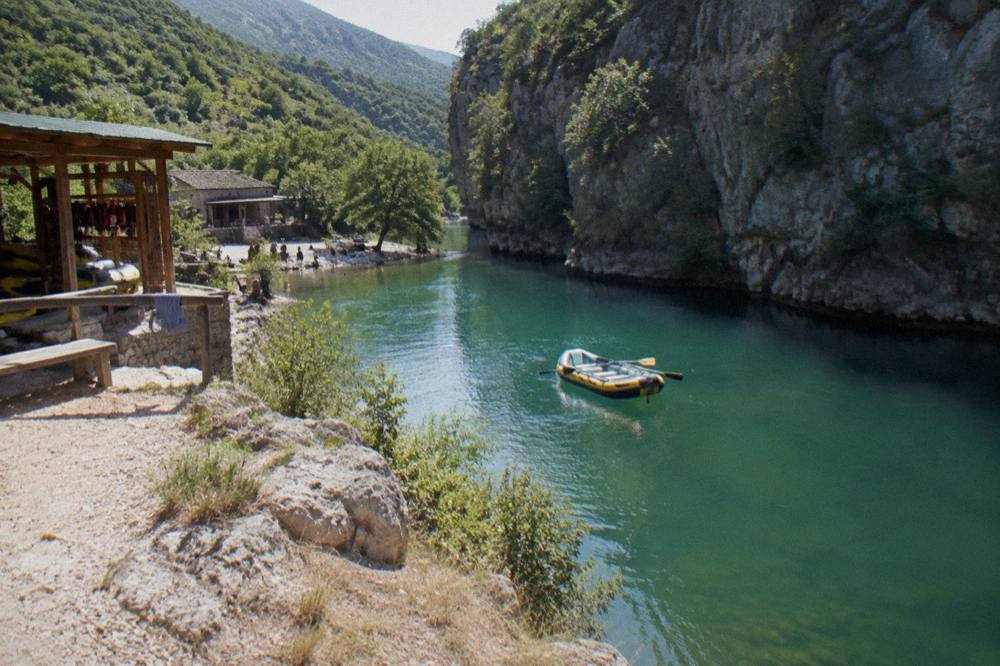
The official season runs April to October, and within it the river tells three different stories. In the early window the Tara is at its most powerful, which suits people who came for white water; swim stops happen but they are brief, and wetsuits are the norm. Midsummer flips the balance: gentler rapids, warmer air, long lazy floats in the stops, and the busiest family weeks on the water. Autumn is the connoisseur's stretch, quieter on the river, with the first rains gradually returning volume.
If swimming is the priority, book midweek in July or early August: the water is at its calmest, the air temperature makes the cold water welcome rather than brutal, and weekday trips carry smaller groups, which usually means more time at each stop. If white water is the priority and a swim would be a bonus, go late May or June and accept that the guide may trade the stop for an extra rapid run. Season specifics for any given departure are always on the listing.
What Should You Wear To Swim In The Tara River?
Wear what the operator provides plus a swimsuit underneath: wetsuit, life jacket, helmet and paddle jacket in the cooler months, life jacket and helmet always. Bring trainers or wet shoes you do not mind soaking, a towel, and dry clothes for after. Cotton is the enemy, it stays cold and heavy, so keep the t-shirt synthetic or skip it entirely.
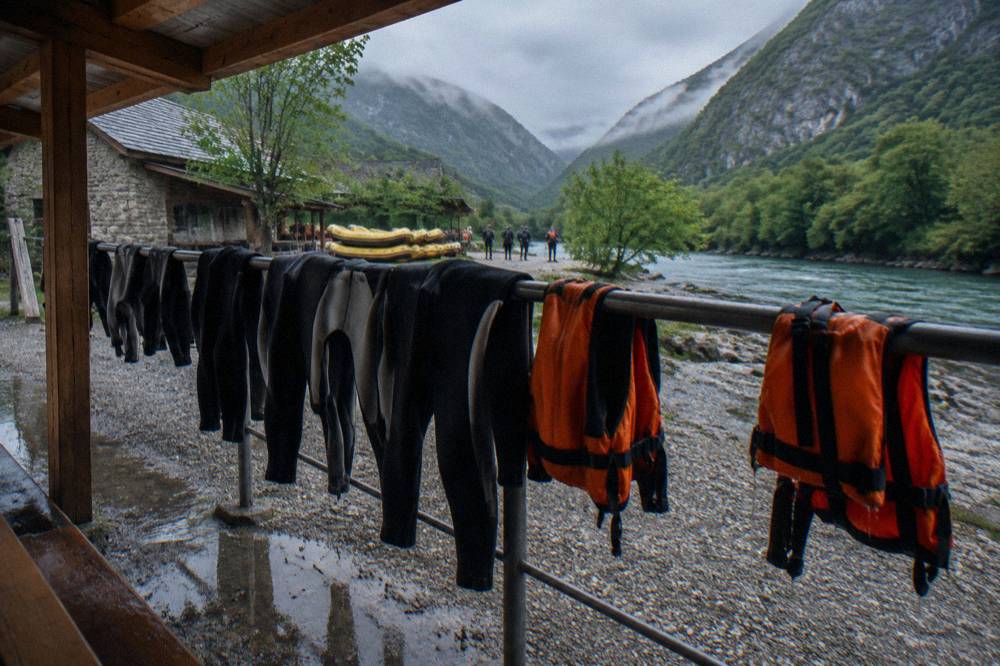
Operators supply the technical kit as part of the trip price, and the fittings happen at the camp before the transfer to the put-in. Sizes run out on peak days, so arriving on time for the safety briefing matters more than it sounds. For the swim stop itself, the practical kit list is short: swimsuit already on, glasses secured with a strap or left on the bus, phone left with the dry bags unless the operator says otherwise, and a warm layer waiting for the take-out.
| Item | Spring And Autumn | July And August | Notes |
|---|---|---|---|
| Wetsuit | Provided, usually required | Provided, often optional | Operator decides by water level |
| Life jacket | Always | Always | Stays on in the water |
| Helmet | Always | Always | Non-negotiable on all runs |
| Footwear | Trainers or wet shoes | Wet shoes or sandals with straps | Barefoot is not allowed on most trips |
| After the trip | Warm layer, dry towel, dry shoes | Towel and dry clothes | Changing rooms at the camps |
The full packing question extends beyond the river, and the site's guide on what to wear and bring on Montenegro tours covers the coast and mountains side. The one Tara-specific addition is a dry bag for the bus if you want photos; most operators sell or rent them, and a soaked phone is the most common avoidable loss of the day.
How Much Does A Tara Rafting Trip With Swim Stops Cost?
Listed Tara trips on this site run from $56 to $202 per person depending on length and inclusions. The four-hour Tara Canyon trip is $56, the three-hour Durmitor rafting from Zabljak is $77, the three-hour tour with park entry is $95, and a whole-day version with lunch is $202. The official tourism body's guide price for a one-day trip is around EUR 70 per person, which is a benchmark, not any listing's price. For a closer look at what drives those differences, our full breakdown of Tara rafting trip costs explains what each option includes and which extras to budget for.
| Trip | Length | Price | Rating | Departs |
|---|---|---|---|---|
| Tara Canyon rafting | ~4 hours | From $56 per person | 4.8 from 138 reviews | Pljevlja |
| Rafting in Durmitor | ~3 hours | From $77 per person | 4.1 from 132 reviews | Pljevlja |
| Rafting with park entry | ~3 hours | From $95 per person | 4.8 from 388 reviews | Zabljak |
| Whole-day rafting, lunch included | ~7 hours | From $202 per person | 12 reviews, too few for a star claim | Zabljak |
What moves the price is time in the canyon and food. Short trips are transport-plus-rapids; the whole-day format adds a longer canyon section and a cooked lunch at a camp, which is where the step up to $202 comes from. Park entry appears either bundled, as the $95 trip's name states, or payable at the gate, so check what the listing includes before comparing prices. If you want a fuller cost picture before committing, the breakdown in how much a rafting trip on the Tara River costs goes line by line.
One caution on reading the table: the whole-day trip has 12 reviews, which is too small a pool for a star claim, so treat its inclusion here as a price signal only. The two four-point-eight ratings sit on review bases of 388 and 138, which is a meaningful signal. Prices are per person for all four trips listed; none of them is a per-group listing.
Can You Swim Near The Djurdjevica Tara Bridge?
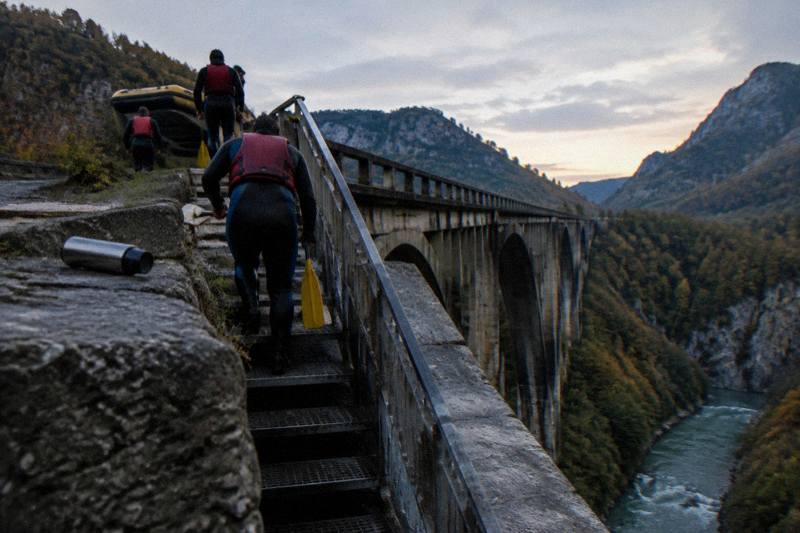
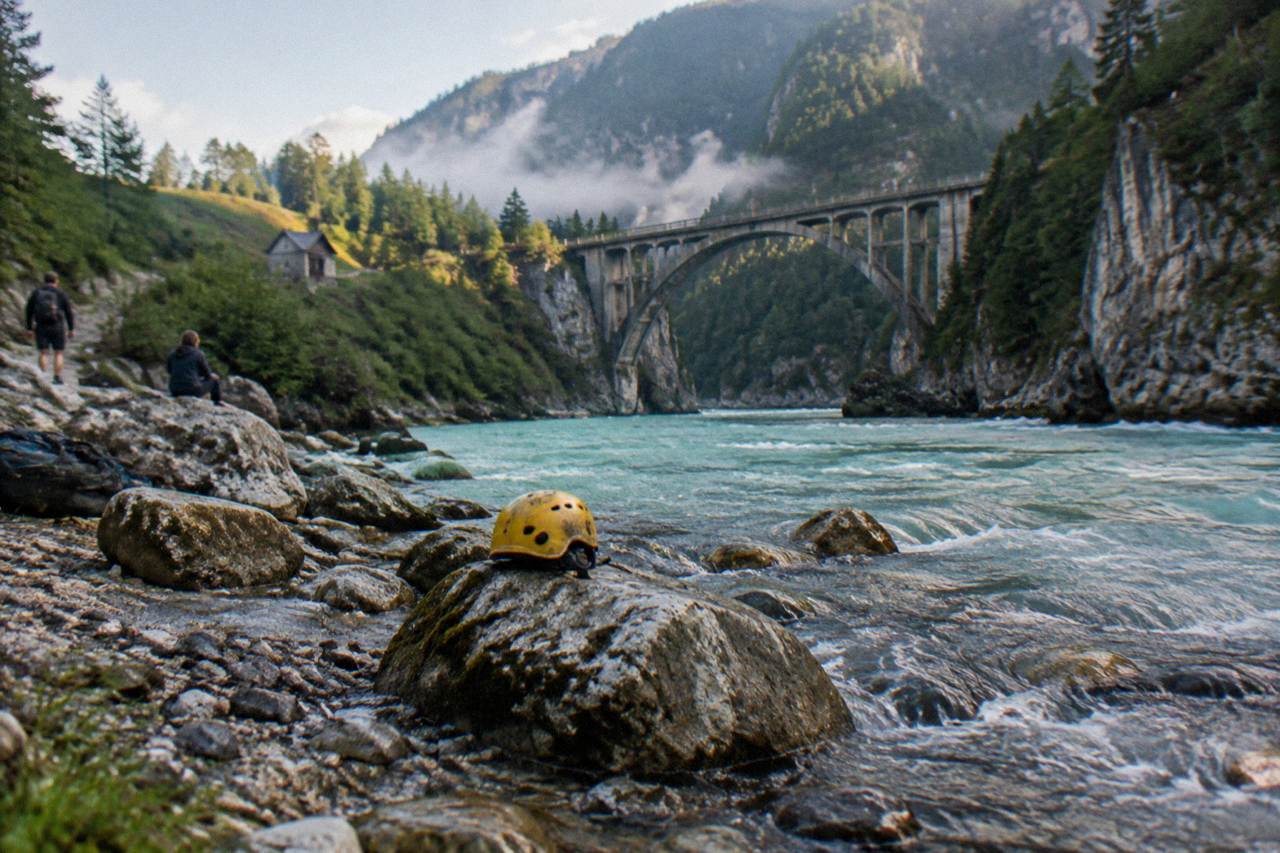
You can swim in the river near the bridge, in the calmer gravel stretches on the downstream side, and in summer local camps run small beach setups along the banks. But the bridge itself is 150-odd metres of viewpoint above the canyon, not a swimming spot: access to the water is by paths and road, not from the span. The ziplines strung across the canyon here are the other reason people stop.
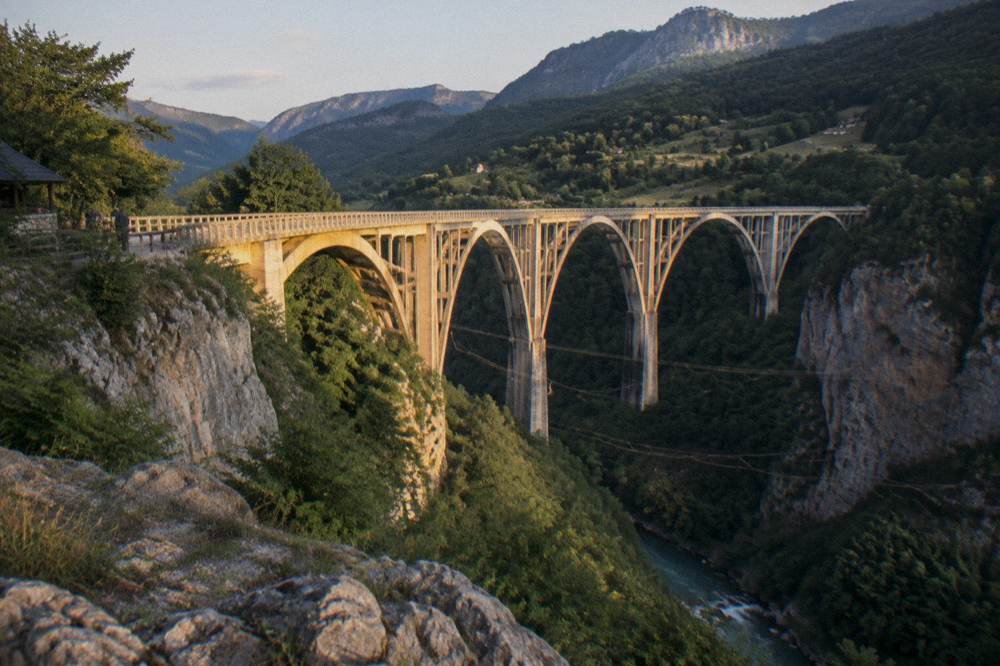
The bridge is the free, drive-up experience of the Tara: it costs nothing to visit, sits roughly a half-hour drive from Zabljak, and delivers the vertigo shot of the canyon that opens every Montenegro brochure. For swimming, the value of the stop is scouting: from the span you can see exactly how the river alternates between glassy pools and whitewater, which is the clearest possible illustration of why swim stops are placed where they are. The Tara Bridge zip line, from $62 per person with a 4.5 rating from 133 reviews, crosses the canyon here for anyone who wants the water viewed from a harness rather than a boat.
Do You Need To Be Able To Swim To Go Tara Rafting?
Strictly, no: operators take non-swimmers on rafting trips because the life jacket is the primary flotation, not your stroke, and everyone wears one the whole time. Practically, you should tell the operator in advance, and a non-swimmer should think carefully about the optional swim stop, where you are in the water without the boat beneath you. The rapids themselves you sit through, not swim.
The honest framing is that rafting is a buoyancy activity and the swim stop is a swimming activity. On the raft, in the rapids, a non-swimmer who falls in is picked up by the safety kayak or the raft itself within seconds, and the jacket keeps their head above water throughout. That is the system working as designed, and it is why the briefing before every trip drills the fall-in position: feet up, facing downstream, hold the jacket. The swim stop is the one moment when being unable to swim genuinely limits you, and skipping it is entirely normal; plenty of guests stay in the boat and eat the snacks.
Families should note that operators set minimum ages, usually around the early school years, and enforce them by water level as much as by calendar. High-water May trips carry higher age minimums than August ones, so a family with young children should book midsummer and state the children's ages at booking, not at the camp. The listing states each trip's current minimums, and seasonal safety calls belong to the operator on the day, nobody else.
Common Questions About Swimming In The Tara River
Can You Swim In The Tara River?
Yes. Swimming happens at guided swim stops on commercial rafting trips, in calm flat-water stretches the guide chooses, and independently in the easy-access spots near the Djurdjevica Tara Bridge and river camps. It is never done in the rapids, and the water is cold year-round because the river is snowmelt-fed.
Is The Tara River Water Cold Enough To Need A Wetsuit?
In spring and autumn, yes, and operators supply wetsuits as standard then. In May, when snowmelt runs high, they are generally compulsory. In July and August most guests swim in swimsuits with just the life jacket and helmet, though operators keep wetsuits available.
When Is The Tara Rafting Season?
The official Montenegro tourism body sets the season at April to October, with April and May the wildest months. Operators around Zabljak typically start commercial runs in May once water levels are workable, and autumn rains can keep levels interesting into October.
Can Non-Swimmers Go On A Tara Rafting Trip?
Yes, with the operator informed in advance. The life jacket is the primary flotation and stays on throughout, and guides are trained for guests who end up in the water. Non-swimmers usually skip the optional swim stop and stay in the boat.
How Much Does A Tara Rafting Trip Cost?
Listed trips run from $56 to $202 per person: $56 for the four-hour Tara Canyon trip, $77 for the three-hour Durmitor rafting, $95 for the three-hour tour with park entry, and $202 for a whole-day version with lunch. Durmitor entry is EUR 5 per adult per day where it is not bundled.
Can You Swim In The Tara On Your Own, Without A Tour?
Only in the accessible spots near the bridge and the camps along the lower river, at your own risk with no patrols and no signed areas. The canyon interior has no road or safe footpath access; the only practical way to swim inside the canyon is on a commercial rafting trip.
For planning beyond the river, Montenegro Tours covers the coast and canyon options side by side, and the Durmitor day-trip guide explains how a Tara swim fits a wider northern itinerary. Whatever you book, read the operator's own trip description for its swim-stop wording, and check the listing for current dates before you plan around one.