Can You Swim In Blue Cave, Montenegro?
Yes, you can swim in Blue Cave, Montenegro, and since a 2026 rule change you swim in from a boat anchored outside. Here is how the swim stop works, what to bring and which tours include it.
Can You Swim In Blue Cave, Montenegro?
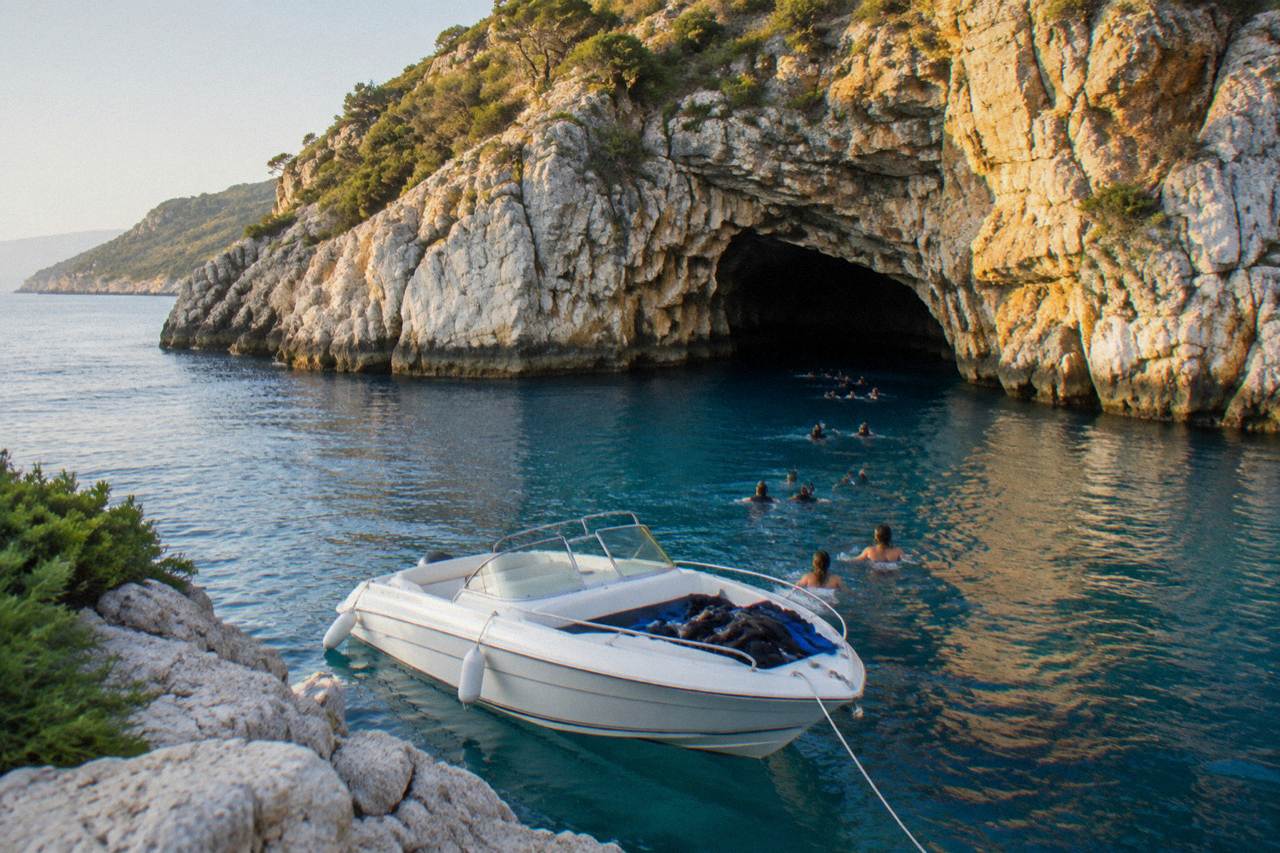
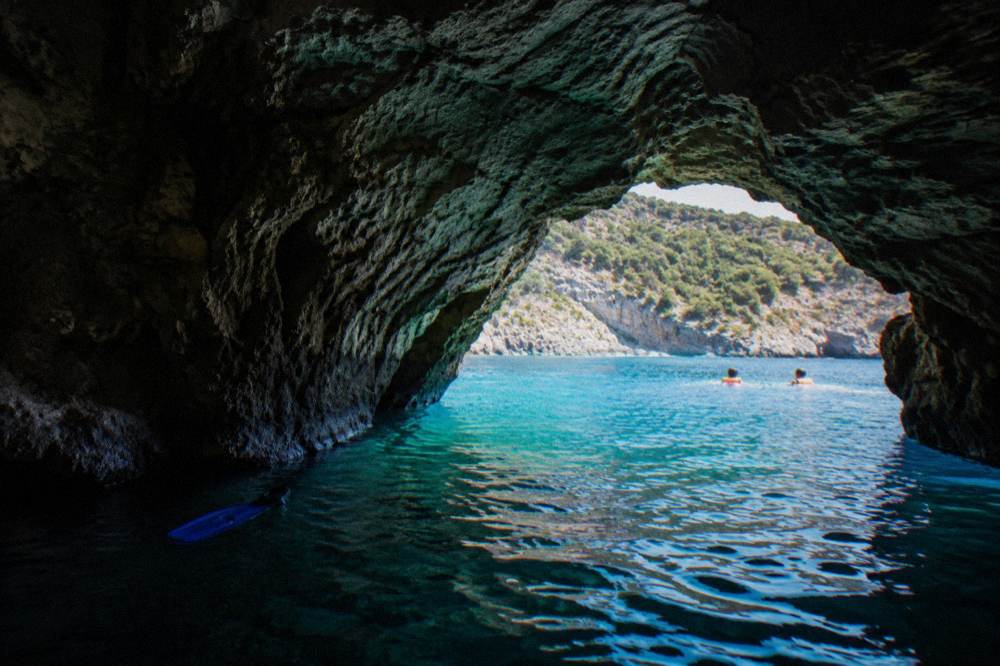
Yes, you can, and since late May 2026 swimming is the only way in for almost everyone. A new Montenegrin navigation regulation bans motorized vessels from entering the Blue Cave, so tour boats anchor 10 to 20 metres outside the entrance and guests swim the rest of the way, with life jackets and kickboards provided by the operators. Kayaks, as non-motorized craft, may still enter. If that kayaking exception has you wondering about skipping a guided trip altogether, our guide to visiting the Blue Cave without a tour explains what independent access actually looks like.
That single rule change reshaped how every Blue Cave trip from Kotor works. Before it, smaller boats would nose partway into the chamber so passengers could see the glow from their seats. Now the listing text is explicit across the roster: the speedboat does not enter the Blue Cave, and guests reach the cave by swimming from the boat. If you are comfortable being in deep water for a few minutes with a flotation aid, the swim is the product. If you are not, the tour becomes a boat ride past the entrance, and that is worth knowing before you book. Since the swim briefing on most of these boats is given in English, our guide to English across Montenegro's coast is a useful read before you commit to a tour.
The change was not arbitrary. The regulation, reported by local media when it was published in the Official Gazette, is part of a wider set of Boka Bay safety measures that also introduced a 6-knot speed limit within 300 metres of the coast and in sensitive zones such as the Verige Strait, with organized fast corridors up to 18 knots further out. Crowding inside the cave chamber was a real problem in peak summer, and moving the swimmer entry to an anchored position outside reduced both the crush and the risk of hull contact with swimmers. For visitors the practical effect is a calmer, longer swim and a less crowded cave.
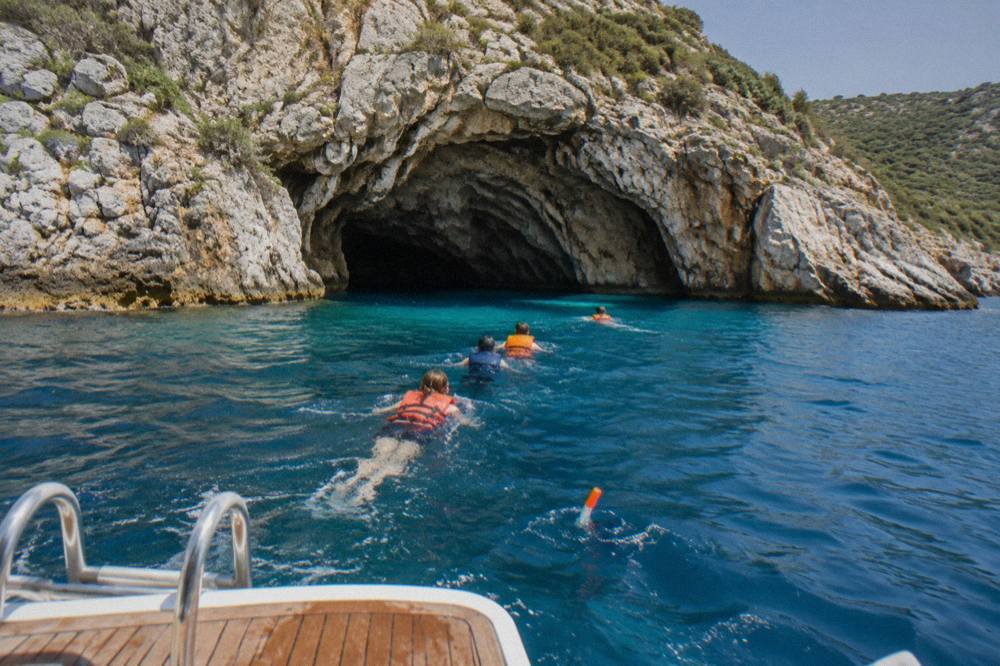
The tours that carry most of the volume from Kotor have all adapted the same way. The 3-hour Blue Cave, Submarine Base and Our Lady of the Rocks tour from Aquaholic Speedboat Tours, priced from $43 per person and rated 4.8 from 5,099 reviews, follows exactly this format: anchor outside, swim in, swim out, then continue around the bay. The listing text on these products is the place to confirm the swim stop for your chosen date, because sea state, not marketing, decides whether it happens.
How Does The Swim Into The Cave Actually Work?
The boat anchors a short distance from the cave mouth, crew hand out life jackets and foam kickboards, and guests slide or step into the water and swim roughly the final stretch to the entrance and inside the chamber. Operators report typical swim stops of around 30 minutes. Guides stay in the water or at the entry point, and the boat never leaves the swimmers.
In practice it is a short, supervised swim in calm, sheltered water, not an open-sea crossing. The operators' own guidance, published by Montenegro Submarine and Speed Boat Tours in its explanation of the 2026 rules, describes boats anchoring 10 to 20 metres from the entrance with crew managing the group in the water. You do not need to be a strong swimmer to take part, but you do need to be willing to float and kick for a few minutes without touching the bottom, because the water under the cave is deep. Life jackets are provided, and the kickboards mean even nervous swimmers can complete the entry. For more context on the rule itself, Radio Tivat's report on the Blue Cave motorboat ban sets out what changed and when.
What the swim feels like depends on the light. The cave's famous blue glow comes from sunlight refracting through the underwater entrance and filling the chamber with light, and it is strongest around the middle of the day when the sun is high. That is why so many departures cluster around late morning: tours leaving Kotor around 09:00 or midday time the cave stop for the brightest window. The glow is a natural phenomenon and no operator can promise it at full intensity on any given day, but the physics favours a midday visit.
There are a few honest caveats. The swim only happens when the sea outside the cave is calm enough, and boat trips on the bay are sometimes cancelled or rerouted for the bura or scirocco winds. Entry to the water is from the boat, usually a platform or ladder at the stern. And the chamber itself is a natural sea cave, so the floor is rock, the light is dim at the edges, and swimmers are asked to stay with the group. None of this is difficult, but it is real swimming, not wading.
Do You Need To Be A Strong Swimmer?
No, but you do need to be comfortable floating in deep water with a flotation aid for several minutes. Life jackets and kickboards are standard issue on the Kotor tours, the swim distance is short, and crew supervise the group, so confident-but-not-fast swimmers manage it easily. Non-swimmers should expect to stay on the boat.
The honest dividing line is not technique but water confidence. The water inside and outside the cave is well over your head, there is nothing to stand on, and the entry is from a boat ladder or platform. If being in deep water with a life jacket sounds fine, you will be fine. If it sounds frightening, sitting out the swim and watching from the boat is a normal choice, and on a typical trip a few guests do exactly that while the rest of the group swims. Operators do not treat the swim as compulsory.
Age and fitness wise, the tours are family products, and children swim with the same jackets and boards the adults get. The more useful filter is the sea on the day: a flat-calm morning makes the entry trivial, and a choppy one makes it a scrappy few minutes even for decent swimmers. Crew make the call on whether conditions allow the stop at all, and the listing's cancellation terms are where your refund or rebooking rights live if the cave is skipped.
If swimming from an anchored boat genuinely does not appeal, there is an alternative in the same regulation: kayaks, as non-motorized craft, may still enter the Blue Cave directly. A kayak-and-snorkel product such as the Blue Cave Kayak and Snorkel trip from Kotor, about 5 hours and from $136 per person with pickup per the listing, rated 4.7 from 96 reviews, reaches the cave under paddle power rather than swimming from an anchor point. It is more physical overall, but it removes the deep-water swim.
What Should You Bring For The Blue Cave Swim?
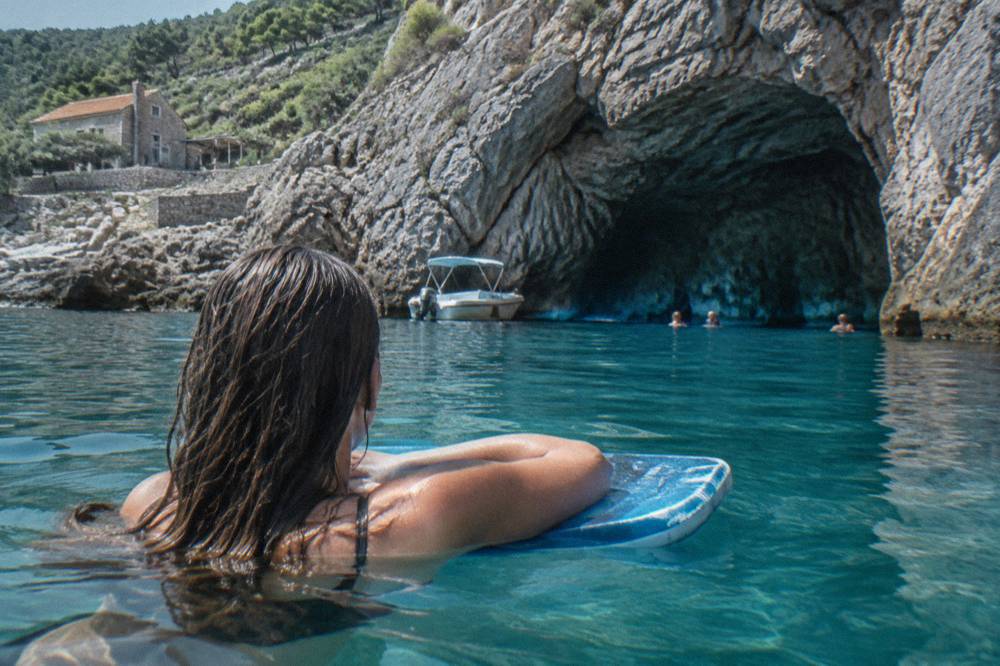
Bring a swimsuit worn under your clothes, a towel, reef-safe sunscreen applied before departure, and something dry to change into on the boat. Water shoes help on the ladder, and a dry bag protects a phone. Leave valuables at the hotel; most boats have only open deck storage, and anything that goes in the water goes at your own risk.
The packing list is short because the trip is short. Most tours run about 3 hours door to door from Kotor, which is not long enough to need much, but the swim stop plus the other stops, often Our Lady of the Rocks at Perast and a wartime submarine pier or tunnel, means you are in and out of the water and then walking around a stone island town. A cover-up or quick-dry layer earns its place. There is a small church and museum entry fee on Our Lady of the Rocks, typically a few euros paid at the desk, so a little cash or a card is handy for that too.
| Item | Why It Matters On This Trip |
|---|---|
| Swimsuit worn under clothes | No changing cabin on most speedboats; you swim in what you wore out |
| Life jacket and kickboard | Provided by the operator; say your size before departure |
| Towel and dry layer | The ride back across the bay is fast and windy, wet skin gets cold |
| Water shoes or sandals with grip | Ladders and rock are slick; Perast cobbles are uneven |
| Dry bag or waterproof phone pouch | Spray is routine on a fast boat; storage on deck is open |
| Small amount of cash or a card | Island church and museum entry at Our Lady of the Rocks is paid on site |
One thing not to bring is a rigid expectation of warmth. The site does not publish a verified water temperature for the cave, and none should be invented here: the sea is swimmable through the main season and cool early and late in it, and that is as specific as honest copy gets. For a fuller packing treatment across all Montenegro tour types, the What To Wear And Bring On Montenegro Tours guide covers the bay, the mountains and the monasteries in one place.
Which Tours Include A Swim Stop At The Cave?
Almost every Blue Cave tour departing Kotor now includes the swim-in stop as standard, because the 2026 motorboat ban made it the only way for boat passengers to experience the cave. The differences between listings are duration, price and the other stops bundled alongside, not whether the swim is offered. Before you pick a tour, the guide to reaching the Blue Cave explains where boats leave from and what to expect at the meeting points.
The three-hour format is the workhorse. Aquaholic's Blue Cave, Submarine Base and Our Lady of the Rocks tour, from $43 per person, and Montenegro Submarine and Speed Boat Tours' Blue Cave Swim trip, from $40 per person and rated 4.7 from 4,903 reviews, both run the classic loop: cave swim, Mamula island pass-by or submarine tunnels, and a Perast stop. Hawai Boat Tours' version ranges from about 3 to 7 hours depending on the option chosen, from $38 per person, rated 4.7 from 2,533 reviews. Longer variants add Old Town time or extra swimming; shorter ones, like the 2-hour speedboat to Perast from $33 per person, skip the cave entirely, so read the itinerary before assuming.
| Tour (all from Kotor) | Duration | From | Rating And Reviews | Swim Stop |
|---|---|---|---|---|
| Blue Cave, Submarine Base, 3 Hours | ~3 hours | $43 per person | 4.8 from 5,099 reviews | Yes, swim-in from anchor |
| Blue Cave Swim, 3.5 Hours | ~3 to 3.5 hours | $40 per person | 4.7 from 4,903 reviews | Yes, swim-in from anchor |
| Blue Cave, War Tunnels, 7 Hours | ~3 to 7 hours | $38 per person | 4.7 from 2,533 reviews | Yes, swim-in from anchor |
| Blue Cave and Perast, 4 Hours | ~4 hours | $51 per person | 4.9 from 343 reviews | Yes, swim stop included |
| Blue Cave Kayak and Snorkel | ~5 hours | $136 per person | 4.7 from 96 reviews | Kayak entry, then snorkel |
Prices are the live listing's starting figures for adults and move with season and demand, so treat them as the floor rather than a quote. The pattern worth noticing is how little the price varies for the same core product: roughly $38 to $51 buys the cave swim plus a Perast stop across a dozen operators, and the premium options are buying smaller groups, private boats or longer itineraries, not a different cave. If the swim is the point of your trip, this Montenegro Tours article's core advice is simple: pick on schedule fit and group size, not on the promise of a better swim.
Can The Swim Be Cancelled Even After You Book?
Yes. The swim stop, and sometimes the whole trip, is cancelled or rerouted when wind and swell make the cave entrance unsafe, most often with the bura or scirocco winds, and this is stated openly on the listings. Operators offer rescheduling or refunds per their cancellation terms, which you should read before booking rather than after.
The bura is a cold, gusty northeasterly that funnels down the mountains, and the scirocco, locally the jugo, is a steadier southeasterly that brings swell and haze; both are stronger and more frequent outside midsummer and can blow for one to three days at a stretch. When either is running, the exposed stretch of coast where the cave sits becomes unpleasant at best and dangerous at worst, and no responsible captain pushes it. Trips usually still run in the sheltered inner bay, substituting Perast, Mamula and the submarine tunnels for the cave stop.
Two practical consequences. First, book the cave trip early in your stay, not on your last day, so a weather cancellation leaves you a day to retry. Second, when a forecast looks marginal, check the listing's terms before you sail rather than after; the cancellation and refund conditions are on the operator's booking page, and they differ slightly between operators. A cave swim that turns into a bay tour is a decent consolation prize, but you want to know in advance which one you are paying for. The Blue Cave sea conditions and best time guide goes deeper on the wind patterns and timing your booking around them.
Is The Cave Deeper Or Colder Than A Normal Swim?
The water is deep enough that you cannot stand anywhere in or near the chamber, and you should expect it to feel cooler than a sheltered beach, especially early and late in the season. No verified depth figure or water temperature for the cave is published, and any article quoting one precisely is guessing.
What can be said honestly is practical. The depth is the reason life jackets are handed out without being asked for and why the entry is from the boat rather than from rocks: there is no shallows to walk into. The coolness is relative. The Adriatic warms through the summer and cools again in autumn, and swimmers in July describe a different sea than swimmers in May, but a specific temperature number would be invented, so none is printed here. If you swim easily in the Mediterranean in early summer, the cave will not shock you; if you need bathwater, go midsummer.
The swim itself is over quickly. Between the boat and the chamber and back is a matter of minutes each way, and most guests spend longer floating just inside the entrance, looking at the light, than they spend actually swimming. That is the design of the stop: the kickboard exists so you can hang in the water and watch the blue rather than fight to hold position. Snorkel masks are worth bringing if you have them, because the refracted light under the surface is half of the effect.
Can You Swim Somewhere Else On The Same Tour?
Yes, most Blue Cave itineraries include a second, more relaxed swimming stop in a sheltered cove on the Lustica peninsula or inside the bay, where the swimming is optional, shallower-feeling and longer. Some listings also stop at the submarine tunnels and at Perast, where swimming is not part of the visit.
The cave swim is the headline, but the bay stops are where many guests actually relax, because there is no time pressure and no group movement to keep up with. The Exclusive Blue Cave Swim trip from LIMITLESS SPEED BOAT KOTOR, from $57 per person and rated 4.8 from 592 reviews, and the 4-hour Blue Cave and Perast tour, rated 4.9 from 343 reviews, both market additional swim time beyond the cave. If a long float matters more to you than the cave itself, the longer formats are the better buy; the three-hour trips fit the cave, Perast and the tunnels into one loop and keep the swimming brisk.
For swimmers who want the water without a boat at all, the bay offers its own options, covered in the question can you swim in the Bay of Kotor. But the honest summary is that the combination, one dramatic cave swim plus one lazy cove stop plus a walk around Perast, is exactly what the standard three-hour tour sells, and it is a well-designed half day.
What Do Reviews Say About The Swim?
Reviews consistently describe the swim-in as the highlight of the trip and the part guests remember, with the recurring caveat that crowding outside the cave in peak season tests patience. Reviewers who could not swim, or whose trip hit weather, note the crew handled it well but wished they had known the format in advance.
The pattern across recent guest reviews on the live listings is stable. Swimmers loved it: the blue light, the surprise of the water, the guides keeping everyone together. Families with confident kids called it the best hour of their holiday. The complaints cluster around two things. First, in July and August several boats can be anchored at the cave at once, so you wait your turn in the water, and the chamber is busy during your minutes inside. Second, guests who expected to ride a boat into the cave, the pre-2026 experience described in older travel articles, were caught out by the swim-only format until the skippers explained it.
Both complaints have the same fix: timing and reading. Travel in June or September and the cave is quieter and the water still warm. Book any month after reading the listing's own description of the swim, which since the 2026 rule is explicit on every major product. The operator's own summary of the new arrangement, published by Montenegro Submarine and Speed Boat Tours at its explanation of the Blue Cave rules, is worth two minutes before you commit, because it describes exactly the anchored, swim-in format your trip will use.
How Much Does A Trip With A Cave Swim Cost?
The standard shared speedboat tours with the cave swim start between $38 and $45 per person for roughly three hours, depending on operator and season. Longer or premium formats run $51 to $57, and private boats for a group start around $342 for up to eight guests. These are live-listing starting prices, not quotes.
The budget spread is narrow enough that price should rarely decide it. What moves the number materially is format: private speedboats such as the Hawaii Boat Tours Kotor private Blue Cave tour at from $342 per group for up to 8 guests, rated 4.8 from 168 reviews, or the private boat for up to 9 from $389 per group, buy you a flexible schedule, a longer swim stop and no strangers, at several times the per-person cost of a shared trip. For most travellers the shared three-hour loop at around $40 is the rational choice, and the upgrade decision is about group size and time control, not a better cave.
| Format | Typical Price | Who It Suits |
|---|---|---|
| Shared 3-hour speedboat | $38 to $45 per person | First-time visitors wanting cave, tunnels and Perast in one loop |
| Shared 4 to 7-hour tour | $51 to $57 per person | Swimmers wanting longer stops and Old Town time |
| Kayak and snorkel trip | From $136 per person | Active travellers avoiding the motorboat ban question entirely |
| Private boat, up to 8 or 9 | From $342 to $389 per group | Families and groups wanting their own schedule |
One cost note that catches people: the island church and museum at Our Lady of the Rocks charges a small entry fee, typically a few euros, paid on site and separate from the boat fare, and it was never part of your ticket price. The boat tour price covers the boat, the guide and the swim stop; everything on land is your own. For the full price picture across every Blue Cave option on this site, the Blue Cave tour cost breakdown lists current starting prices by format.
Common Questions About Swimming In Blue Cave Montenegro
Can You Swim In Blue Cave, Montenegro?
Yes. Since a 2026 navigation rule banned motorboats from entering the cave, swimming in from an anchored boat is the standard way every tour guest experiences it. Life jackets and kickboards are provided, and the swim is short and supervised.
Do The Boats Enter The Blue Cave?
No. Under the regulation, motorboats must keep clear of the cave mouth, and tour boats anchor 10 to 20 metres outside the entrance while guests swim in. Only non-motorized craft such as kayaks may enter the chamber.
How Long Is The Swim Stop?
Operators report a typical swim stop of around 30 minutes at the cave, which covers the swim in, time floating inside the chamber and the swim back to the boat. Longer tour formats add separate cove swimming on top.
Can Non-Swimmers Still Take The Tour?
Yes. Non-swimmers stay on the boat during the cave stop and still see Perast, Mamula and the submarine tunnels. The rest of the itinerary is unchanged, and staying aboard is a normal choice the crews see every day.
Is The Cave Swim Guaranteed When I Book?
No. Wind and swell, especially the bura and scirocco, can cancel the cave stop or the whole trip. Operators reschedule or refund per their cancellation terms, so read them on the listing before booking.