Do They Speak English In Montenegro?
English is widely used across Montenegro's coastal towns and tourism industry. This guide covers where English works, where it thins out, and how tour listings handle language for visitors.
Do They Speak English In Montenegro?
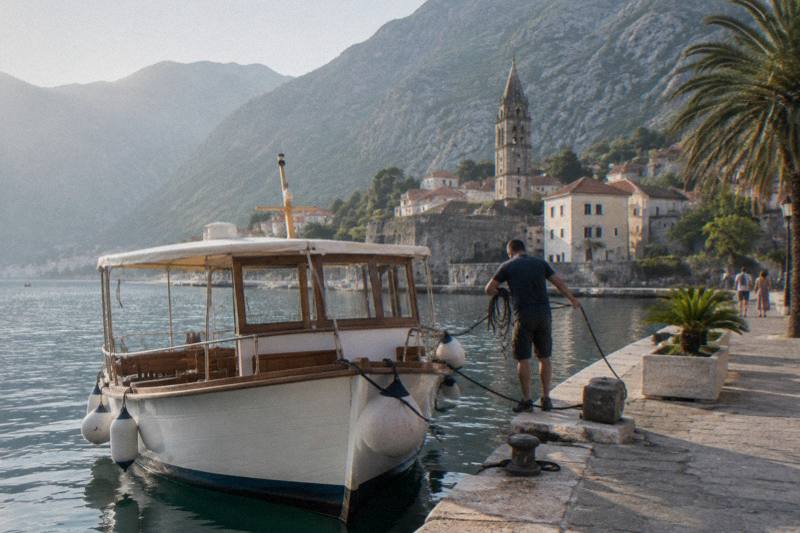
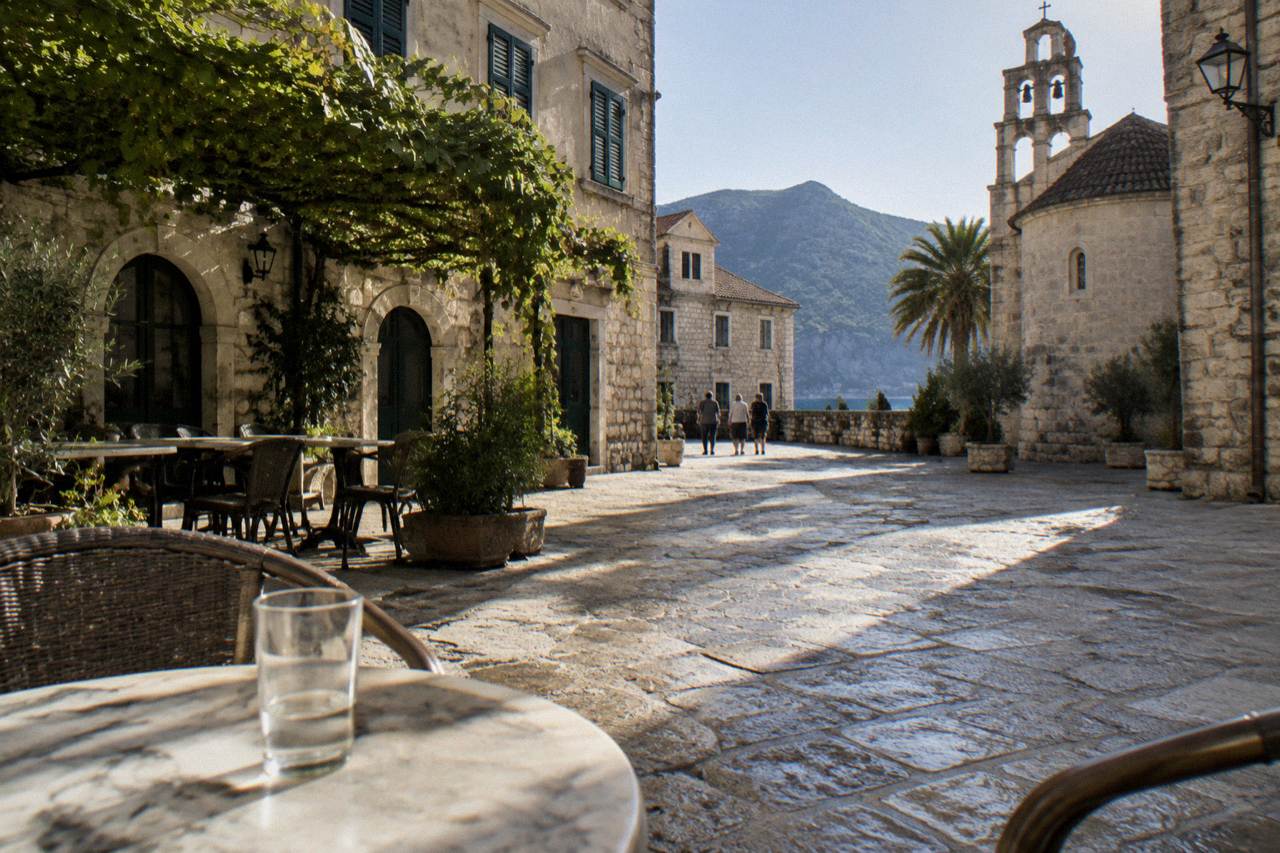
Yes, in the places visitors actually go, English is spoken widely enough that most travellers never need another language. Montenegro's tourism industry runs on international guests, and coastal towns such as Kotor, Budva and Perast handle English across hotels, restaurants, boat docks and ticket desks year after year. Deeper inland the comfort level drops, but even there, patience and a translation app cover almost every situation a visitor will meet.
Montenegrin is the official language, and it sits close to Serbian, Croatian and Bosnian, so a phrase in any of those will be understood everywhere. Russian, German and Italian show up on the coast in pockets built by decades of package tourism. But English is the shared default between locals and visitors, and the further you move toward the Bay of Kotor and the Budva riviera, the more that holds.
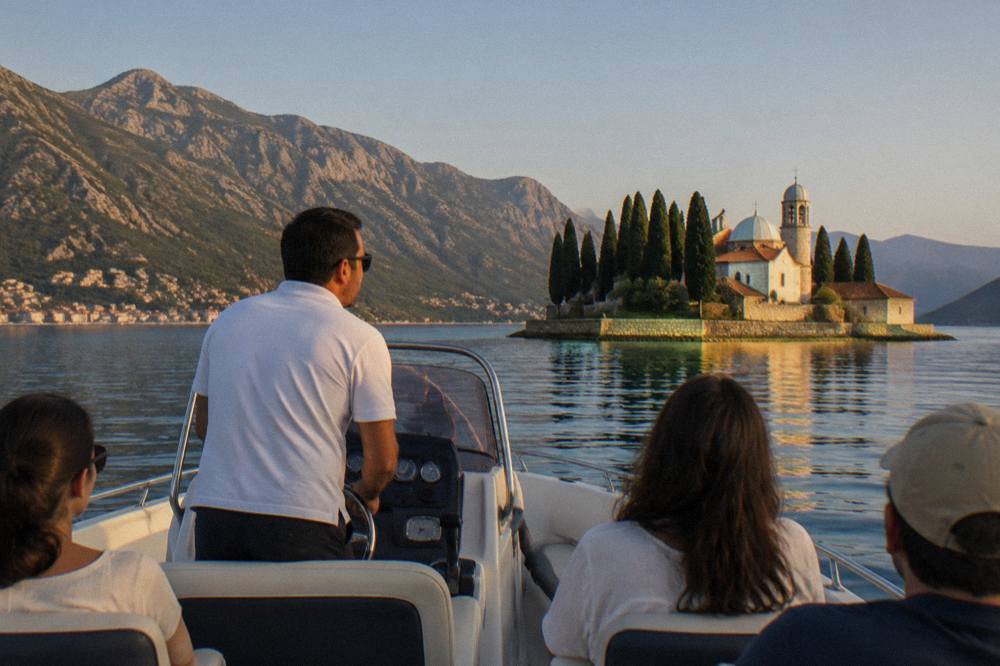
The practical proof is in the products. The country's most-bookable experiences, from speedboat trips on the bay to rafting runs on the Tara River, are sold to an international market in English, with operators such as Aquaholic Speedboat Tours Kotor and Montenegro Submarine and Speedboat Tours running several departures a day through the season. A trip like the Blue Cave, Submarine Base and Our Lady of the Rocks tour from Kotor, from $43 per person and rated 4.8 from 5099 reviews, is delivered in English as standard, because the passengers are British, American, Australian and everything between. If you are weighing whether a boat day makes sense at all, our piece on whether a boat tour in Kotor is worth it covers the value question separately.
That said, English in Montenegro is a tourism phenomenon more than a universal one. Outside the season, outside the coast and outside the industry, you will meet people whose English is limited to numbers and greetings. This article walks through exactly where the language works, where it thins, and what to do in the gaps.
Do Tour Guides In Montenegro Speak English?
On essentially every commercially bookable tour in the country, yes. Listings for Montenegro's tours are written and sold in English, operated by crews and guides who work with international guests daily, and guest reviews in English pile up by the thousands on the biggest products. A traveller who books rather than improvises will hear English from the moment they meet the operator.
The roster of tours on this site tells the story on its own. Montenegro Submarine and Speedboat Tours runs both a 3.5 hour Blue Cave swim trip from $40 per person, rated 4.7 from 4903 reviews, and a 2 hour speedboat run to Perast from $33 per person, rated 4.7 from 1129 reviews, out of Kotor. Sea Dog Speed Boat Tours, Easy Boat Tour, Hawai Boat Tours Kotor and MontenegroGlobe all sell the same kind of bay circuit to English-speaking guests. Further afield, Gray Line Montenegro and 360Monte run full-day mountain excursions, Miro & Sons Montenegro Tours leads food walks and old town walks, and rafting operators such as Rafting Tara North Challenge put English-speaking guides on the water. None of these products could function in Montenegrin alone.
The pattern extends to the free and tip-based end of the market too. Tip-based walking tours in Kotor, Budva and Podgorica are offered in English by local licensed guides, some in English and Spanish, some in English and Italian, because the audience is almost entirely foreign. The same logic applies to niche products: a private cooking class with lunch from Montenegro Travel Club, from $217 per person, or a home food and wine tasting with Montenegro Golden Bay, from $183 per person, both depend on English conversation between hosts and guests around a table.
The review pools themselves are evidence. Thousands of guests have left English-language reviews on the bay's boat products, a volume that only builds when the experience itself runs in English. A quick look at the biggest tours shows how international, and how English-heavy, the customer base really is.
| Tour | Operator | Rating and review pool | Price |
|---|---|---|---|
| Blue Cave, Submarine Base, 3 Hours | Aquaholic Speedboat Tours Kotor | 4.8 from 5099 reviews | From $43 per person |
| Blue Cave Swim, 3.5 Hours | Montenegro Submarine and Speedboat Tours | 4.7 from 4903 reviews | From $40 per person |
| Blue Cave, War Tunnels, 7 Hours | Hawai Boat Tours Kotor | 4.7 from 2533 reviews | From $38 per person |
| 2-Hour Speedboat to Perast | Montenegro Submarine and Speed Boat Tours | 4.7 from 1129 reviews | From $33 per person |
| Shore Speedboat, Blue Cave, 3 Hours | Montenegro Submarine and Speed Boat Tours | 4.9 from 287 reviews | From $51 per person |
If language doubt has been holding back a booking, it should not. Check the listing for the language line before you book if you want certainty, but on anything sold internationally, English is the working language.
Is English Enough For Booking Tours And Day Trips?
For anything you book in advance, yes. Booking pages, confirmation emails, meeting point instructions and cancellation terms are all delivered in English, and meeting points are given as addresses and map pins rather than spoken directions. The transaction happens before any conversation does, so the language of the dock or the van matters far less than travellers fear.
Consider the flow of a typical day trip. A traveller books the Blue Cave, War Tunnels trip with Hawai Boat Tours Kotor, from $38 per person, rated 4.7 from 2533 reviews, and receives written instructions in English for where to board in Kotor. On the day, the crew briefs passengers in English about the swim stop and the cave, and the only Montenegrin spoken is between crew members. Day trips from Dubrovnik, such as the 11 hour Montenegro excursion from $56 per person rated 4.4 from 5782 reviews, work the same way: the guide narrates border crossings, bay viewpoints and Perast stops in English for a mixed coach of foreigners.
The one place to read carefully is the fine print rather than the language. Cancellation terms, weather clauses and what is included differ between listings, and those differences matter more than linguistics ever will. Boat trips on the bay are cancelled for wind and swell, the bura and the scirocco, and operators rebook or refund per their own terms, so check the listing's policy before assuming anything.
| Situation | Language you will encounter | How English holds up |
|---|---|---|
| Booking a tour online | Listing, terms and confirmation in English | Fully covered |
| Speedboat trip on the Bay of Kotor | Crew safety briefing and commentary in English | Fully covered |
| Old town guided walk | Licensed guide narrating in English | Fully covered |
| Restaurant on the coast or in Kotor | Menu in Montenegrin and English, staff bilingual | Comfortable |
| Taxi or local bus inland | Driver may speak limited English | Numbers, a map and a translation app |
| Village shop or mountain guesthouse | Montenegrin, sometimes German or Russian | Basic phrases help |
Do People Speak English In Kotor, Budva And The Coast?
Along the coast, English is part of the everyday economy, not a courtesy extended to tourists. Kotor and Budva in particular have spent decades absorbing cruise passengers, sailing crews and summer holidaymakers, so waiters, ticket sellers, apartment hosts and shop staff switch into English without hesitation. In the height of summer it can feel like the town's second working language.
Kotor's economy is built around visitors arriving on foot from the port, and the town has the language to match. The Kotor City Walls fee, EUR 15 for non-residents since 01/03/2025 per the municipality's own notice, is collected from international guests all day, every day. Shore excursions such as the 3 hour Blue Cave speedboat trip from Montenegro Submarine and Speedboat Tours, from $51 per person and rated 4.9 from 287 reviews, exist precisely for this crowd.
Budva works the same way. Its old town stalls, beach clubs and excursion desks trade in English through the whole season, and the town's kayaking and paddleboard operators, such as EDDY Kayak and SUP Adventures with its coastal caves tour from $51 per person rated 4.9 from 248 reviews, brief groups in English by default. Perast, Tivat and Herceg Novi follow the same pattern at smaller scale, because a town that lives from bay tourism cannot function otherwise.
The coast is also where English holds longest into the shoulder season. A restaurant that needs foreign custom in October keeps its English menu out; a mountain village that does not host foreigners in any season never needed one.
What About English In Podgorica And Inland Montenegro?
In the capital and the bigger inland towns, English is common among younger people, professionals and anyone in services, but it is less universal than on the coast. In Podgorica, Bar and Niksic you can bank, dine and shop in English. In mountain villages around Durmitor and the far north, expect polite, basic exchanges and a translation app for anything detailed.
Podgorica supports a tip-based walking tour scene delivered in English, including history walks with local guides from $24 per person, which tells you a functioning English-speaking guide economy exists in the capital. Museums, the airport and business hotels all handle English. Bar, further down the coast, sees far fewer cruise calls than Kotor but sits comfortably in the bilingual coastal zone.
The north is different in degree rather than in kind. Zabljak, the base town for Durmitor National Park at 1,456 metres, lives from hiking and rafting tourism, so guesthouses, tour desks and rafting outfits manage English for bookings and briefings. Rafting Republic Wild River runs 4 hour Tara canyon trips from $56 per person, rated 4.8 from 138 reviews, with international guests on every boat through the May to October season. The official national tourism organisation describes the Tara as a 144 km river running through a canyon 78 km long and up to 1,333 m deep, facts every guide recites in several languages a day. But step away from the tourism counters, into a village shop or a family farm, and English confidence drops quickly.
That drop is not hostility, it is exposure. The coast has hosted foreign guests for fifty years; a hamlet above the Tara has hosted a handful. A little Montenegrin, even just a greeting, goes a long way inland, and the national tourism body's rafting pages show how the industry already bends toward the visitor.
How Do Menus, Signs And Tickets Work For English Speakers?
Coastal and tourist-area menus are typically bilingual, important road and town signage uses the Latin alphabet, and ticketing at the major sights is a transaction of numbers and pointing more than conversation. A visitor with no Montenegrin can eat, drive and pay entry fees without a phrasebook; the only friction shows up at small rural counters and with handwritten menus.
Menus in Kotor, Budva and Perast almost always carry an English version, sometimes with prices in euros only, since Montenegro uses the euro despite sitting outside the EU. Further inland the menu may be Montenegrin only, but dishes translate easily with a phone camera. Road signs use both the Latin and Cyrillic alphabets depending on the region, and the Latin script is readable to anyone with English: Kotor, Budva, Cetinje, Zabljak look exactly as they sound.
Tickets are simple. At Montenegro's five national parks, entry costs between EUR 3 and EUR 5 per adult per day depending on the park, with an annual all-parks pass at EUR 13.50, per the official national parks price list, and the transaction is cash or card and a receipt, not dialogue. At Ostrog Monastery, the Orthodox pilgrimage site wedged into a cliff, entry is free with donations customary and a modest dress code of covered shoulders and knees; the monastery keeps daily hours year-round, and no conversation is needed to walk its chambers.
One practical note worth knowing: EU roaming rules do not apply in Montenegro, so an EU phone plan can bill roaming rates there. Download an offline translation file and an offline map before you leave accommodation wifi, and the few language gaps that remain close entirely.
Should You Learn Any Montenegrin Words?
You do not need Montenegrin for a successful trip, and locals do not expect it, but a handful of words changes the tone of every interaction. Greetings, thanks and please cost nothing to learn and are noticed everywhere, especially inland. Learn ten words, not a hundred, and deploy them at the start of each exchange before switching to English.
The useful ten are short. Dobar dan means good day and works from mid-morning until evening. Hvala is thank you, and hvala puna is thank you very much. Molim covers please, you are welcome and pardon me all at once. Zdravo is an informal hello, dovidenja is goodbye, and izvinite is excuse me. For the practical moments: koliko kostaje means how much does it cost, racun is the bill, and gdje je is where is. Numbers help at markets, though staff will type any price into a calculator or phone for you anyway.
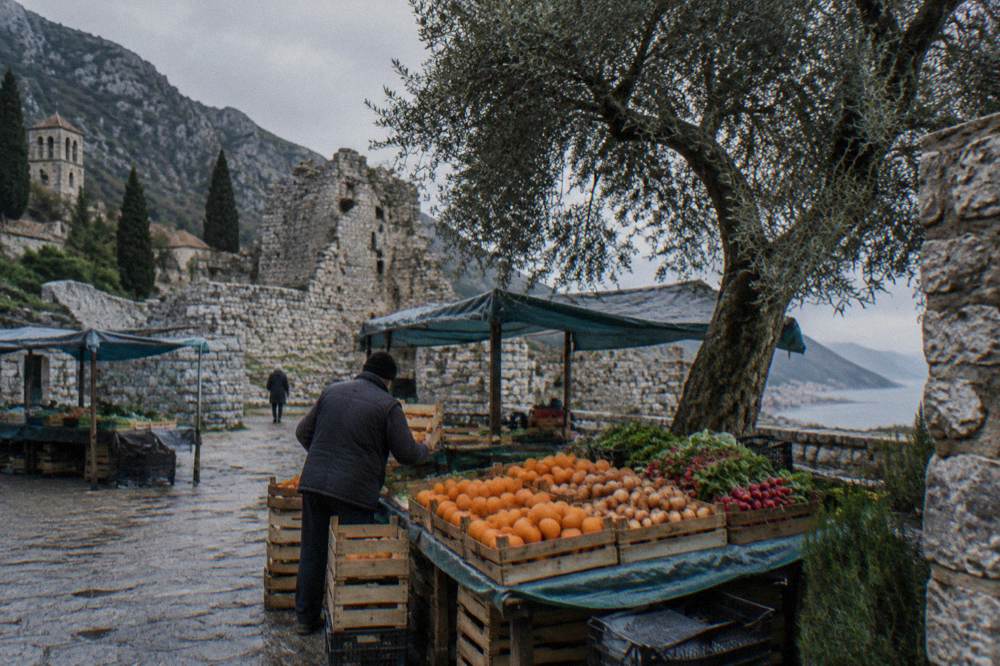
The reason to bother is social rather than functional. On a boat, the crew will brief you in English regardless. But in a Njegusi smokehouse on the road to Lovcen, or at a Crmnica winery tasting near Lake Skadar, opening in Montenegrin before falling into English signals something, and hosts respond to it. Montenegrin sits so close to Serbian, Croatian and Bosnian that your ten words will also work across the border in Dubrovnik, which matters for the many travellers who combine both coasts on one trip.
Do You Need Montenegrin For Private Tours Or Local Hosts?
No, and private tours are in some ways the easiest language environment of all, because you have one host whose job is to talk to you. Private guides, boat skippers and cooking-class hosts across Montenegro work in English with international clients as their core business, and a private format means the conversation moves at your pace, not a group's.
The private listings on this site are uniformly English-delivered. A private boat for up to 9 guests with Montenegro Submarine and Speedboat Tours, from $389 per group and rated 4.9 from 221 reviews, or the flexible VIP private charter from $169 per person, rated 4.9 from 210 reviews, both put an English-speaking skipper beside you for the whole bay circuit. The same operator family sells the 3.5 hour Blue Cave swim trip from $40 per person for shared departures, so the choice between private and shared never turns on language. Our guide to choosing between private and group tours in Montenegro breaks down the price logic.
Hosted experiences work identically. Miro & Sons Montenegro Tours runs a private old town walk recommended by a well-known American travel writer, from $63 per person and rated a perfect 5 from 74 reviews, and a Kotor food tour from $160 per person rated 4.9 from 60 reviews; both are conversation-led, and both exist for English-speaking guests. A private home food and wine tasting, from $183 per person with pickup stated on the listing, is literally a family receiving you in English around their own table.
Even remote logistics are fine. Mont Travelers runs an 11 hour Black Lake and Tara canyon day trip from Podgorica with pickup stated on the listing, from $277 per person, and Natour Montenegro runs private canyon itineraries from $177 per person, again with pickup per the listing. Guides narrate in English across the whole drive.
What Happens At The Border, In Taxis Or With Police Without Montenegrin?
At border crossings, in taxis and with any official, English or basic shared vocabulary is enough, and signage plus documents do most of the work. Border police across the Croatia to Montenegro crossing handle foreign travellers all day, taxi drivers on the coast are used to English addresses shown on a phone screen, and written documents matter more than spoken fluency in any official encounter.
The main crossing for Dubrovnik travellers, Debeli Brijeg on the Montenegrin side and Karasovići on the Croatian side, processes a steady stream of foreign vehicles through summer. Since 10/04/2026 the EU's Entry/Exit System has been fully operational at EU external borders, meaning non-EU travellers register fingerprints and a facial image instead of collecting passport stamps on the Croatian side; the EU delegation's own explainer covers the mechanics. None of it requires conversation. Queue length varies enormously by season and hour, and no reliable figure should be trusted for planning, so cross early and carry snacks.
Taxis are a numbers game in any language. Agree the fare or confirm the meter before the car moves, show the destination on a map, and the ride proceeds in whatever mixture of languages suits. Rental cars add one genuine language-adjacent task: crossing into Croatia requires a Green Card insurance certificate and explicit cross-border permission in the rental contract, documents, not dialogue.
Police and emergency services deal with tourists constantly on the coast, and the EU emergency number 112 works in Montenegro with English-speaking operators. For everything short of an emergency, a translation app plus a paper booking confirmation solves nearly everything a visitor will ever need to explain.
So How Much Of A Language Problem Is Montenegro, Really?
For a visitor staying on the coast, booking tours in advance and carrying a phone, the language barrier is close to zero, and this puts Montenegro ahead of several better-known European destinations for friction-free travel. The industry's entire booking layer, from listings to briefings to reviews, runs in English, and the ten-word courtesy vocabulary closes whatever social gap remains.
Think of it in tiers. The tourism tier, guides, skippers, hotel desks, excursion offices, is functionally bilingual. The service tier, restaurants, taxis, shops on the coast, is comfortable with English and a pointing finger. The everyday tier, rural buses, village counters, older residents inland, is where a few Montenegrin words and an offline translation file earn their keep. Most itineraries, which concentrate on Kotor, Perast, Budva, Skadar Lake and the northern parks, touch the first two tiers almost exclusively.
The question most travellers should actually ask is not whether English works, but how many days they need, and our answer on how many days in Kotor is enough handles that. If you are deciding whether an organised excursion beats exploring solo, the piece on needing an excursion in Kotor weighs it up. On Montenegro Tours every bookable product page states its own details, so language is one line you can confirm before committing.
In short: arrive with English, leave with hvala. The country will meet you more than halfway, and on the water, where most visitors spend their best hours, it has been doing so for decades.
Common Questions About Speaking English In Montenegro
Do They Speak English In Montenegro?
Yes, widely in the tourist areas. The coast around Kotor, Budva and Perast works comfortably in English across hotels, restaurants and tour desks, and every commercially bookable tour in the country is delivered in English to international guests. Inland and off-season English thins out, but a phone translation app covers almost everything.
Do Montenegro tour guides speak English?
Yes. Tours sold to international visitors, including speedboat trips on the Bay of Kotor, old town walks, rafting runs on the Tara and food tours, are operated in English as standard. Check the language line on the live listing if you want it confirmed before booking.
Is English enough to book tours and day trips?
Yes. Listings, confirmations, meeting point instructions and cancellation terms are all in English, and meeting points are given as addresses or map pins. Day trips from Dubrovnik and shore excursions from Kotor are narrated in English for mixed international groups.
Do people speak English in Kotor and Budva?
Yes, comfortably. Both towns depend on foreign visitors, including cruise passengers at Kotor's port, and staff in restaurants, shops and ticket desks switch to English without hesitation. English holds through the shoulder season too, since the towns still need foreign custom.
Should I learn any Montenegrin before my trip?
You do not need to, but ten words change the tone of interactions, especially inland. Dobar dan, hvala and molim cover greeting, thanks and please, and koliko kostaje handles how much at markets. Montenegrin is close enough to Serbian, Croatian and Bosnian that the same words work in neighbouring countries.
Can I get by in Montenegro without speaking the language at all?
Yes. Book tours in advance, carry your booking confirmations, download offline translation and maps before you leave wifi, and show taxi drivers your destination on a screen. Signage in the Latin alphabet is readable to English speakers, entry tickets are simple transactions, and emergency operators on 112 handle English.