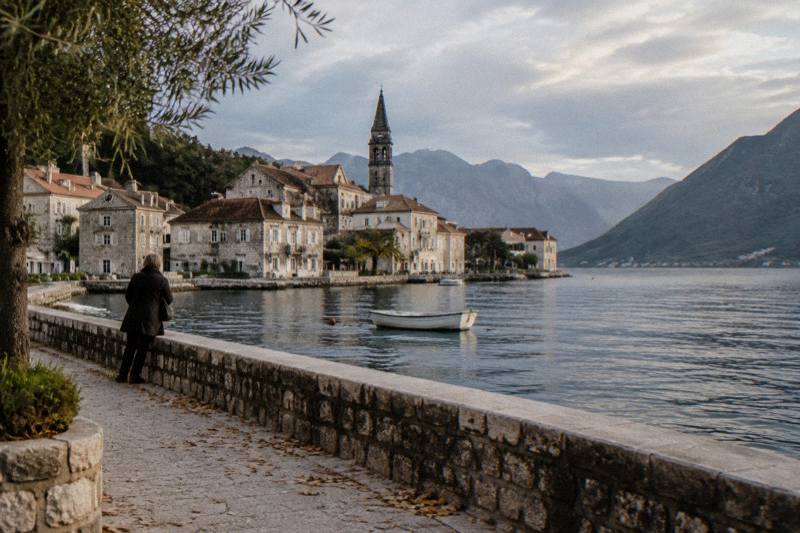
Montenegro Border Crossing From Croatia
The Dubrovnik to Montenegro border crossing sits on almost every day trip from Croatia, and since April 2026 it works differently than it used to. Here is what changes, what documents you need, and when paying for a tour instead of driving yourself makes sense.
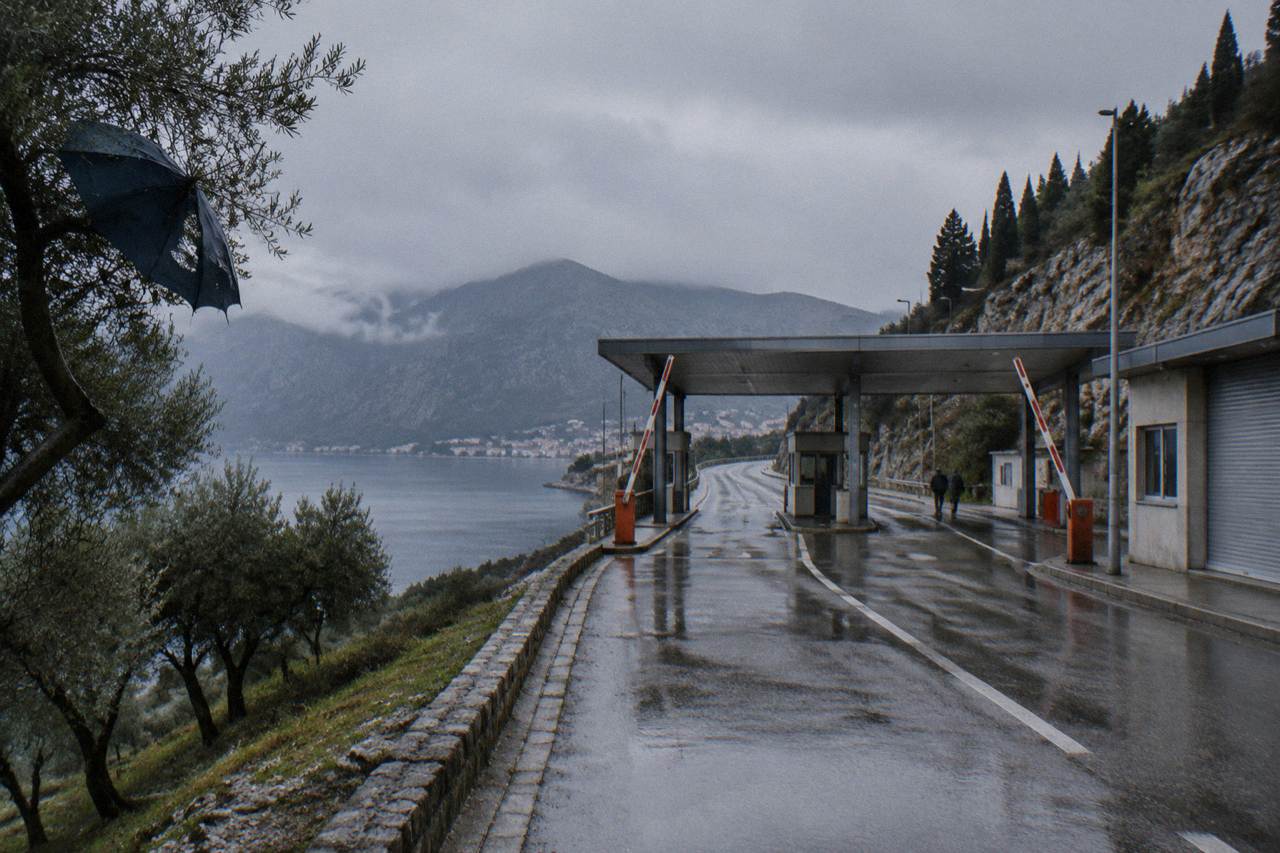
Short answer
US, UK and EU citizens generally need no visa for short stays in Montenegro, just a valid passport; EU citizens can also use a national ID card for up to 30 days. Since 10 April 2026, the EU Entry/Exit System registers fingerprints and a facial image on the Croatian side. Wait times vary and are not reliably published.
The Dubrovnik to Montenegro border crossing is the single variable that decides whether a day trip to Kotor, Perast or Budva works or collapses. Two countries, one narrow coastal road, and since April 2026 a new European Union biometric system on the Croatian side have changed the arithmetic that older guidebooks still print. This guide lays out the documents, the rules, the rental car paperwork and the honest trade-off between driving yourself and letting a tour operator run the clock. If driving yourself is the plan, this guide on taking a rental car from Croatia to Montenegro explains the cross-border fee, the green card question, and the paperwork rental desks rarely volunteer on their own.
Montenegro is not in the European Union and not in Schengen, which is why the crossing exists at all. Croatia is in both. That single fact explains everything else on this page: why your passport gets scanned or stamped, why your rental contract matters, and why a bus or a tour can feel very different from a steering wheel. For the wider question of whether a coach trip across the border is worth the day, the Dubrovnik to Kotor tour comparison breaks down both sides in detail.
What Documents Do You Need At The Montenegro Border?
Crossing into Montenegro from Croatia requires a valid passport for almost everyone. US, UK and EU citizens generally need no visa for short stays, and the commonly cited allowance is 90 days in any 180-day period, though this figure is not confirmed on an official Montenegrin page, so check the Montenegrin Ministry of Foreign Affairs site before you travel. EU citizens have an additional option: a national ID card, valid for stays of up to 30 days.
Children need their own documents, not a place on a parent's passport, and standard family paperwork applies if you are travelling with a child whose other parent is not with you. Montenegrin border police can ask for proof of accommodation or a return ticket, so having a hotel confirmation to hand is sensible even though most travellers are never asked.
Three practical points worth knowing before you pack:
- Your passport should have enough validity left; the safest assumption for any Balkan crossing is at least six months, and airlines may enforce this before you even land in Dubrovnik.
- Montenegro uses the euro despite not being an EU member, so you do not need a second currency for the day trip itself.
- Keep travel insurance details accessible; it is occasionally requested at the booth.
For the full entry picture including what the new European systems do and do not require, the Montenegro entry requirements explained guide covers it in depth. The short version for the border itself: carry a passport, know your dates, and do not plan a trip around an ETIAS travel authorisation that is not yet in operation. Official EU pages state plainly that the system is not running and no applications are being collected, so any third party selling you one is selling you nothing.
How Does EES Change The Croatian Side Of The Border?
Since 10 April 2026, the EU Entry/Exit System, or EES, has been fully operational at all external Schengen borders, including Croatia's. It replaces passport stamping with biometric registration, fingerprints plus a facial image, for non-EU visitors on short stays. Your entry to Croatia and your exit back into Croatia are recorded electronically, and each first registration takes longer than a stamp did. If longer waits at the booth have you reconsidering how many crossings to build into your trip, this side by side comparison of Montenegro and Croatia can help you decide which country deserves more of your time.
The European External Action Service explains the system for Western Balkan travellers in detail: the official EEAS briefing on EES for the region. The part that matters on a Dubrovnik day trip is the return leg. Entering Montenegro is a standard checkpoint. Re-entering Croatia means an EES record for anyone who is not an EU citizen, and that record is created with fingerprints and a camera at the booth, not in a back office.
What this means in plain terms for a day tripper:
| Situation | What EES does | Extra time at the booth |
|---|---|---|
| EU citizen with an EU passport or ID | No EES record, standard check | None |
| UK, US, Australian, Canadian passport | Biometric record on entry to Croatia and exit from Croatia | First crossing longest |
| Same-day return from Montenegro | Exit and re-entry both recorded | Slower in a full coach |
| Repeat entry within validity | Fingerprints and image already on file, faster matching | Less than the first time |
Two things EES does not do. It does not apply to the Montenegrin side of the border, which runs its own checks with its own stamps for those who receive them. And it is not a visa: your right to be in either country is unchanged, only the recording method is new. ETIAS, the separate travel authorisation for visa-free visitors to the EU, is a different system again, and no start date has been confirmed, so plan around today's rules, not a rumoured ones.
How Long Does The Dubrovnik To Montenegro Border Crossing Take?
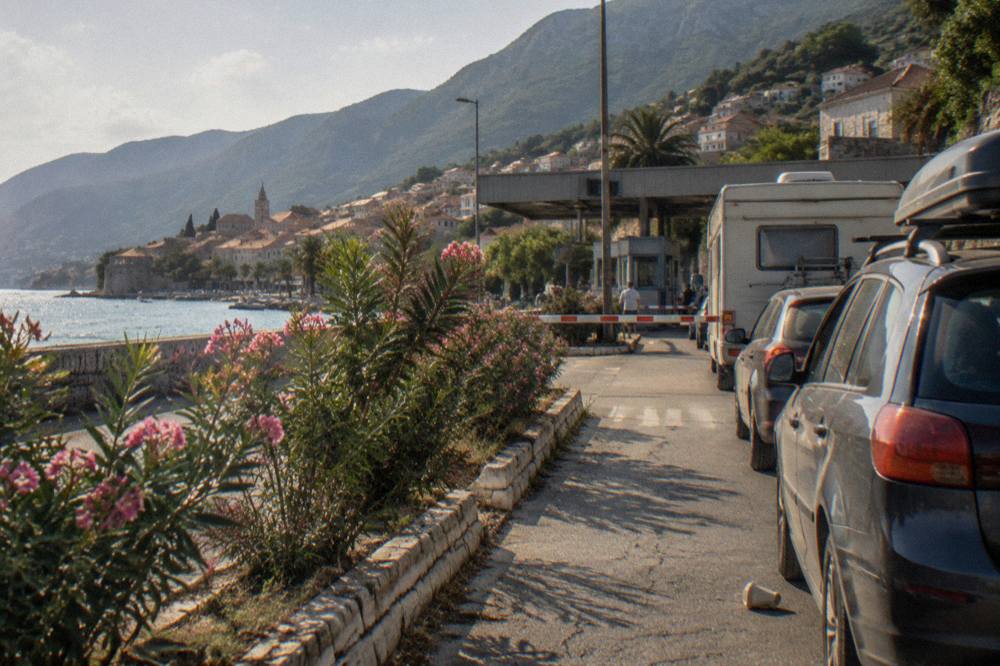
No honest source publishes a reliable hour figure for this crossing, and this site will not invent one. Wait times swing with season, day of week, cruise arrivals and how many coaches are ahead of you, from minutes at 7am in October to a long hot standstill at midday in August. Treat any specific number of hours quoted in a forum or blog as a single bad afternoon, not a schedule.
What can be said with confidence is structural. There are two main crossing points on the coastal route: Debeli Brijeg on the Montenegrin side, paired with Karasovici on the Croatian side, which is the crossing for Kotor and Budva, and the inland Konavle crossing at Vitaljina, quieter but a detour unless you are heading toward Herceg Novi. Coaches count as one unit but process dozens of passports, so a tour bus waits differently from a car: longer at the booth, shorter in the queue lane.
| Factor | Effect on your wait | What you can control |
|---|---|---|
| Month | July and August worst, May, June, September lighter | Travel dates |
| Time of day | Mid-morning to early afternoon busiest | Depart very early or later |
| Day of week | Weekend daytime peaks | Shift a day if flexible |
| Vehicle type | Coach queues differently from cars | Tour vs self-drive choice |
| EES first registration | One-off longer stop for non-EU citizens | Nothing, just budget it |
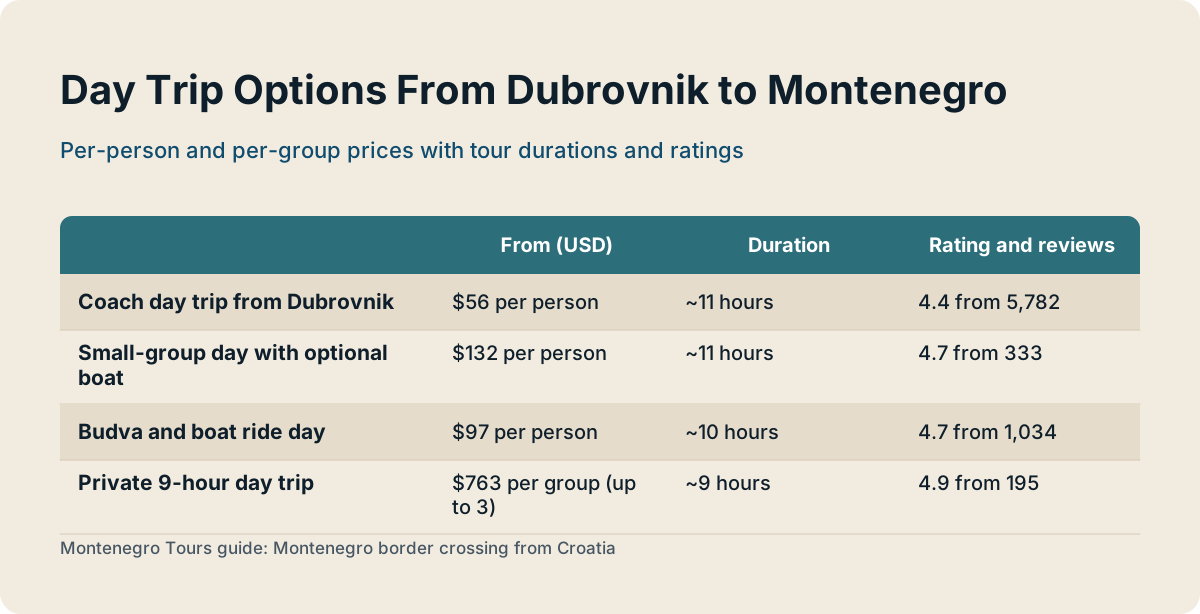
The practical takeaway for anyone planning a day trip: leave Dubrovnik as early as your itinerary allows, carry water, and do not book a fixed afternoon commitment on the other side. If a border delay would ruin the day, that is the strongest argument for a tour, because a professional driver reroutes, re-times and absorbs the stress while you sit in a seat. Check availability for the day trip from Dubrovnik, from $56 per person with a 4.4 rating from 5,782 reviews, alongside the site's day trip planning guide for the other end of the route.
Crossing With A Rental Car: Green Card And Paperwork
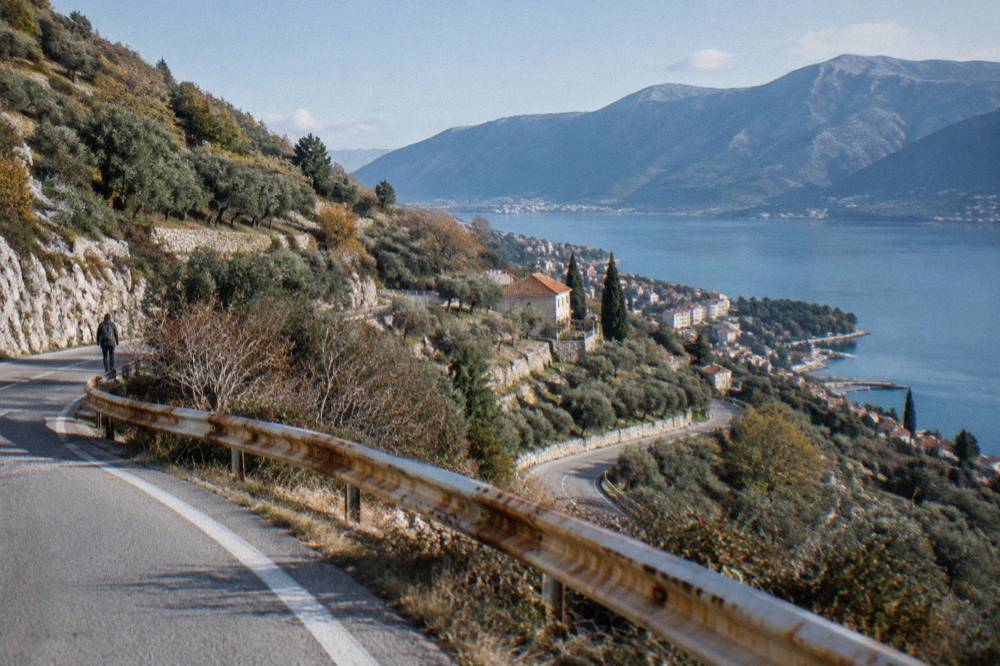
A rental car crossing from Croatia into Montenegro needs two things written into the contract before you reach the booth: explicit cross-border permission from the rental company, and a valid Green Card insurance certificate covering Montenegro. The crossing points operate around the clock. Without those two documents, a border guard can turn the car around regardless of your passport. If you'd rather skip the paperwork question entirely, the full guide to crossing from Croatia to Montenegro explains how a booked day trip handles the border for you.
Arrange this at the pickup desk, not the night before. The rental firm logs the cross-border permission and issues the Green Card, sometimes for a fee. Photograph both documents and keep the originals in the car, since the booth can ask for the paper, not your phone gallery. The same rules apply in both directions, and returning to Croatia triggers the EES re-entry for non-EU citizens described above. If you're still weighing whether the drive is worth the paperwork, our guide to renting a car for the Croatia to Montenegro route walks through the border requirements and when a booked day trip is the easier call.
Also worth knowing on four wheels:
- The coastal road south of Dubrovnik and around the bay is narrow, winding and slow; the border is only one part of the driving time.
- Montenegrin police can and do stop foreign plates for routine checks; keep the contract, Green Card and licence together.
- Fuel is comparable in price on both sides; do not cross on a near-empty tank in high season.
The renting a car in Montenegro guide covers local rentals if you would rather pick a car up inside the country and skip the cross-border question entirely. That trick works well for longer trips: take a bus or transfer over the border, then drive domestically.
What A Tour Handles Versus Driving Yourself?
A tour removes the border's two biggest costs, your attention and your schedule risk. The operator manages departure timing around known queue patterns, the driver deals with the documents, and a coach is processed as one unit. You give up route freedom and stop flexibility in exchange. Self-drive gives you the exact opposite trade: total freedom, total responsibility for the paperwork and the wait.
For a single long day from Dubrovnik, the arithmetic usually favours the tour. The window of usable daylight, the drive on both sides and at least one border crossing eat most of a self-drive day before you have seen anything. The guided alternative costs from $56 per person for the standard coach day trip from Dubrovnik, roughly 11 hours, rating 4.4 from 5,782 reviews. A step up in comfort and inclusions, the Budva and boat ride day from Dubrovnik runs about 10 hours, from $97 per person, rating 4.7 from 1,034 reviews, with pickup listed. At the top end, a private 9-hour day trip from Dubrovnik to Kotor, Perast and Budva costs from $763 per group for up to 3 guests, rating 4.9 from 195 reviews, with pickup per the listing. More of these guides are collected on Montenegro Tours.
| Option | From (USD) | Duration | Rating and reviews | Border role |
|---|---|---|---|---|
| Coach day trip from Dubrovnik | $56 per person | ~11 hours | 4.4 from 5,782 | Operator handles timing |
| Small-group day with optional boat | $132 per person | ~11 hours | 4.7 from 333 | Pickup listed, coach border |
| Budva and boat ride day | $97 per person | ~10 hours | 4.7 from 1,034 | Pickup listed, coach border |
| Private 9-hour day trip | $763 per group (up to 3) | ~9 hours | 4.9 from 195 | Private driver, pickup listed |
| Self-drive rental | Car rental plus Green Card | Your call | Not applicable | You handle everything |
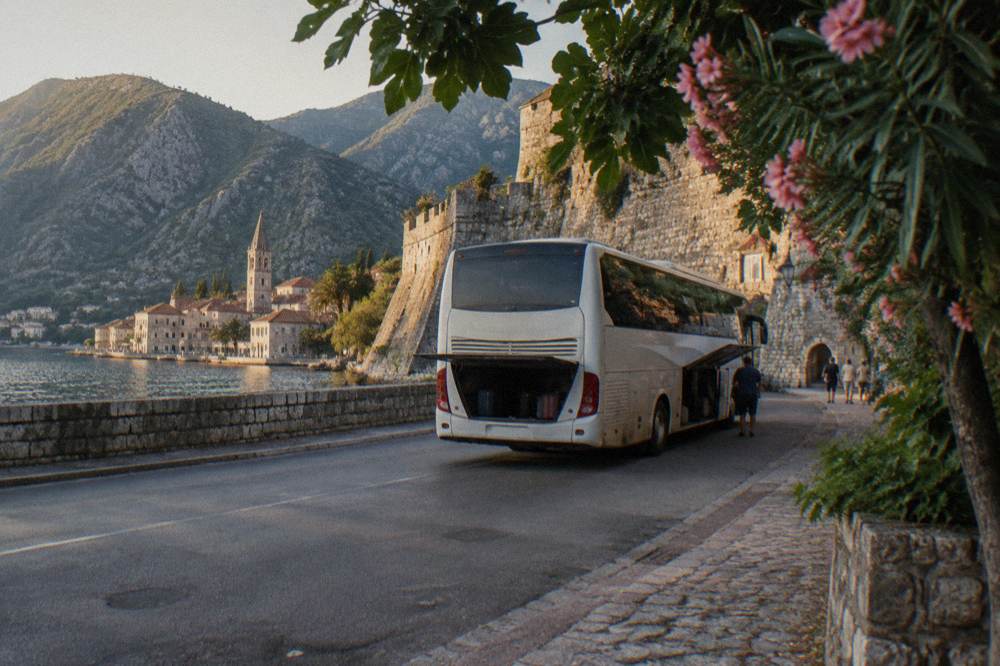
Read the listings for what is actually included, because "tour of Montenegro" covers everything from a coach seat to a private guide. The free-cancellation terms on most of these bookings also matter for a border-dependent day: if the weather or the crossing turns against you, a refundable booking loses nothing. Check the cancellation window on the operator's live listing before you commit.
Can You Cross The Border By Bus Instead?
Yes, and for solo travellers it is often the cheapest sensible option. Buses run from Dubrovnik toward Kotor, Herceg Novi and Budva across the same border points, and a scheduled service is processed at the booth like any coach. You still need your passport in hand at the checkpoint, since everyone leaves the vehicle or passes documents forward when requested.
The trade-offs are predictable. A bus commits you to its timetable, which cuts both ways on a day trip: you cannot leave early when the border is clear, but you also cannot be the one negotiating a queue. Tickets are bought from the carrier or at the Dubrovnik bus station, and prices are not published on this site's verified sources, so check the carrier directly. Luggage holds are standard, and the coastal scenery from the right-hand seats is the same view the tour coaches get.
For most visitors weighing bus versus tour, the deciding factors are time and certainty. A tour bundles the transfer, the border and a planned day on the other side; a bus gives you the crossing and nothing else. Travellers with two or more days in Montenegro can use the bus one way and build the rest from Kotor, as the Montenegro itinerary planner suggests.
What Should You Do If The Queue Is Long?
Build slack into the day and never schedule a fixed appointment close to the crossing. If you are driving, travel before 8am or after mid-afternoon, keep water and snacks in the car, and check the queue with your own eyes before committing to a lane. If you are on a tour, the operator makes the call and you should let them: their drivers cross this border weekly and time their departures accordingly.
A few habits that hold up in any season:
- Keep passports in a reachable pocket, not buried in a boot bag, because every passenger may need to present one.
- Stay with the vehicle if asked; wandering a border zone causes more delay than it saves.
- Have the accommodation name and address ready for the Montenegrin side in case it is asked.
- If a queue makes a day trip unworkable, a good cancellation policy on a refundable tour is worth more than heroic planning.
Weather compounds queues, too. The bura and scirocco winds that affect Bay of Kotor boat schedules through the year also slow coastal traffic when they blow hard, and a boat-dependent itinerary on the far side can shift even when the road is clear. The Blue Cave sea conditions guide explains how those winds shape trips on the water you are crossing the border to reach.
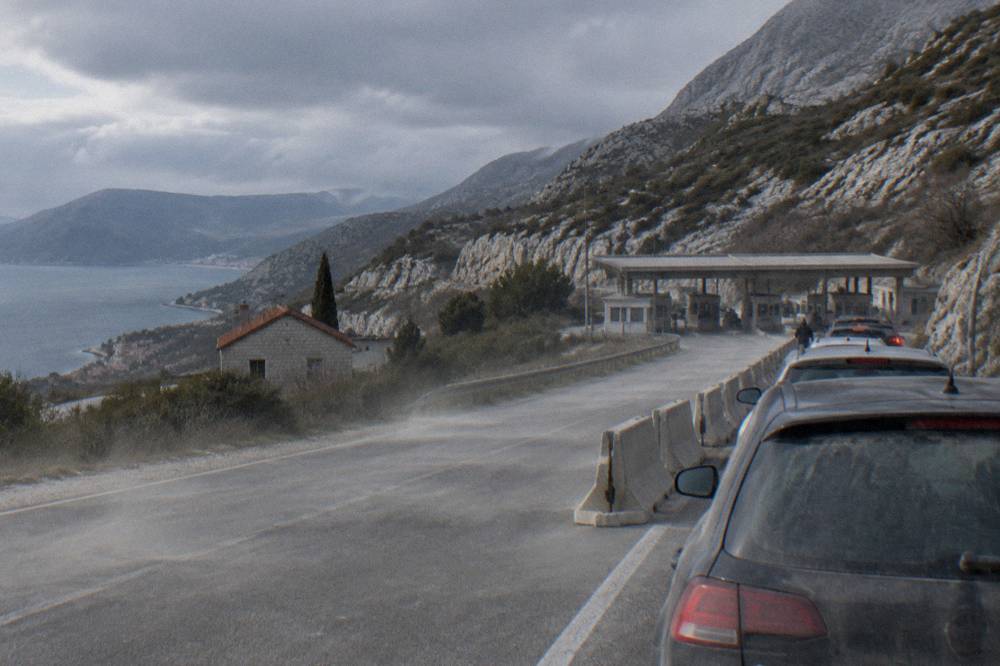
One more rule of thumb: the return crossing into Croatia is where EES bites for non-EU citizens, and it lands at the worst hour, late afternoon, when every day tripper heads back at once. A tour that times its departure from Kotor or Budva before the peak, or one that documents an earlier final stop, buys back real time. The Kotor cruise port guide is useful here even for land travellers, because it explains how the town's daily visitor rhythm stacks the crowds.
Which Tour Should You Book If The Border Worries You?
Pick the tour whose structure absorbs border risk best for your group. A large coach day trip keeps the cost down and the schedule professional. A small-group tour with pickup gives flexibility and fewer passports per vehicle. A private tour gives a driver who reroutes on the day. For a water-focused day, a private boat tour once you are inside Montenegro removes road logistics from the second half entirely.
Three tiers stand out on the roster. The standard day trip from Dubrovnik at from $56 per person is the volume option, 11 hours, 4.4 from 5,782 reviews, and it makes the border the operator's problem for the whole coach. The Budva and boat ride day from Dubrovnik, from $97 per person, rating 4.7 from 1,034 reviews, adds a water element so the day does not stand or fall on road time alone. And for groups already planning from the Kotor side, the private boat tour for up to 9 guests, from $389 per group, rating 4.9 from 221 reviews, spends its hours on the bay rather than at any checkpoint.
| If you want | Best fit on this site | Price basis |
|---|---|---|
| Cheapest guided crossing | Day trip from Dubrovnik | $56 per person |
| Mixed road and water day | Budva and boat ride day | $97 per person |
| Private pace from Dubrovnik | Private 9-hour day trip | $763 per group, up to 3 |
| No border at all, bay day | Private boat up to 9 guests | $389 per group |
Whichever you choose, book refundable where the option exists and re-check the meeting point, because pickup is listed for some departures and not for others. Pickup is never assumed on this site: every listing states its own arrangement, and the booth-adjacent details, departure time, meeting spot, included stops, live on the operator's booking page.
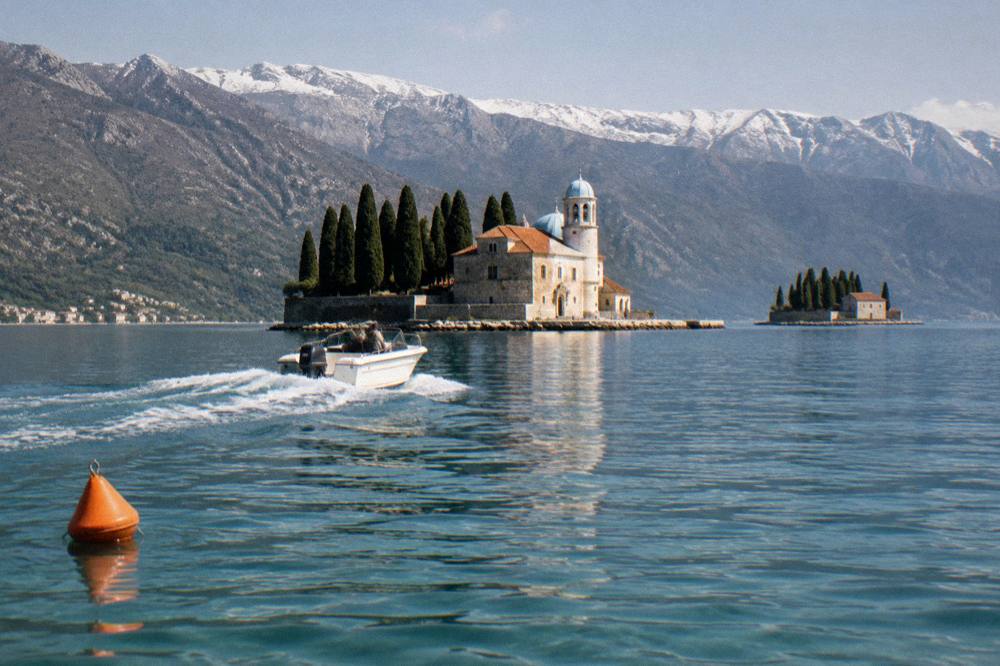
For travellers with more than a day, the border question shrinks: cross once, stay, and explore from inside. The comparison of Kotor or Budva as a base helps with that decision, and Montenegro Tours covers every region of the country in between.
Common Questions About The Croatia To Montenegro Border
How Long Does The Dubrovnik To Montenegro Border Crossing Take?
No reliable figure exists and any specific number of hours should be treated as one traveller's bad afternoon. Waits range from minutes to long summer queues depending on month, time of day and vehicle type. Cross very early or late afternoon, and build slack into any day trip schedule.
Do I Need A Visa To Cross From Croatia To Montenegro?
US, UK and EU citizens generally need no visa for short stays, commonly cited as 90 days in any 180-day period, though this allowance is not confirmed on an official Montenegrin page. Confirm on the Montenegrin Ministry of Foreign Affairs site. EU citizens can also use a national ID card for stays of up to 30 days.
Does EES Apply At The Montenegro Border?
EES applies on the Croatian side, not the Montenegrin side. Since 10 April 2026 it has been fully operational at all external Schengen borders, registering fingerprints and a facial image for non-EU visitors on short stays. Your return into Croatia is where you notice it on a day trip.
Can I Take A Rental Car From Croatia To Montenegro?
Yes, if the rental contract explicitly permits cross-border travel and you carry a Green Card insurance certificate covering Montenegro, both arranged through the rental company before you drive. The crossing points operate around the clock. Border officials can refuse entry without those documents.
Is A Tour Better Than Driving Yourself Across The Border?
For a single day trip, usually yes. A tour operator times departures around known queue patterns and the driver handles documents, while a coach is processed as one unit. Self-drive gives full freedom of route and stops but puts the paperwork, the queue and the schedule risk on you.
When Is The Border Crossing Busiest?
July and August, mid-morning to mid-afternoon, and weekend daytimes are the peaks, with the late-afternoon return wave into Croatia the single worst slot because every day tripper heads back at once. May, June, September and early or late crossings are dramatically lighter.