Montenegro Entry Requirements For US, UK And EU Visitors
Montenegro sits outside the European Union, so its entry rules are simpler than most visitors expect: a valid passport, no visa for typical short stays. The complication is Croatia, which many travellers cross on a Dubrovnik day trip, because the EU's new biometric Entry/Exit System now applies on that side of the line.
Short answer
US, UK and EU visitors normally enter Montenegro visa-free for short stays on a valid passport; the exact 90-day allowance should be confirmed with official sources before travel. The EU's Entry/Exit System has been fully operational since 10 April 2026 and applies at the Croatian border, not the Montenegrin one. ETIAS is not yet in force and has no confirmed start date.
Montenegro is not a member of the European Union, and that single fact shapes almost every entry question travellers ask. The country uses the euro, sits on the Adriatic next to Croatia, itself an EU member, and welcomes visitors from the United States, the United Kingdom and the EU without a visa for typical tourist stays. What has changed recently is the paperwork on the Croatian side: since 10 April 2026 the EU's Entry/Exit System (EES) has been fully operational at external Schengen borders, which means anyone flying into Dubrovnik and day-tripping down to Kotor now registers biometrically on the way in and out of Croatia. If you're weighing which side of the border suits your trip better, our guide to choosing between Montenegro and Croatia compares the costs, crowds and coastlines on offer.
This guide separates what is settled from what is not. Passport rules for Montenegro itself are stable and simple. The visa-free length of stay for US, UK and EU citizens is widely reported as 90 days in any 180-day period, but that figure should be confirmed with the official Montenegrin foreign ministry source before you rely on it. And ETIAS, the EU's planned travel authorisation for visa-exempt visitors, is not yet in operation, with no confirmed start date; any site selling you an "ETIAS registration" today is selling something that does not exist yet. The EU's official pages on the Entry/Exit System and ETIAS carry the authoritative status of both systems.
The practical stakes are real for a specific kind of trip: the Dubrovnik to Kotor day run, one of the most popular excursions on the Adriatic. That itinerary crosses an external EU border twice in a single day. Entry rules therefore affect a booked trip directly, which is why this guide also points to the tour listings that manage the crossing for you, including the Montenegro Tours roster's Dubrovnik departures.
Do US, UK And EU Citizens Need A Visa For Montenegro?
No visa is needed for ordinary tourist visits by US, UK and EU citizens; a valid passport is the core requirement, and stays are treated as visa-free short stays. The commonly cited allowance is up to 90 days in any 180-day period, but that figure is not confirmed officially, so confirm your allowed stay with Montenegro's Ministry of Foreign Affairs before a long trip. EU citizens are widely reported to have a national ID card option for shorter stays.
Montenegro maintains its own visa policy, separate from the EU's, because it is outside the Union and outside Schengen. For travellers holding US, UK or EU passports, the practical experience at the border is quick: a passport check, occasionally a question about the purpose or length of the visit, and a stamp or electronic record on the way in. No advance authorisation, no online form, no fee paid to Montenegro for entry itself.
Two cautions are worth stating plainly. First, the "90 days in 180" figure circulates widely on travel sites, and our research could not confirm it directly on an official Montenegrin government page. Treat it as the working assumption, not a guarantee, and check the Montenegrin Ministry of Foreign Affairs guidance before booking a stay longer than a few weeks. Second, passport validity rules matter: your passport should be valid for the duration of your stay, and carriers can be stricter about validity than border officers. Six months of remaining validity is the safe margin most advice settles on.
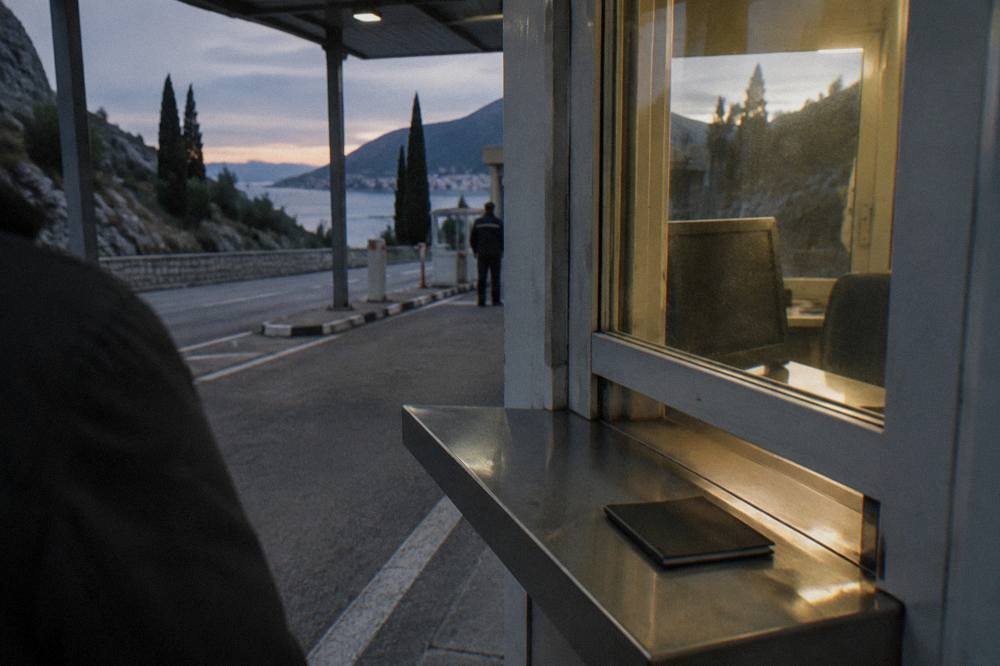
For context on how this plays out at the crossing itself, the companion guide to crossing the Croatia Montenegro border covers the Debeli Brijeg checkpoint, the paperwork rental cars need, and what a day trip timing looks like in practice.
What Is The EU Entry/Exit System And Does It Affect Montenegro?
The Entry/Exit System (EES) is an EU biometric border register that became fully operational on 10 April 2026, replacing passport stamping for non-EU short-stay travellers at external Schengen borders. It does not apply inside Montenegro, because Montenegro is not in the EU. It applies on the Croatian side, so it matters for anyone flying into Dubrovnik or Split and travelling overland to Montenegro.
The system records fingerprints and a facial image the first time a non-EU visitor crosses an external Schengen border, then logs each entry and exit electronically. For a traveller landing in Croatia, that registration happens at Dubrovnik or Split airport on arrival. When that traveller drives or rides down to Kotor for the day, they exit the EU at Debeli Brijeg and re-enter it at Karasovici on the way back, and each movement is recorded. The EU's delegation to Montenegro explains the mechanics for Western Balkans travellers on its official EES information page.
What this means in the queue is that border checks for non-EU passport holders take somewhat longer than they did in the stamp era, since biometric capture is part of the process. EU and other Schengen-area citizens are unaffected, moving through with a simple document check. Queue length at the Dubrovnik crossing varies enormously by season, hour and ship schedule, and no reliable general figure exists; treat any specific hours-long claim you read online with caution and simply avoid crossing at peak weekend times in July and August.
Is ETIAS Required To Visit Montenegro?
No. ETIAS, the European Travel Information and Authorisation System, is not yet in force, no start date has been fixed, and it would in any case apply to entering the EU, not to Montenegro. The EU's official ETIAS page states plainly that the system is not in operation and that no applications are being collected or accepted. Any third-party site selling ETIAS registrations today is not offering a real requirement.
This is the single most confusion-prone point in the whole entry story, because search results are full of pages that name a launch date. Those dates have moved repeatedly, and the EU has removed its earlier target language from official material. The honest position is: not in operation, no confirmed date. When ETIAS does eventually launch, it will be a pre-travel online authorisation for visa-exempt nationals entering the Schengen area, similar in spirit to the US ESTA, and it will matter for the Croatian leg of a Montenegro trip, not for Montenegrin entry itself.
Here is how the two systems line up side by side:
| System | What it is | Status | Applies to Montenegro? |
|---|---|---|---|
| EES | Biometric entry/exit register at EU external borders | Fully operational since 10/04/2026 | No, but applies at the Croatian border crossings used to reach Montenegro |
| ETIAS | Pre-travel online authorisation for visa-exempt visitors to the EU | Not in operation, no confirmed start date | No, and not required for Croatia either until it launches |
| Montenegrin visa policy | National rules, outside the EU framework | Visa-free short stays for US, UK and EU citizens | Yes, this is the only system that governs entering Montenegro itself |
For most travellers the takeaway is reassuring: nothing needs to be bought or applied for in advance. The only entry "requirement" worth acting on is having a valid passport and, if you are renting a car in Croatia, arranging cross-border paperwork with the rental company before you drive south.
Which Documents Should You Carry At The Border?
Carry your passport, always, for both sides of the crossing; Montenegrin police and Croatian border officers both expect it, and hotel registration in Montenegro also relies on it. If driving a Croatian rental car south, carry the rental agreement, the Green Card insurance certificate and any cross-border authorisation letter the company issues. Proof of onward or return travel is sensible for longer stays.
The rental-car point deserves emphasis because it is the one that regularly turns people back. Not every Croatian rental company permits its vehicles into Montenegro, and those that do usually require a Green Card, the international insurance certificate, arranged in advance. The crossing at Debeli Brijeg and Karasovici operates around the clock, but permission is a contract matter between you and the rental firm, not a border rule. The full detail on this, including what to ask for at the rental desk, is in the guide to driving a rental car from Croatia to Montenegro.
A short checklist covers everything a typical visitor needs:
| Document | Who needs it | Notes |
|---|---|---|
| Valid passport | Everyone | National ID reportedly works for EU citizens on short stays, but a passport avoids any ambiguity |
| Rental agreement | Drivers of rental cars | Must permit cross-border use into Montenegro |
| Green Card certificate | Drivers of Croatian rental cars | Arrange through the rental company before travel |
| Return or onward ticket | Air travellers on longer stays | Occasionally requested; rarely asked of obvious tourists |
| Accommodation details | All visitors | Used for the mandatory tourist registration on arrival |
Registration on arrival is the one Montenegrian formality that catches visitors out. Accommodation providers normally handle it, registering you with the local tourist office within a day or so of check-in; if you stay in private accommodation, confirm the host does this, since unregistered stays can cause friction at departure.
Since the border runs both ways and most readers of this guide are heading south from Dubrovnik rather than north, it is worth deciding early whether the crossing day is a self-drive day or a guided one.
How Do Entry Rules Affect A Day Trip From Dubrovnik?
A Dubrovnik to Montenegro day trip crosses the EU's external border twice in one day, which means EES checks on exit from and re-entry to Croatia, plus a standard Montenegrin passport check in between. This is entirely routine and tour operators run it daily; the practical effect is timing, since border formalities add variable time that a scheduled tour absorbs but an independent driver has to budget for themselves.
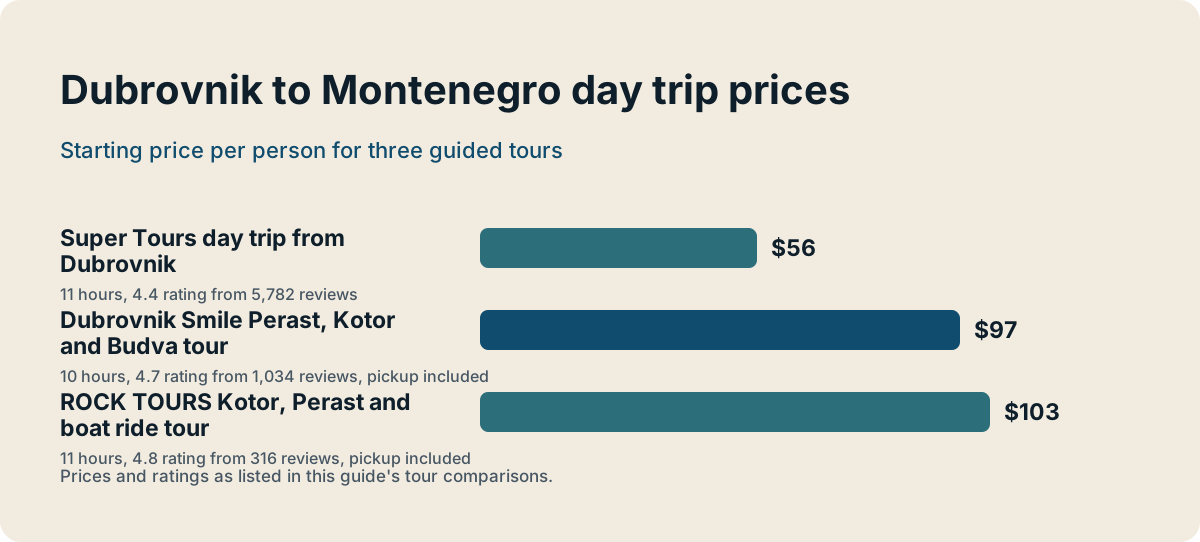
This is precisely why the guided day trip is the most-booked product on this stretch of the coast. The 11-hour day trip from Dubrovnik with Super Tours Travel Agency runs from $56 per person and carries a 4.4 rating from 5,782 reviews, a genuinely large review pool for this route. It handles the border queues, the parking in Kotor and Perast, and the timing of the return, all of which are the friction points of doing it independently. Check availability if that format suits you.
The wider choice among Dubrovnik departures is deep, and the differences between them matter more than price alone. The Perast, Kotor and Budva tour with a boat ride from Dubrovnik Smile runs 10 hours from $97 per person, rated 4.7 from 1,034 reviews, and includes pickup, which the listings that depart from a central Dubrovnik meeting point do not. That operator is a good benchmark for what a pickup-inclusive, boat-inclusive day costs; use it to judge whether cheaper listings without pickup actually save money once you add the logistics of reaching a meeting point in a crowded Dubrovnik summer.
For travellers who want the fullest version of the day, a comparable option is the Kotor, Perast and boat ride day tour from ROCK TOURS Travel Agency, 11 hours from $103 per person with pickup included, rated 4.8 from 316 reviews.
Do You Need A Visa For A Cruise Stop In Kotor Or Bar?
No. Cruise passengers arriving at Kotor or Bar are covered by the same visa-free short-stay rules as any other US, UK or EU visitor, and shore arrivals are processed aboard or at the terminal rather than through a land border. Kotor's port sits a short flat walk from the Old Town gates, so a passport and your ship card are all most passengers ever need to show.
Kotor is a tender-and-dock port: some ships berth at the main pier, roughly a five-minute walk from the Sea Gate, while others anchor in the bay and tender passengers ashore. Either way there is no Croatian-style border in between, because you are entering Montenegro directly, and Montenegro's visa-free regime covers the visit. Bar receives far fewer cruise calls, but the same rules apply there.
The realistic planning concern for cruise passengers is not paperwork but time and crowds. On days when several ships coincide, the Old Town, the City Walls ticket points and the Perast boat departures all get busy at once. The walls fee is EUR 15 per non-resident visitor, in effect since 1 March 2025, and the two entrances are at Parila behind the church of St Ozana and at Skaljarska pjaca. Planning help is in the Kotor cruise port guide, and a six-hour plan is laid out in how to spend six hours in Kotor from a cruise ship.
What Can You Expect At Montenegrian Border Checks In Practice?
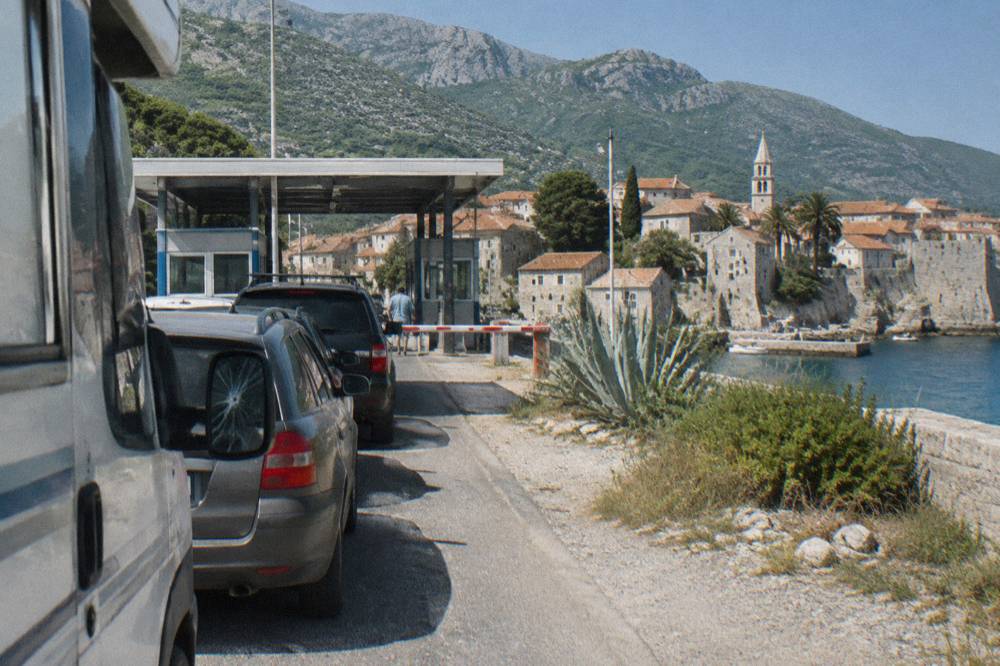
Montenegrin border checks for visa-free nationals are short document inspections: passport, occasional questions about purpose and length of stay, and a record of entry. There is no biometric system on the Montenegrin side, no form to fill in advance, and no fee. The variable element is queue length at the road crossings with Croatia, which swings with season, day of week and cruise and ferry schedules.
The busiest crossing for tourists is Debeli Brijeg on the Montenegrin side, paired with Karasovici on the Croatian side, on the coastal road between Dubrovnik and Herceg Novi. There are inland alternatives, but for the Dubrovnik to Kotor route the coastal crossing is the standard one, and tour coaches use it too. In peak summer, weekend middays are the congested window; early morning crossings move fastest. No trustworthy general figure for wait times exists, and single anecdotal reports of multi-hour waits should not shape your plan, only your departure time.
For air arrivals the picture is simpler still. Tivat and Podgorica airports both process international arrivals with standard passport control, and the transfer options from each are covered in the airports to Kotor guide. Whether you fly in or drive down, the honest summary of Montenegrin entry is that it is one of the least bureaucratic borders in the region, and the systems that generate headlines, EES and ETIAS, belong to the EU next door.
What Other Formalities Apply Once You Are In Montenegro?
Beyond tourist registration, which your accommodation handles, there are three formalities visitors actually encounter: paying the euro-denominated local fees at attractions, carrying cash for park and church entries, and observing that Montenegro uses the euro despite not being an EU member. None of these are entry requirements, but they follow directly from Montenegro's position outside the Union.
The currency point first. Montenegro adopted the euro unilaterally years ago, so everything on the ground is priced in euros, while tour listings on this site quote in US dollars. Park entries are the clearest example of the local fee structure: Durmitor and Skadar Lake charge EUR 5 per adult per day, Lovcen EUR 3, and an annual ticket covering all five national parks costs EUR 13.50 per person. Children under 15 enter the parks free. These are official National Parks of Montenegro figures from the park authority's own price list.
| Fee | Amount | Who pays |
|---|---|---|
| Durmitor National Park, daily entry | EUR 5.00 | Adults; under 15s free |
| Skadar Lake National Park, daily entry | EUR 5.00 | Adults; under 15s free |
| Lovcen National Park, daily entry | EUR 3.00 | Adults; under 15s free |
| All-parks annual ticket | EUR 13.50 | Per person, per year |
| Kotor City Walls and St John Fortress | EUR 15.00 | Non-residents; in effect since 01/03/2025 |
One further note on connectivity: EU "Roam Like at Home" rules do not apply in Montenegro, so a European mobile plan may charge roaming rates there even though the currency is the euro. It is a small thing, but it surprises people who assumed euro adoption implied EU membership. None of this changes what you show at the border; it changes what you carry in your pocket once you are through.
How Should Entry Rules Shape Your Booking Decisions?
Entry rules should shape timing, not destination: book day trips that cross from Croatia with operators who manage border timing, keep passports accessible rather than buried in luggage, and treat any summer crossing before mid-morning or after late afternoon as the calmer window. For stays inside Montenegro, the rules are so light that they should not influence your itinerary at all.
The commercial logic is straightforward. When a border sits inside a day trip, the operator's experience with crossing patterns is part of what you are buying. Beyond the Dubrovnik flagship, the small-group day trip with an optional boat ride from Amico Tours runs 11 hours from $132 per person, rated 4.7 from 333 reviews, with pickup included, and its smaller coach size can move through the crossing faster than a full-size bus. The day trip with a Kotor Bay cruise from Select Dubrovnik runs from $56 per person with a 4.5 rating from 1,971 reviews, pairing the border run with time on the water.
For travellers already based inside Montenegro, entry rules are essentially irrelevant to daily planning, and the choice shifts to what to book from Kotor and Budva. The Blue Cave and Perast tours from Kotor, from $38 per person, involve no border at all, and a private boat for up to 9 guests runs from $389 per group with a 4.9 rating from 221 reviews, a strong option once a group reaches five or six people. If the whole trip is still at the outline stage, the two-week Montenegro itinerary sequences the coast, the bay and the north without a single border crossing after arrival.
One closing reassurance on cancellations: border delays are rare enough that operators run their schedules reliably, but wind cancellations on bay boat trips are common and honest operators rebook or refund. Read the cancellation terms on the listing before you book anything weather-dependent, and keep your confirmation available offline, since mobile data at the border can be patchy if your plan is non-EU.
Common Questions About Montenegro Entry Requirements
Do US, UK And EU Citizens Need A Visa For Montenegro?
No. US, UK and EU citizens enter Montenegro visa-free for ordinary tourist stays on a valid passport. The commonly cited allowance is 90 days in any 180-day period, but that figure is not confirmed on an official government page in our research, so verify with Montenegrin foreign ministry sources before a long stay.
Does The EU Entry/Exit System Apply In Montenegro?
No. Montenegro is not in the EU or Schengen, so EES does not operate at its borders. It applies at the Croatian side of the crossing, and has been fully operational since 10 April 2026, registering fingerprints and facial images for non-EU short-stay travellers at external Schengen borders.
Is ETIAS Needed To Visit Montenegro?
No. ETIAS is not yet in operation, no start date is confirmed, and the EU's official page states that no applications are being collected or accepted. When it launches it would apply to entering the EU, so even then it would concern the Croatian leg of a trip, not Montenegrian entry.
Can I Take A Rental Car From Croatia Into Montenegro?
Yes, if the rental company permits it. You need the rental agreement with cross-border authorisation and a Green Card insurance certificate arranged in advance through the company. Not all Croatian rental firms allow their cars into Montenegro, so confirm before you book the car.
Do Cruise Passengers Need Any Special Paperwork For Kotor?
No. Cruise passengers are covered by the same visa-free short-stay rules as other visitors, processed aboard or at the terminal. Kotor's berths and tender landing sit within a short walk of the Old Town gates, so a passport and ship card are all that is normally needed.
What Currency And Fees Should I Expect Once Inside Montenegro?
Montenegro uses the euro despite not being an EU member. Expect cash fees at national parks, EUR 5 daily entry at Durmitor and Skadar Lake and EUR 3 at Lovcen, EUR 15 for the Kotor City Walls, and remember that EU roaming rules do not apply to mobile plans there.