Can I Drive A Rental Car From Croatia To Montenegro?
Cross-border rental rules for driving from Croatia into Montenegro, border paperwork, green cards, and when a booked day trip is the simpler choice.
Can I Drive A Rental Car From Croatia To Montenegro?
Yes, you can drive a rental car from Croatia into Montenegro at the Debeli Brijeg and Karasovici crossings, provided your rental contract explicitly permits cross-border travel and you carry the insurance paperwork the company issues for it. Montenegro is outside the EU, so leaving Croatia means leaving the EU's common border area, and rental firms treat that as a special condition rather than a default. The drive from Dubrovnik to Kotor takes roughly two to three hours depending on queues, and most of it runs along the Adriatic coast on decent roads. If you're still deciding how to split your time between the two countries, this Montenegro vs Croatia travel comparison covers the differences in costs, crowds, and coastline.
The question sounds simple, but it hides three separate decisions: whether the rental company allows the car out of Croatia at all, whether your insurance stays valid once it crosses, and whether the border itself is manageable on the day you travel. Each of those has a different answer, and only the third one is the same for everybody.
For many visitors, especially those on a short Dubrovnik stay, a booked day trip from Dubrovnik into Montenegro removes the first two questions entirely. The most booked option on this site's roster, an 11-hour trip operated by Super Tours Travel Agency from $56 per person, rated 4.4 across 5,782 reviews, handles the border from a shared coach while you watch the coastline. A step up is the 10-hour Budva-and-boat-ride tour from Dubrovnik Smile, from $97 per person with pickup, rated 4.7 from 1,034 reviews. And for families or small groups, a private boat in Kotor for up to 9 guests runs from $389 per group, rated 4.9 from 221 reviews. Three formats, same border, zero paperwork for you.
Do Rental Companies Allow Their Cars Into Montenegro?
Most large rental firms operating in Croatia do allow their cars into Montenegro, but only when it is requested in advance and written into the contract, and some charge a fee for it. Smaller local firms sometimes ban it outright or restrict it to specific vehicle categories. The permission is never automatic, so the rental agreement is the single document that decides whether the trip is possible. Check the terms before you book the car, not before you drive it.
What you are asking the company for is usually two things: cross-border permission in the contract, and a Green Card, the international insurance certificate that proves your coverage is recognised in Montenegro. Rental desks in Croatia issue these routinely for the neighbouring non-EU countries, but they need notice, because the card is physical or at least company-issued and not something you can print yourself. Without it, Montenegrin border officers can treat the car as uninsured and turn it back.
A practical sequence works like this. Contact the rental company before pickup and ask three questions: is Montenegro permitted, is there a cross-border fee, and will they issue a Green Card. Confirm all three answers in writing if you can. At pickup, check that the Green Card actually lists Montenegro by its code, and that the car's registration papers are in the vehicle. Carry your driving licence and passport, obviously, but also keep the rental contract within reach at the border rather than buried in the boot.
The one thing this article will not do is tell you a specific company's current policy or a specific fee. Those change, they vary by pickup location, and they are exactly the kind of detail a rental firm can answer in one email. Treat the operator's terms as the source of truth, and treat anything you read online, including summaries like this one, as background.
| What to arrange with the rental company | Why it matters | When to arrange it |
|---|---|---|
| Written cross-border permission | The contract, not the border, is what authorises the trip | Before booking or at latest before pickup |
| Green Card insurance certificate | Proves coverage is recognised in Montenegro | Request in advance, collect at pickup |
| Registration papers in the car | Border officers may ask for vehicle documents | Verify at pickup |
| Any cross-border fee | Some firms charge for the permission and the card | Ask at booking, budget for it |
| Approved border crossings | Occasional contracts name specific crossings | Read the terms before driving |
Which Border Crossing Should You Use From Dubrovnik?
The main crossing on the Dubrovnik to Kotor route is Karasovici on the Croatian side and Debeli Brijeg on the Montenegrin side, a 24-hour road crossing that carries almost all coast-bound traffic. It is the one tours and locals use, and it feeds directly onto the coastal road to Herceg Novi and the Bay of Kotor. Alternatives exist further inland, but they add distance and rarely save time on a coastal itinerary.
The crossing itself is unremarkable: a few booths, a short stretch of no-man's-land, and two sets of officers. What makes it slow is volume, not procedure. Summer weekends and mid-morning are the congested periods, and cruise-transfer days can bunch traffic too. Queues build in both directions because Croatia is an EU external border here, so you clear out of the EU and into Montenegro going south, then the reverse coming back.
Since 10 April 2026 the EU's Entry/Exit System has been fully operational at external borders, including Croatia's, replacing passport stamps with biometric registration for non-EU travellers on short stays. The EU delegation to Montenegro explains the system here. In practice this means a fingerprints-and-photo step for non-EU passport holders on first entry, which adds a little time per person at the Croatian booth, most noticeably on the return leg into Croatia when several cars queue behind you.
EU citizens generally pass faster, since they use the EU citizen lanes and skip biometric registration. Either way, the crossing runs around the clock, so an early start or a late return can turn a slow queue into a five-minute formality. That timing lever is free, and it works in both directions.
If the queue-and-paperwork picture sounds like the wrong way to spend a holiday morning, the alternative costs less than most people assume. A small-group day trip from Dubrovnik with Amico Tours runs 11 hours from $132 per person with pickup, rated 4.7 from 333 reviews, and the coach takes the border while you nap.
What Documents Do You Need At The Border?
You need your passport, your driving licence, the rental contract showing cross-border permission, the vehicle registration papers, and the Green Card insurance certificate issued by the rental company. Montenegro is not in the EU, so identity cards that work inside Croatia may not be enough, and a passport is the safe document for every traveller in the car, not just the driver.
Montenegro allows visa-free entry for US, UK and EU citizens for up to 90 days in any 180-day period, so for most readers no visa is needed, but the passport requirement is real and applies to passengers as much as drivers (see Free Things To Do). Children need their own documents. If anybody in the car is travelling on a different nationality, check that nationality's Montenegro requirements separately before the trip, because visa policy is not uniform.
The Green Card deserves one more sentence because it is the document people forget. It is not the same as the rental company's standard insurance, and it is not something your credit-card coverage replaces at the booth. If the company issues it, carry it in the glovebox from the moment you leave the pickup desk, since border officers on both sides can ask for it.
One small municipal detail is worth knowing for the Montenegro side of the day: Kotor charges EUR 15 per non-resident visitor to walk its City Walls and San Giovanni Fortress, a fee in force since 1 March 2025, with Montenegrin residents exempt, per the municipality's own notice. It is not a border cost, but it is the kind of euro-denominated expense that catches out visitors who changed no cash, since smaller local vendors still prefer it.
How Long Does The Drive From Dubrovnik To Kotor Take?
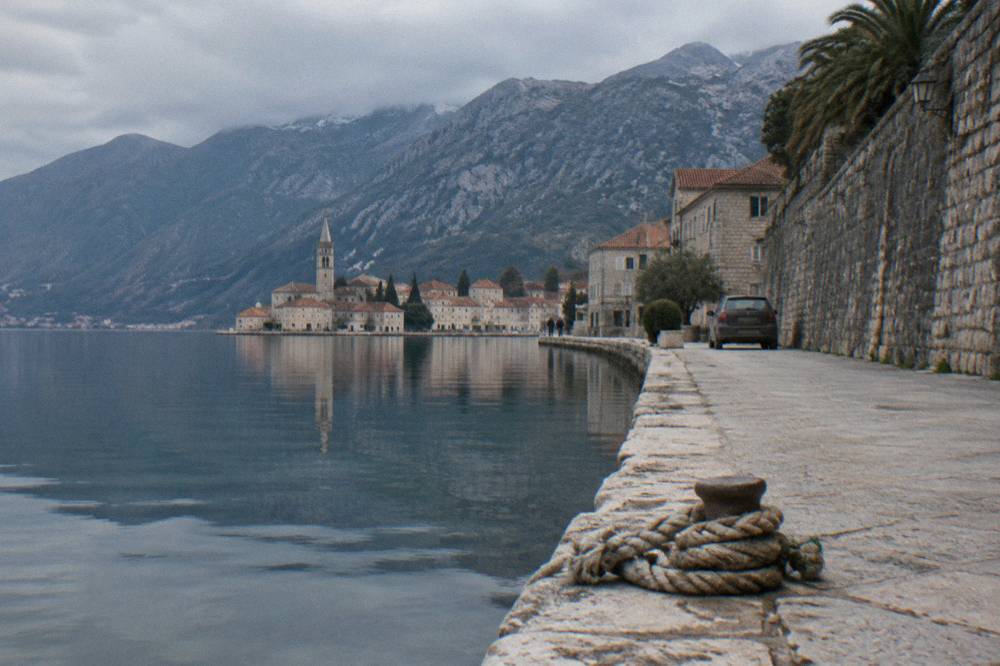
The drive from Dubrovnik to Kotor covers roughly 90 kilometres and takes about two to three hours door to door in normal conditions, of which the border itself can be anywhere from minutes to a large fraction of that range depending on the day and hour. Without a queue the road section alone is pleasant and scenic, hugging the coast around the bay of Kotor's outer shore.
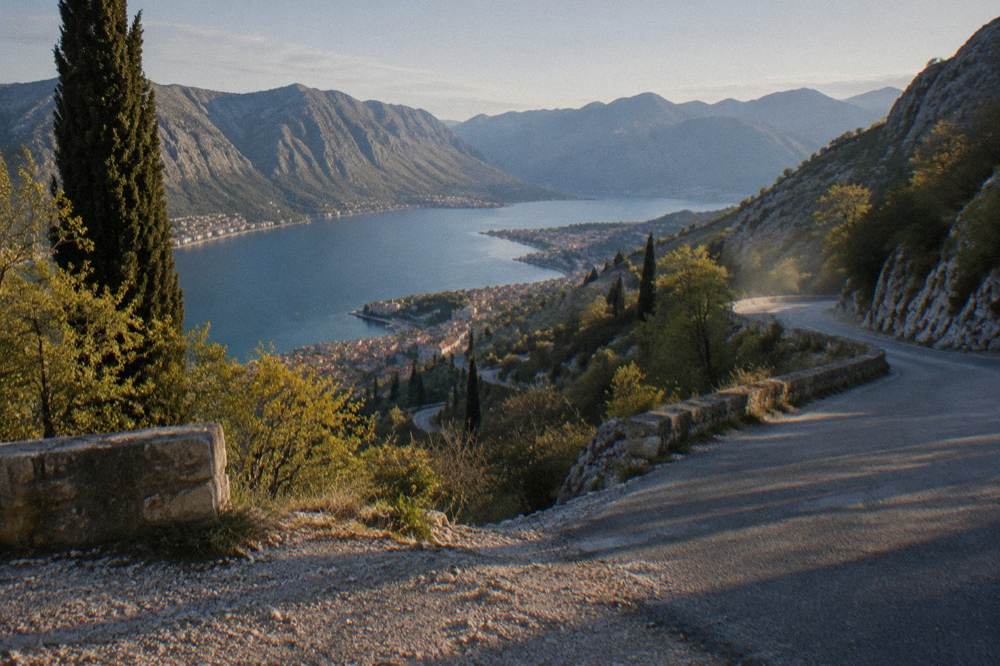
The route runs south from Dubrovnik along the Adriatic, crosses at Debeli Brijeg, then descends past Herceg Novi and around the bay through Kamenari or, in summer, the Verige crossing points. The final stretch into Kotor is the postcard part: the fjord-like bay narrowing between steep mountains, with Perast and its two islands appearing on the water to your left. Give yourself stops, because the viewpoint pull-ins above the bay are the reason to drive this rather than fly over it.
Timing matters more than route. A departure before 08:00 from Dubrovnik usually beats both tour-bus waves and the mid-morning border build-up. The return is the mirror image: leaving Kotor after 16:00 puts you into the late-afternoon queue northbound, while a 19:00 departure often sails through. These are patterns, not promises, and a single incident or a holiday weekend can break them.
Park in Kotor rather than driving into the Old Town, which is pedestrianised inside its walls. From the main car parks the Sea Gate is a short flat walk, and that is where a walking tour begins. A 70-minute Old Town walk with Montenegro Adventures DMC costs from $28 per person, rated 4.8 across 250 reviews, and fits neatly into a driving day as the leg-stretcher before the return border.
Is It Cheaper To Drive Or To Book A Tour?
For a solo traveller or a couple on a one-day visit, a booked day trip is usually cheaper and always simpler: the popular 11-hour coach trip from Dubrovnik starts at $56 per person, while a rental car costs a day's hire plus fuel plus any cross-border fee, before your time in the border queue is counted. For three or four people splitting costs, driving can win on price, but it loses on effort.
The honest comparison is not just euros. A rental day from Dubrovnik with cross-border permission is priced by the company, and the cross-border fee, where charged, is also company-specific, so no general figure can be printed here. What can be compared is what each option buys. The coach passenger sleeps to the border, gets a guide's commentary on the way, and follows a fixed itinerary. The driver chooses their own stops, lingers in Perast if the light is right, and answers to nobody's schedule.
| Option | Entry cost from | Who it suits | What you trade |
|---|---|---|---|
| Coach day trip, 11 hours | $56 per person | Solo travellers, couples, first visits | Fixed itinerary, group pace |
| Small-group trip with pickup | $132 per person | Those wanting fewer fellow passengers | Higher price, same border |
| Private boat in Kotor, up to 9 | $389 per group | Families already in or near Kotor | Boat only, no border transport |
| Rental car with permission | Company-specific | Three or more, custom itineraries | Paperwork, queue time, driving duty |
There is also a hybrid that works well: drive in the morning, then put the boat part of the day in somebody else's hands. The bay's signature water time is the Blue Cave and Our Lady of the Rocks circuit, and a 3-hour speedboat tour from Kotor with Aquaholic Speedboat Tours runs from $43 per person, rated 4.8 across 5,099 reviews. Parking near Kotor's port is a few minutes from the departure points, so the car sits while you swim.
Readers weighing the two styles across a whole week rather than a single day will find the fuller comparison in private versus group touring in Montenegro, which breaks down cost per person as group size changes.
What Are The Roads Like Once You Are In Montenegro?
The main coastal road from the border through Herceg Novi to Kotor and Budva is paved, signed and in reasonable condition, and an ordinary rental car handles it without difficulty. The two-lane sections around the bay are winding and can be slow behind trucks in summer, and the mountain roads inland, such as the serpentine above Kotor, demand more care and are best not attempted on a day trip schedule.
The Adriatic highway, the Jadranska magistrala, is the spine of the coast. Expect single carriageways with occasional overtaking lanes, village speed limits that drop quickly, and pedestrians in the high season. Montenegrin driving has a reputation for spontaneity, and it is partly earned: keep a relaxed following distance and assume the motorbike in your mirror will pass you on a blind corner.
Fuel is widely available on the coast and priced in euros, since Montenegro uses the euro despite being outside the EU. Pay by card is common at larger stations but not universal, so carry some cash for small purchases, parking and the walls fee mentioned earlier. Speed limits are posted in kilometres per hour and enforcement includes fixed cameras on the main routes.
One seasonal rule worth knowing if you fancy the dramatic road above Kotor: the serpentine up Lovcen operates one-way traffic windows from late May to mid-October, uphill in the morning and downhill in the late afternoon. If a mountain viewpoint is on your list, plan around it rather than discovering it at the barrier.
Can You Do The Trip Without A Car At All?
Yes, and many travellers do: shared day trips, small-group tours and private transfers all run the same border daily, plus local buses connect Dubrovnik and Kotor at low fares. The tour route is the lowest-friction option because the operator handles timing around the queue, while the bus is the cheapest and the least flexible. Your choice depends less on money and more on how much of the day you want to control.
The coach option has already appeared in this article for good reason, and it is the workhorse of the route. The 11-hour day trip from Dubrovnik at $56 per person, rated 4.4 across 5,782 reviews, includes guided commentary and free time in Kotor. A version that adds a Kotor Bay boat segment runs from $56 to $59 per person depending on the operator's format. If you would rather move at your own pace once inside Montenegro, a private 9-hour day trip from Dubrovnik with Dubrovnik Top Tours, from $763 per group for up to 3 guests, rated 4.9 from 195 reviews, includes pickup and a dedicated guide.
Buses run between Dubrovnik and Kotor several times daily in season, and the same border applies, with the same EES biometric step for non-EU passport holders. The bus is cheap and it removes the rental questions entirely, but you are tied to its timetable and its border slot, which in August can mean arriving after the Old Town has filled.
What Could Go Wrong, And How Do You Reduce The Risk?
The three realistic failure modes are a rental contract that silently bans Montenegro, a missing or incomplete Green Card discovered at the booth, and a border queue that eats your day. All three are reducible: read the contract before booking, verify the card lists Montenegro at pickup, and cross early or late rather than mid-morning. None of them is a safety issue; they are logistics issues.
Turned-back cars do happen, and almost always because of paperwork rather than the traveller. The fix is boringly administrative: written permission, correct card, documents in the glovebox. Do a two-minute check at the rental desk before driving off, because fixing an omission there costs a conversation, while fixing it at Debeli Brijeg costs your trip.
The queue risk is managed with timing and, failing that, with patience. Do not plan a same-day cruise-ship check-in or a tight flight around a mid-afternoon southbound crossing in August. Build slack into the day, keep water in the car, and treat a long queue as the price of a beautiful road.
Weather deserves one line of respect. The bura, a gusty northeast wind, and the scirocco can affect the coast and the bay outside high summer, and boat segments of any trip are cancelled for wind and swell. The rental car is actually the all-weather option on this route; it is the boats, not the border, that the wind closes.
Should You Drive, Or Take The Tour?
Drive if you are three or more people, you want a custom itinerary, and you have arranged cross-border permission and a Green Card in advance. Take a booked day trip if you are one or two, you are on a short Dubrovnik stay, or you simply prefer to spend your day looking at the bay instead of a queue. Both reach the same Kotor; they differ in who does the work. If the tour option sounds tempting, our guide to doing Montenegro as a day trip from Dubrovnik covers the border crossing, the drive, and what the organized tours actually include.
This site, Montenegro Tours, exists because the second option is the one most visitors end up wishing they had taken. The evidence is in the review counts: thousands of travellers run this exact border every year on booked trips, and the roster's day-trip category keeps the largest review pools on the site. The paperwork-free route is not a compromise, it is the mainstream choice.
If you do drive, the reward is real: Perast at your own hour, the bay road without a schedule, and the freedom to stop where the view stops you. Arrange the documents properly and the border is a formality. If you would rather not arrange anything, the buttons below do that part for you.
Common Questions About Driving A Rental Car From Croatia To Montenegro
Can I Drive A Rental Car From Croatia To Montenegro?
Yes, if the rental contract explicitly permits cross-border travel and the company issues a Green Card insurance certificate covering Montenegro. The permission is never automatic, so confirm it before booking the car and collect the card at pickup.
Do I need a Green Card to drive into Montenegro?
Yes. Rental cars crossing from Croatia into Montenegro need a Green Card arranged through the rental company, along with explicit cross-border permission in the rental contract. Request both in advance, since they are not issued automatically at the desk.
Which border crossing connects Dubrovnik and Kotor?
The Karasovici and Debeli Brijeg crossing is the main one on the coastal route, operating around the clock. Almost all traffic between Dubrovnik and the Bay of Kotor uses it, including tour coaches.
Does the new EU border system slow the crossing?
Since 10 April 2026 the EU Entry/Exit System is fully operational at Croatia's external borders, registering fingerprints and a facial image for non-EU short-stay travellers on first entry. It adds a short per-person step at the Croatian booth, most noticeable northbound back into Croatia.
Is a tour cheaper than driving myself?
For one or two people, usually yes: booked day trips from Dubrovnik start at $56 per person, while a rental day adds hire, fuel and any cross-border fee. For three or more sharing one car, driving can cost less, at the price of doing the paperwork and the queue yourself.
Can I take a rental car into Montenegro without telling the company?
No. The contract governs where the car may travel, and crossing without permission can void the insurance and leave the car uninsured in Montenegro. Always get written cross-border permission before the trip.