Ostrog Monastery Dress Code And Visiting Rules
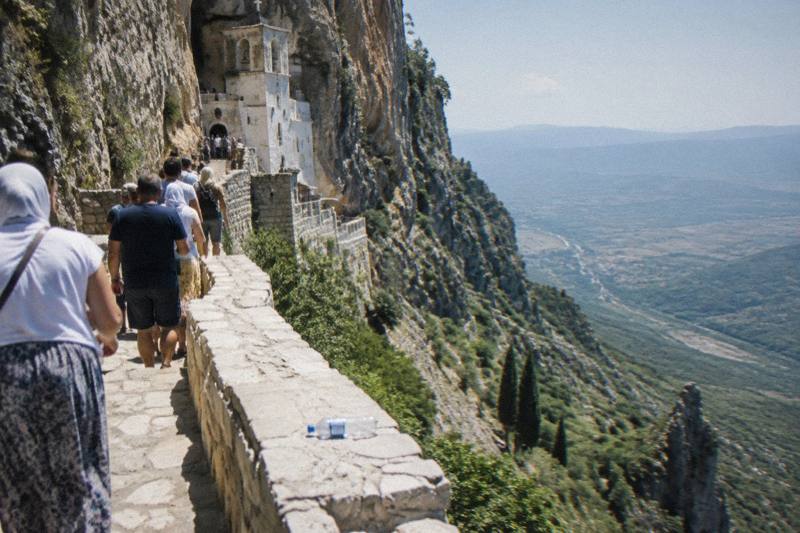
Ostrog Monastery hangs off a vertical cliff in inland Montenegro, and it is a working Orthodox monastery before it is a sight. That single fact shapes every rule that follows, from what you wear to how you behave on the terraces.
Short answer
Ostrog Monastery requires shoulders and knees covered for all visitors: long trousers or skirts, no shorts or sleeveless tops. Entry is free, with voluntary donations customary. The Upper Monastery sits above the Lower Monastery parking area, reached by a steep access road or path. Hours run roughly 06:00 to 17:00 May to September and 05:00 to 16:00 October to April.
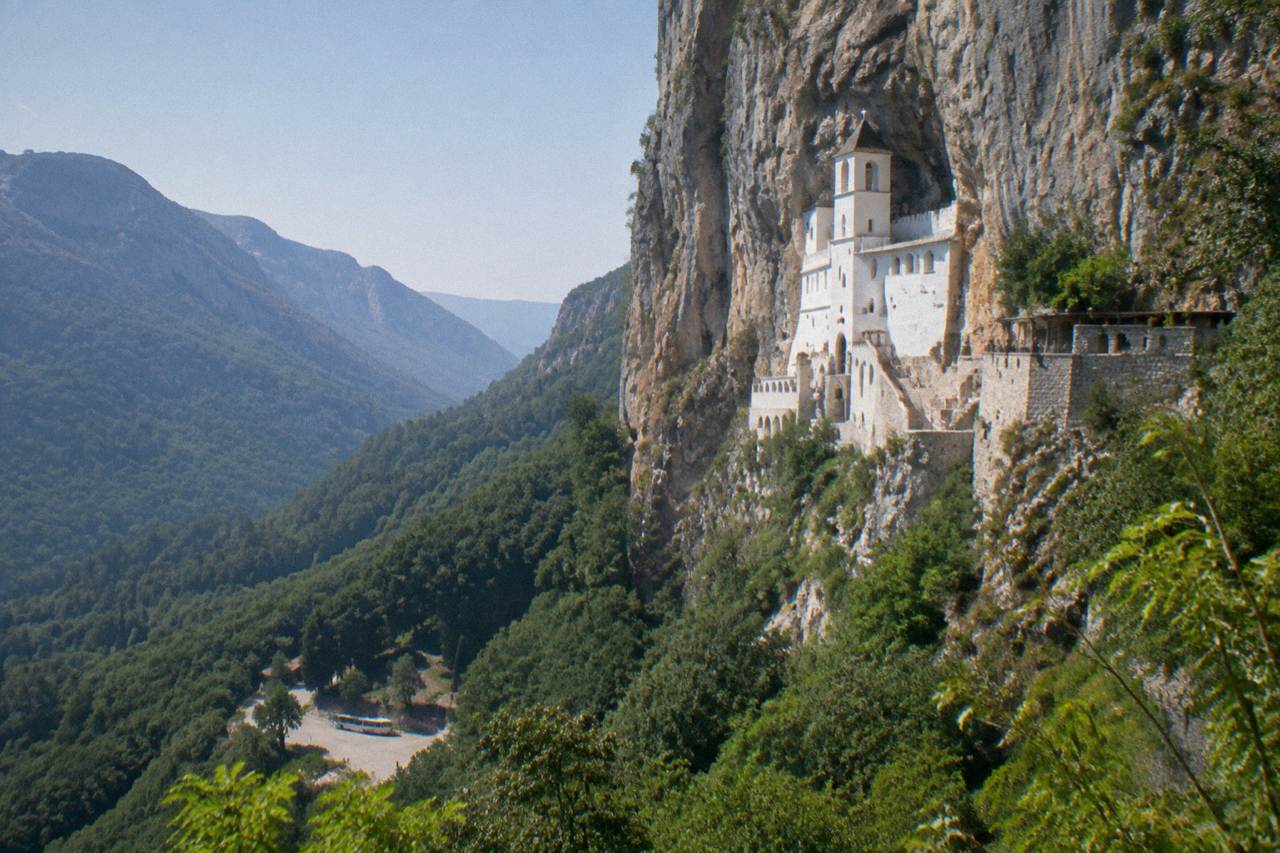
Ostrog Monastery is carved directly into a pale cliff face roughly halfway between Podgorica and the Durmitor highlands, and for most of the year its terraces carry a steady stream of pilgrims, coach groups and independent travellers sharing the same narrow spaces. It is the most visited religious site in inland Montenegro, and it is a working Serbian Orthodox monastery dedicated to St Basil of Ostrog, whose feast day on 12 May draws walking pilgrims from across the region. Because it functions as a monastery first, the rules of a visit are not decoration: they decide whether you get through the Upper Monastery door at all.
The practical side is simple once you know it. Dress modestly, expect a steep final climb, arrive early on weekends, and treat the interiors as a place of worship rather than a photo set. Coastal visitors usually reach Ostrog as part of a long north Montenegro day, and the most booked format on this site is Gray Line Montenegro's 13 hour Durmitor, Tara and Ostrog trip from Kotor, from $120 per person with a 4.7 rating from 2645 reviews. This guide from Montenegro Tours sets out the rules, the climb, the queues and the photography etiquette in one place, so nothing surprises you at the gate.
What Is The Dress Code At Ostrog Monastery?
Shoulders and knees must be covered for everyone entering the monastery: long trousers or long skirts, no shorts and no sleeveless tops. Head coverings for women are optional, and wraps are sometimes available at the Upper Monastery entrance if you arrive underdressed. Entry itself is free, and voluntary donations are customary at the site.
The dress rule is the one that catches the most people out, because Ostrog sits inland where summer temperatures climb well past comfortable, and because many visitors arrive straight from a coastal beach day in Budva or Kotor. The monastery's own guidance is the reference: it asks for shoulders and knees covered, long trousers or skirts rather than shorts, and no sleeveless tops, with head coverings optional for women and wraps sometimes available at the Upper Monastery entrance when the queue moves fast. The rule applies to men and women alike, and it applies in the Lower Monastery churches as much as in the Upper.
Two practical notes make this easier. First, a light long skirt or loose linen trousers solves both the dress code and the heat better than denim ever will, and a scarf in your day bag covers shoulders on the walk between buildings. Second, if you are visiting on a booked tour, the operator cannot lend you clothing at the gate, so the packing happens the night before, in your hotel, not in the parking area below the cliff.
The monastery publishes its own current guidance at manastirostrog.com, and that page is the one to check if your visit falls on a feast day, when the rules are applied most strictly and the site is at its fullest.
| Situation | What works | What to avoid |
|---|---|---|
| Upper Monastery churches | Long trousers, long skirts, covered shoulders | Shorts, sleeveless tops, torn knees |
| Lower Monastery grounds | Same standard, applied throughout the site | Beachwear, even on the terraces |
| Women | Head covering optional, wraps sometimes available at the entrance | Assuming the rule does not apply |
| Men | Long trousers at any length of visit | Football kit, swim shorts |
| Hot summer days | Loose natural fabrics, a scarf for shoulders | Skipping the visit over the code |
If you are planning a wider trip around the bay before heading inland, the free things to do in Kotor guide covers the walks and viewpoints that cost nothing, which balances nicely against a paid monastery day.
How Do You Get From The Lower Monastery To The Upper Monastery?
Most visitors arrive at the Lower Monastery, where parking is free, then reach the Upper Monastery by a steep access road or a path on foot. Shuttle options are noted in peak season. There is no direct public bus to Ostrog, so access is by car, taxi or an organized tour from the coast or from Podgorica.
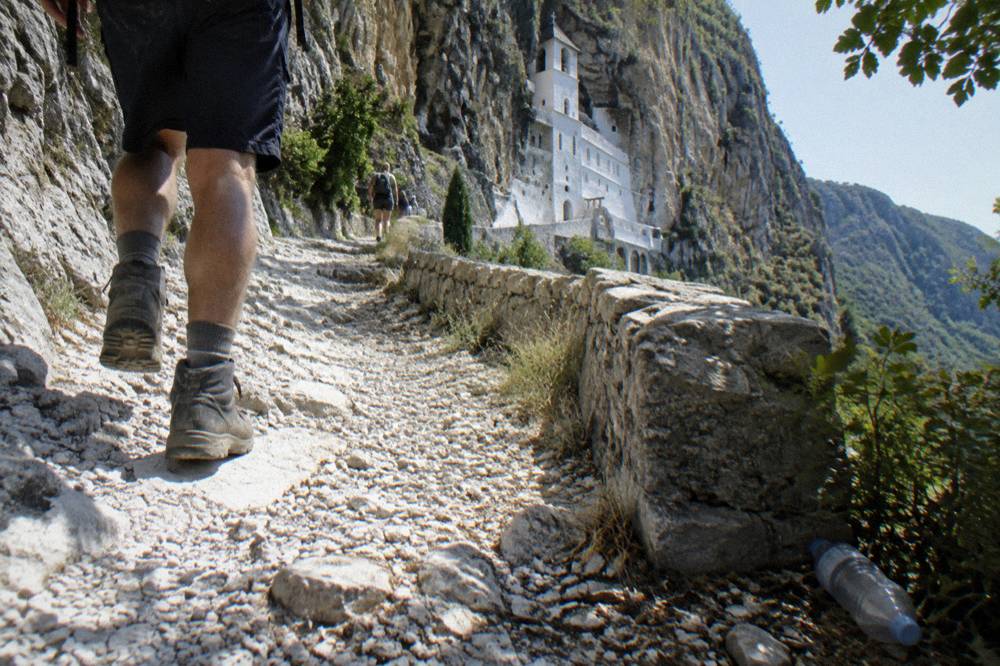
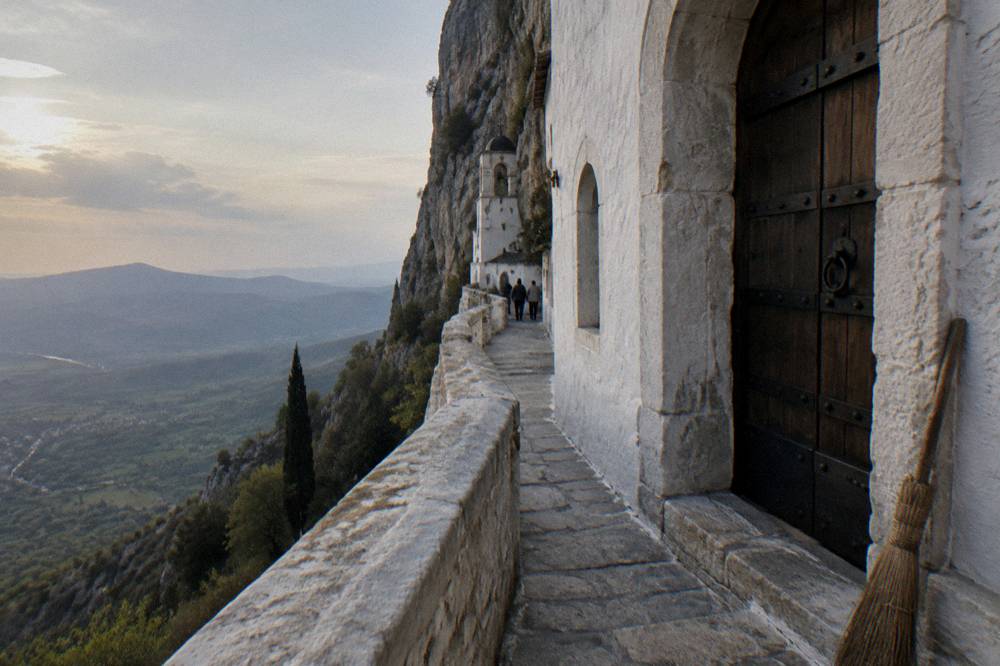
The site splits into two parts, and understanding the split is the difference between a relaxed visit and a rushed one. The Lower Monastery holds the main parking area, the larger church, and the pilgrim accommodation known as the konak. The Upper Monastery, the part you have seen in photographs, is wedged into the cliff face above, containing the small cave churches and the reliquary of St Basil that draws the pilgrims. Between the two runs a steep access road, plus a path for those who prefer to walk, and shuttle options are noted in peak season when the numbers swell.
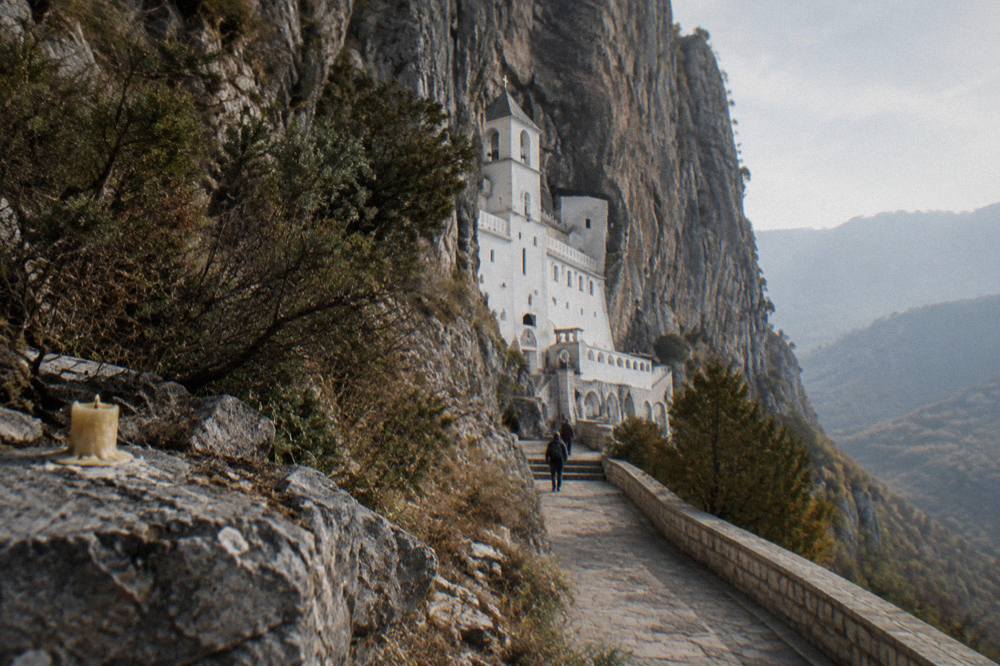
Allow real time for this. The climb is short in distance but relentless in gradient, and in July heat it humbles people who thought a monastery visit was a gentle morning. Visitors with limited mobility should know that the Upper Monastery is the hard part of the site, and the reconstructed accessibility work reported at other Montenegrin park sites does not change the fundamental geometry of a cliff. Go slow, take water, and treat the walk as part of the visit rather than an obstacle before it.
| Area of the site | What is there | How you reach it |
|---|---|---|
| Lower Monastery | Free parking, main church, konak pilgrim dorms | Arrival point, flat ground |
| Access road and path | The climb between the two levels | Steep road, or footpath on foot |
| Upper Monastery | Cave churches, reliquary, terraces over the valley | On foot from the Lower parking, shuttle noted in peak season |
This layout is exactly why so many coastal visitors book a tour rather than drive: the monastery sits inland, off the main coastal axis, and a day that also wants Durmitor or the Tara canyon adds hours of mountain road. The tours below handle that logistics problem in one booking.
When Are The Quietest Times To Visit Ostrog Monastery?
The monastery opens daily year round, with approximate hours of 06:00 to 17:00 from May to September and 05:00 to 16:00 from October to April. Weekend and feast day crowds are the heaviest, so early weekday mornings are the calmest window. Check the monastery's own pages before a long drive, since feast days change the rhythm entirely.
Queues at Ostrog are a function of the calendar more than the clock. The heaviest pressure comes on weekends and on the feast days that punctuate the Orthodox year, when pilgrim groups arrive by the coachload and the small cave churches fill shoulder to shoulder. Early weekday mornings are the calmest realistic window for a visitor who wants space to stand and look, and the hours themselves are generous: approximately 06:00 to 17:00 in the May to September period, and 05:00 to 16:00 from October to April, with the monastery open daily year round. Once you've picked a calm hour, the next question is what a visit actually involves, and our guide to going inside Ostrog Monastery covers everything from free entry to the short climb up to the caves.
If your only option is a summer weekend, go at opening rather than at midday. The tour coaches from the coast tend to land late morning, so the first hour belongs to overnight pilgrims and the occasional early independent traveller. That is also when the light on the cliff face is at its best for photographs from the Lower Monastery terraces.
One planning note for cruise and coastal day trippers: the monastery sits inland, so a visit from Kotor or Budva is a half day of driving before you even start. The Durmitor and Tara day trip from the coast guide explains how the inland day works, and most booked Ostrog tours build the monastery into a longer northern loop rather than a standalone run.
| Period | Approximate daily hours | What to expect |
|---|---|---|
| May to September | 06:00 to 17:00 | Peak pilgrim and coach season, earliest quiet window at opening |
| October to April | 05:00 to 16:00 | Quieter site, colder mornings, earlier close |
| Weekends and feast days | Same hours, heavier flow | Longest queues at the Upper Monastery churches |
| Early weekday mornings | Opening hour onward | The calmest realistic window for space and light |
Can You Take Photographs Inside Ostrog Monastery?
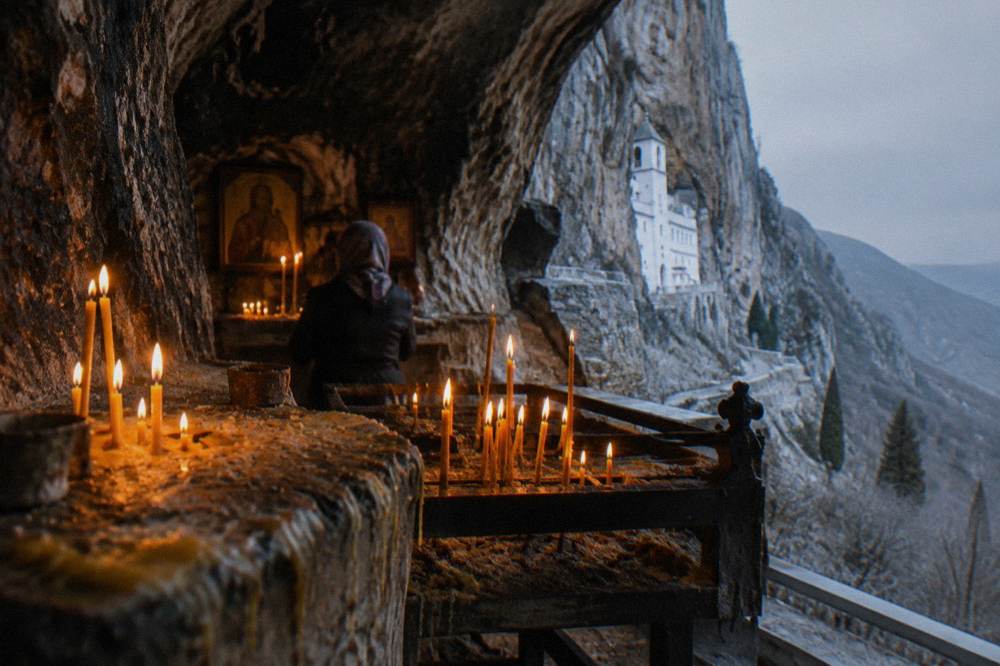
Ostrog is a working monastery first and a sight second, so photography stays discreet and services always take priority. The monastery publishes its own guidance on its site, and that guidance is the reference to follow inside the churches. Outside, on the terraces and paths, the cliff setting is open to any camera you care to carry.
The honest answer on interior photography is that the monastery's own published guidance is the rulebook, and it is the one to follow inside the cave churches. What can be said with confidence is the etiquette of a working monastery: services and prayer take absolute priority, pilgrims at the reliquary are not a backdrop, and a camera held at arm's length in a packed stone chamber is neither discreet nor welcome. When in doubt, lower the camera and let the room be a room.
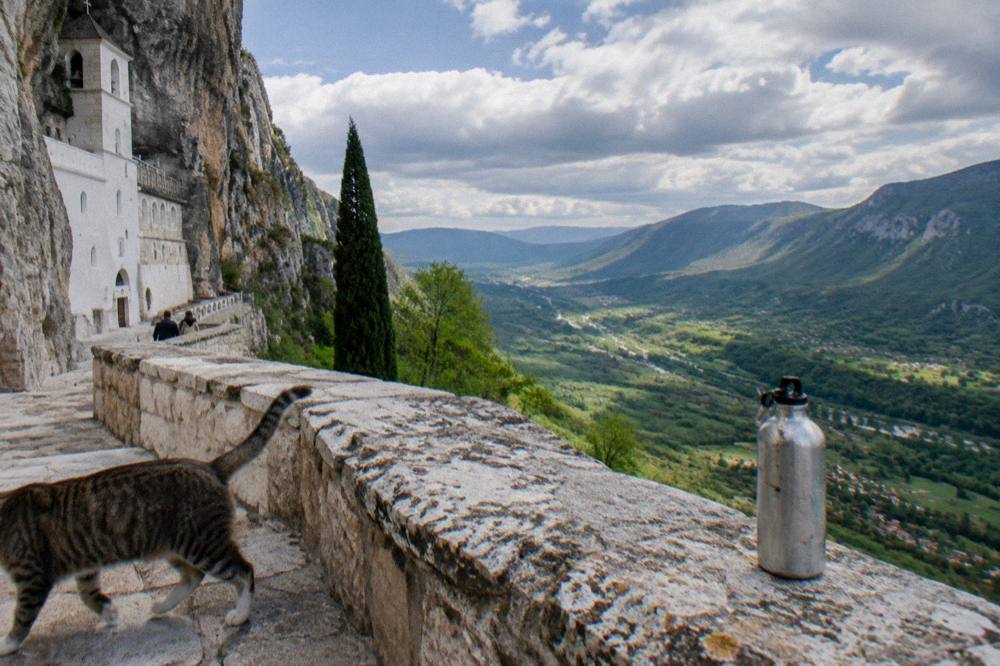
Outside is a different matter. The terraces of the Upper Monastery look out over the Bjelopavlici plain, and the white buildings against the cliff read as one of the most photographed compositions in Montenegro. Morning light hits the rock face directly, which is why the early arrival recommended for queues also serves photographers. If your whole day is built around pictures rather than pilgrimage, plan the Lower Monastery view for the wide shot and the Upper terraces for the panorama.
| Location | Respectful practice |
|---|---|
| Inside the cave churches | Follow the monastery's published guidance, services take priority |
| Around the reliquary | Step back, never photograph pilgrims at prayer |
| Lower Monastery terraces | Open for photography, best morning light on the cliff |
| Upper Monastery terraces | Open for photography, watch your footing at the railings |
| During a service | Camera away entirely, regardless of location |
If you would rather hand the timing to someone who runs the route weekly, a booked day trip solves the hours, the parking and the drive in one step.
Can You Stay Overnight At Ostrog Monastery?
Yes, in the pilgrim accommodation known as the konak, on a donation or low fee basis of around 5 EUR, in segregated dorms at the Lower and Upper sites. Places work on a first come basis, and early arrival matters in season. There is no commercial lodging on the site itself.
The konak is the monastery's own pilgrim guesthouse, and it exists for pilgrims rather than tourists, which is a distinction worth respecting in how you book and behave. Accommodation is on a donation or low fee basis, around 5 EUR, in segregated dormitories at both the Lower and Upper sites, with no commercial hotel-style service anywhere on the property. Places go to those who arrive early in season, and the monastery's own contact lines listed on its site handle arrangements.
For most readers the practical value of knowing this is not that you will sleep there, but that it explains the site's rhythm. The people you see at six in the morning, moving quietly between the churches, are often overnight pilgrims, and the monastery's day starts long before the first coach from the coast. The walking pilgrimage tradition is real and living: groups have made multi day walks to Ostrog for the 12 May feast of St Basil for years, with pilgrim groups from the Herceg Novi area recorded arriving on foot over three days, a practice reported by the Metropolis on its official site.
Which Tours Include An Ostrog Monastery Stop?
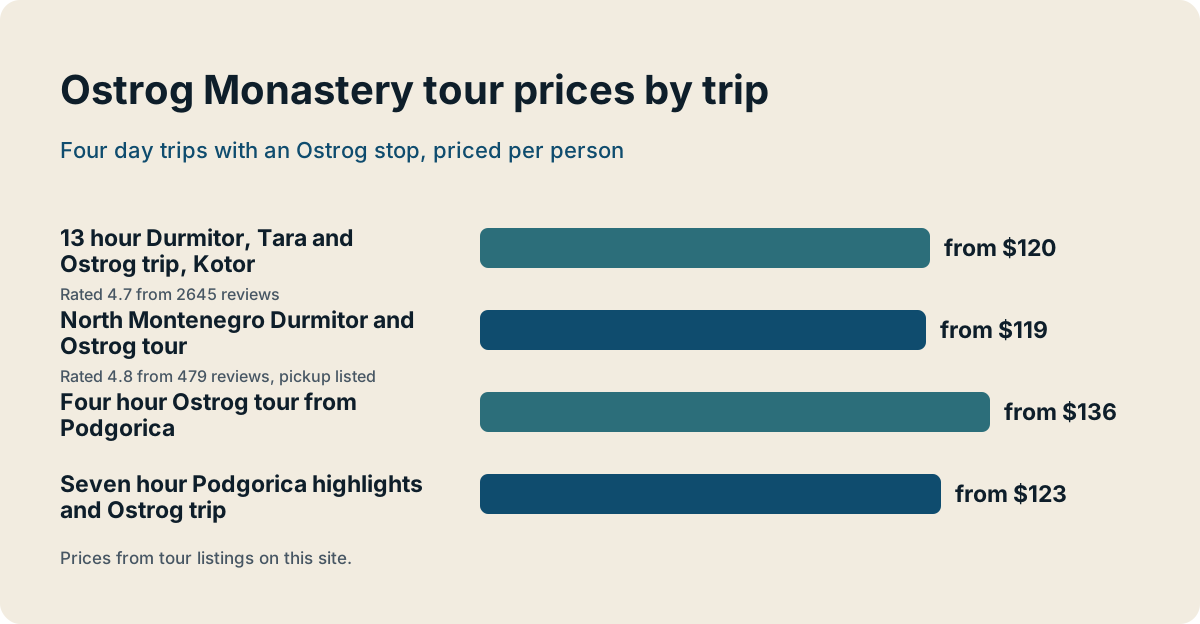
Four listings on this site build an Ostrog stop into a booked day: a 13 hour Durmitor, Tara and Ostrog trip from Kotor from $120 per person, a similar north Montenegro tour from $119, a four hour Ostrog tour from Podgorica from $136, and a seven hour Podgorica highlights and Ostrog trip from $123. Each departs from its stated city, and two list pickup.
The roster splits cleanly by starting point. From the coast, the two long northern days dominate: Gray Line Montenegro's 13 hour Durmitor, Tara and Ostrog trip from Kotor at $120 per person, rated 4.7 from 2645 reviews, and 360Monte's north Montenegro Durmitor and Ostrog tour at $119 per person, rated 4.8 from 479 reviews, with pickup listed on that listing. Both compress the monastery, the Durmitor highlands and the Tara canyon into a single very long day, which is the only realistic way to see all three from a coastal base. Whether that long drive pays off depends on what you want from the stop, and our verdict on whether Ostrog Monastery deserves your time weighs it for pilgrimage, photography or day trip value.
From Podgorica, the formats shorten. Fine-Car Doo runs a four hour Ostrog Monastery tour with pickup listed, from $136 per person, rated 4.9 from 37 reviews, a small pool but a consistently strong one. Natour Montenegro's seven hour Podgorica highlights, Ostrog and Zeta Nature Park day trip runs from $123 per person with a 5 rating from 27 reviews, pairing the monastery with the capital and the new nature park in one loop.
| Tour | Duration | From | Rating | Departs |
|---|---|---|---|---|
| Durmitor, Tara and Ostrog day trip, Gray Line Montenegro | ~13 hours | $120 per person | 4.7 from 2645 reviews | Kotor |
| North Montenegro Durmitor and Ostrog tour, 360Monte | ~13 hours | $119 per person | 4.8 from 479 reviews | Kotor, pickup listed |
| Ostrog Monastery tour, Fine-Car Doo | ~4 hours | $136 per person | 4.9 from 37 reviews | Podgorica, pickup listed |
| Podgorica highlights, Ostrog and Zeta Nature Park, Natour | ~7 hours | $123 per person | 5 from 27 reviews | Podgorica |
The four hour Podgorica format is the one to look at if the monastery is your main goal rather than one stop of many. It reaches the site in the morning, gives you the climb and the churches without rushing, and returns you to the capital with the afternoon intact.
For travellers who want the monastery plus a taste of the capital region rather than a marathon northern loop, the seven hour Natour day is the gentler structure, and its small review pool of 27 comes with a perfect score across it.
Whether the long day is worth it is its own question, and one this site answers in depth in is Ostrog Monastery worth visiting, which weighs the drive against the arrival.
What Should You Bring For The Climb And The Hours?
Comfortable walking shoes, water for the climb, cash for donations and modest spare clothing cover the essentials. The path up to the Upper Monastery is steep, and the site sits inland where mornings run cooler than the coast you left behind. A small day bag is far easier to manage than a suitcase on the stairs.
The packing list for Ostrog is short but unforgiving, because the site combines a mountain walk with a strict dress code and a religious function. Shoes come first: the access path is steep and the terraces are worn stone, and sandals that survive a Budva promenade will not thank you here. Water comes second, especially in the May to September window, because the climb to the Upper Monastery is exposed and the return trip feels longer than the way up. Cash comes third, for the voluntary donations customary at the site, since a monastery that charges no entry still maintains its buildings on what visitors give.
| Item | Why it earns its place |
|---|---|
| Comfortable closed shoes | Steep access path and worn stone terraces |
| Water | Exposed climb, especially May to September |
| Cash in small notes | Voluntary donations at the site |
| A scarf or light wrap | Covers shoulders between buildings, spare for the churches |
| Long trousers or a long skirt | The dress code, non negotiable at any temperature |
| A small day bag | Leaves both hands free on the stairs |
How Does An Ostrog Stop Fit Into A North Montenegro Day?
Most coastal visitors reach Ostrog as one stop on a long north Montenegro day, usually paired with Durmitor National Park and the Tara canyon, roughly 13 hours door to door. From Podgorica the monastery works as a shorter half day outing of about four hours. Both formats exist across the tour roster, and the choice is mostly about where you sleep.
The geography drives everything. Ostrog sits on the inland side of the country, Durmitor and the Tara canyon sit beyond it, and the coast lies two hours back the other way, so a coastal base turns the monastery into one leg of a triangle that only closes with a very long day. That is exactly what the two 13 hour tours from Kotor do, and it is why they dominate the coastal market. The Durmitor leg carries its own entry fee of EUR 5 per person at the park, per the official national parks price list at nparkovi.me, which is separate from any tour price and worth budgeting alongside it.
Travellers based in Podgorica or Žabljak have the better geometry. From the capital, the four hour Fine-Car tour makes the monastery a morning; from Žabljak, the monastery pairs naturally with the Tara bridge and canyon country on the way south. Montenegro Tourist Trips runs the Tara Bridge zip line at Đurđevica from $62 per person, rated 4.5 from 133 reviews, which slots neatly into the same northern day as an Ostrog stop for groups that want adrenaline with their incense. Natour Montenegro also runs a private 11 hour Durmitor and Biogradska Gora tour from Podgorica at $177 per person, rated 5 from 45 reviews, for travellers who want the northern mountains without the fixed group schedule.
If the northern day appeals more broadly, the Tara rafting season and difficulty guide covers the river that runs through the same landscape, and the season windows there overlap with the monastery's busiest months.
The zip line at the Tara bridge is the most common add on for families on the northern loop, and it breaks up the long transfer between Durmitor and the coast with something the children will actually remember.
Whichever structure you choose, the rules in this guide travel with you: the same dress code applies whether you arrive on a 13 hour coach day or in a rental car at seven in the morning, and the monastery does not distinguish between pilgrims and passengers at the door. Plan the clothing, respect the hours, and the rest of the day takes care of itself.
Common Questions About Ostrog Monastery Visiting Rules
What is the dress code at Ostrog Monastery?
Shoulders and knees must be covered: long trousers or long skirts, no shorts and no sleeveless tops. Head coverings for women are optional, and wraps are sometimes available at the Upper Monastery entrance. The rule applies to all visitors, in the Lower Monastery as well as the Upper.
Can you wear shorts at Ostrog Monastery?
No. Shorts are outside the dress code for both men and women, and the code is applied at the monastery entrances. Loose long trousers or a long skirt in natural fabric is the comfortable solution in summer heat, and a scarf covers shoulders between buildings.
Can you take photographs inside Ostrog Monastery?
The monastery publishes its own guidance on its site, and that guidance is the reference inside the churches. The respectful practice is discretion: services and pilgrims at prayer take priority, and the terraces outside are open for photography with the cliff setting at its best in morning light.
Is entry to Ostrog Monastery free?
Yes, entry is free and voluntary donations are customary at the site. There is no admission charge at either the Lower or Upper Monastery, though donations support the maintenance of the buildings and the pilgrim accommodation.
Can you go inside Ostrog Monastery?
Yes, the cave churches of the Upper Monastery are open to visitors daily year round, with approximate hours of 06:00 to 17:00 from May to September and 05:00 to 16:00 from October to April. Queues are longest on weekends and feast days, and early weekday mornings are the calmest window.
Can you stay overnight at Ostrog Monastery?
Yes, in the pilgrim konak on a donation or low fee basis of around 5 EUR, in segregated dorms at the Lower and Upper sites. Places are first come and early arrival matters in season, and the accommodation exists for pilgrims rather than tourists.