Is Ostrog Monastery Worth Visiting?
A verdict on Ostrog Monastery by purpose: pilgrimage, photography, or as part of a Durmitor and Tara day trip, with costs, dress rules and access explained.
Is Ostrog Monastery Worth Visiting?
Yes, for most travellers, Ostrog Monastery is worth visiting, with one honest caveat: it rewards the right expectation. As a pilgrimage site it is the most important in the region. As a viewpoint it is dramatic but brief. As a stop on a longer northern day trip it slots in naturally, and entry is free, so the real cost is the drive, not a ticket.
The monastery answers a question most Montenegro itineraries eventually raise. The coast is small, and by day three many visitors look north. Ostrog sits at the hinge between the coast and the mountains, which is why it appears on so many tour routes, including the 13-hour Durmitor, Tara and Ostrog day trip from Kotor, from $120 per person with a 4.7 rating from 2,645 reviews. That tour, run by Gray Line Montenegro, is the site's featured way to see the monastery in context, and you can Check availability on the operator's live listing.
What follows is a verdict by purpose. Pilgrims, photographers, families and day-trippers weigh the same cliff differently, and the monastery's own rules, published on its site at manastirostrog.com, shape what each of them experiences.
What Is Ostrog Monastery And Why Do People Go?
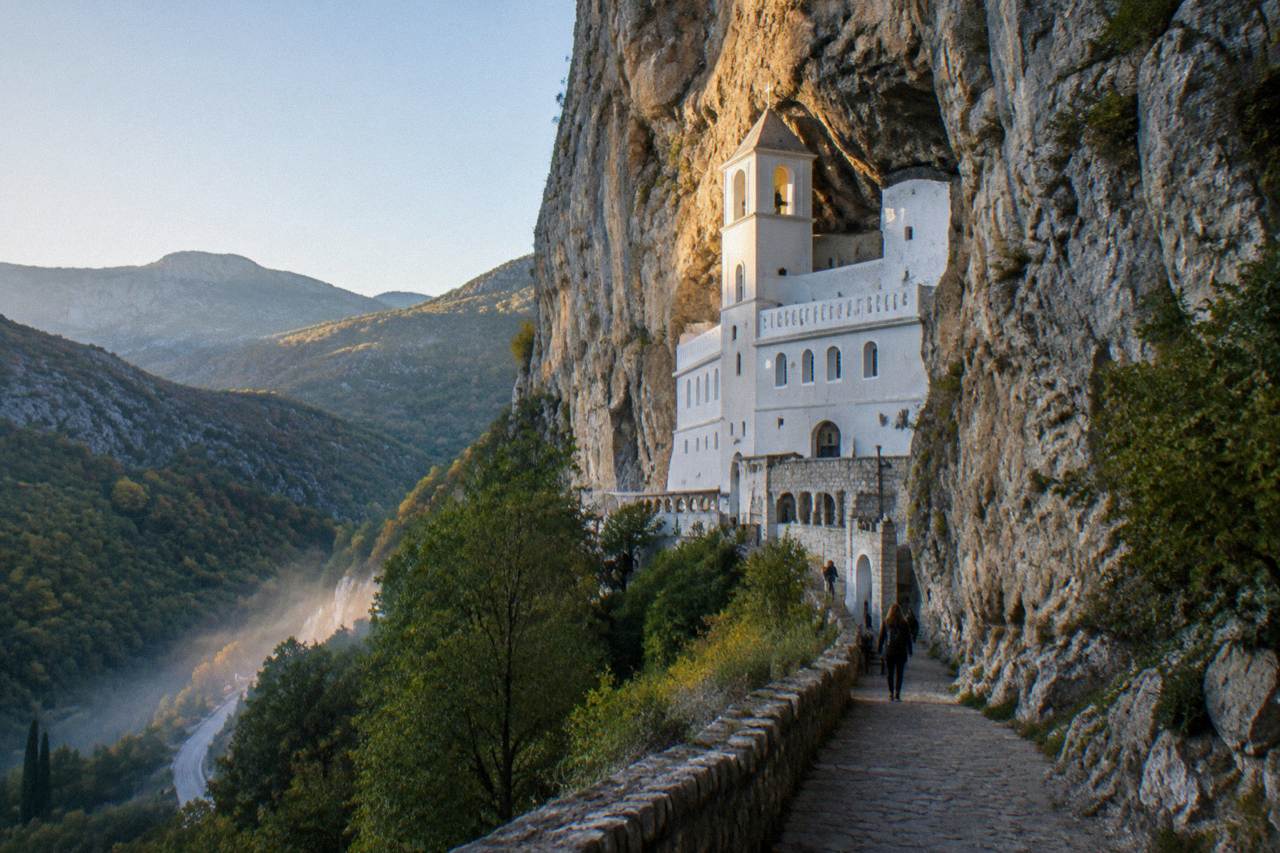
Ostrog is a Serbian Orthodox monastery carved into a vertical cliff about an hour's drive from Podgorica, built around the relics of Saint Basil of Ostrog. People go for three reasons that rarely overlap cleanly: religious pilgrimage, the sheer spectacle of white walls against rock, and its convenient position on routes toward Durmitor and the Tara canyon. Entry costs nothing.
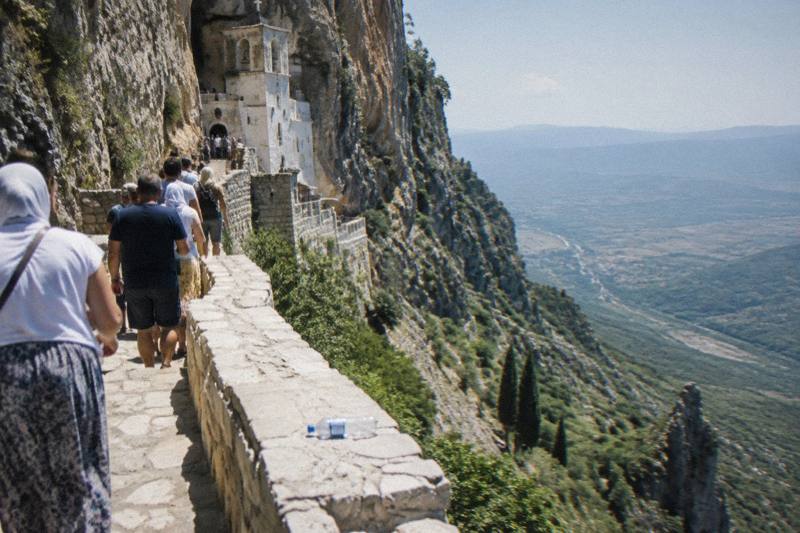
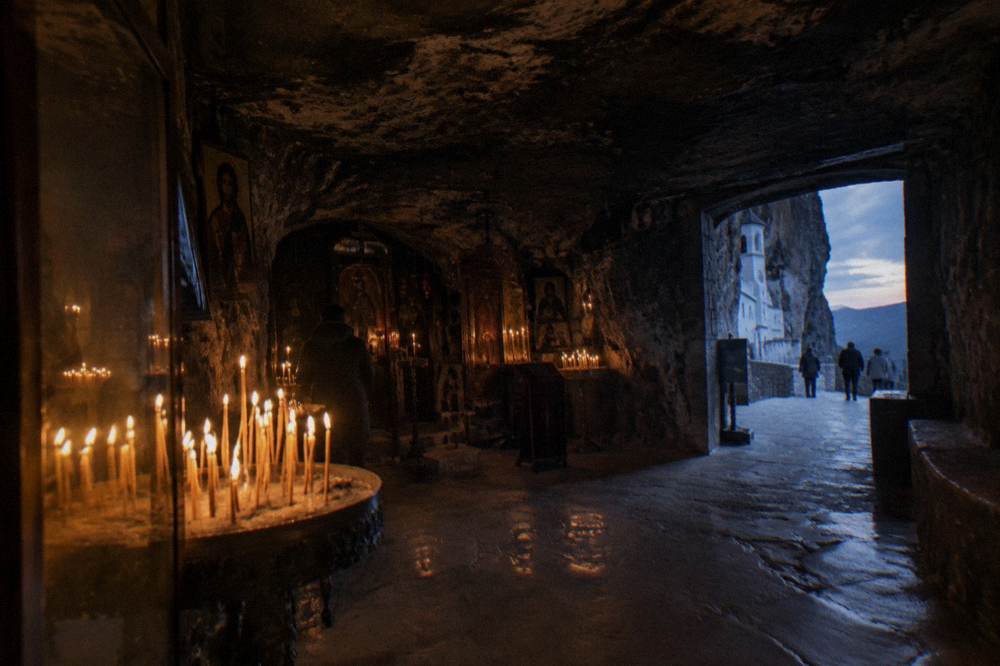
The Upper Monastery, the part everyone photographs, was built into caves in the cliff face. The Lower Monastery sits near the parking area below, and the two are connected by a steep path and access road. The relics of Saint Basil, kept in the Upper Monastery, are what draw pilgrims from across the Balkans and beyond. The scale of that devotion is not obvious from a photo: on feast days, and around the 12 May feast of St Basil in particular, the road fills with walkers, and groups have made multi-day walking pilgrimages to the monastery for years, a practice documented by the Metropolis on its official pages at mitropolija.com.
For secular visitors the appeal is more visual and more compact. The monastery appears to grow out of the rock rather than sit on it, and the view over the Zeta valley from the terraces is wide and green. You do not need faith to feel that the place is unusual. You do need the right shoes and the right clothes, because the site's dress code applies to everyone, and it is covered in detail in the site's guide to the Ostrog dress code and visiting rules.
There is no museum ticket, no guided-only entry and no time slot. The monastery operates daily year-round, with approximate hours of 06:00 to 17:00 from May to September and 05:00 to 16:00 from October to April. Those hours shape the touring day: most group itineraries arrive late morning, which is also when the parking area and paths are busiest.
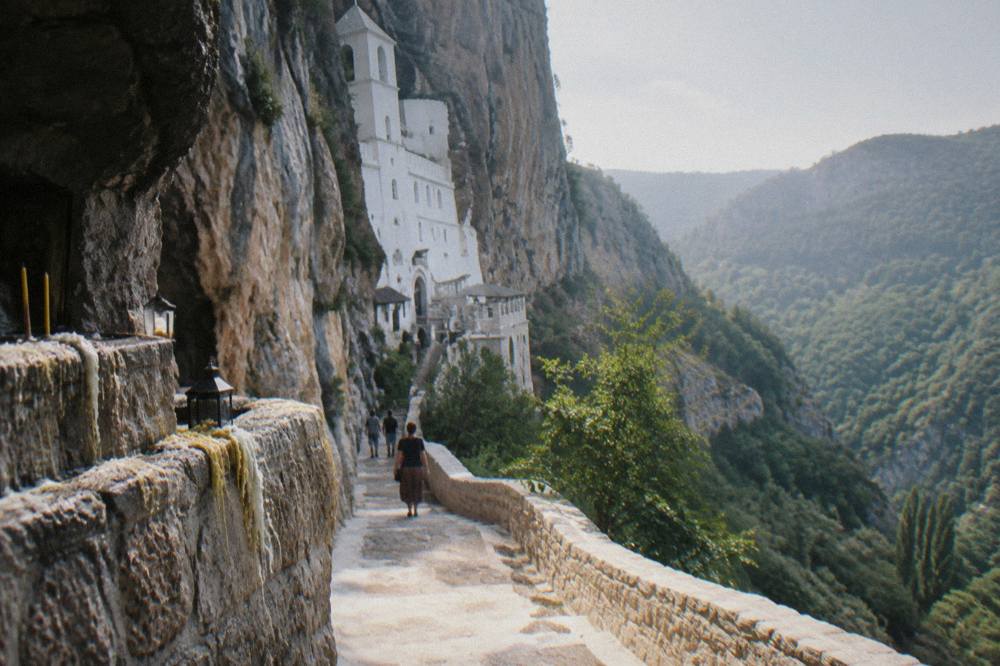
If the purpose of your trip is the north, the question is not whether Ostrog is worth an hour on its own but whether it earns its place beside Durmitor's Black Lake and the Tara canyon. For most people it does, and that combined format is exactly what the best-selling northern tours sell.
How Much Time Do You Need At Ostrog?
Plan on 45 minutes to 90 minutes at the site itself, plus the walk between the parking area and the Upper Monastery. Pilgrims and photographers should budget two hours or more. Ostrog is not a half-day attraction on its own from the coast, which is why nearly every tour pairs it with Durmitor, Tara or Podgorica rather than selling it standalone from Kotor or Budva.
The practical arithmetic works like this. From the Lower Monastery parking, the walk or shuttle up to the Upper Monastery takes a chunk of time on its own, and in peak season there can be a wait to enter the small cave church, because only a limited number of people fit inside at once. Once inside, the church is intimate rather than grand; most visitors spend ten to fifteen minutes there, light a candle, and move to the terraces for the view. Add time for the small church at the Lower Monastery and a rest, and the visit fills a comfortable morning stop.
This is why the standalone option is rare and relatively expensive. The Ostrog Monastery tour with pickup from Podgorica, run by Fine-Car Doo, takes about four hours and costs from $136 per person, with a 4.9 rating from 37 reviews, a small pool but a consistently strong one. That price reflects a private-style transfer to a free attraction: you are paying for the car and driver, not a ticket. Travellers already based in Podgorica or Niksic get better value from it than anyone driving in from the coast for the monastery alone.
By contrast, the long combined days treat Ostrog as the first or last stop. Gray Line's Durmitor, Tara and Ostrog trip runs about 13 hours from Kotor at from $120 per person, and 360Monte's similar Durmitor and Ostrog tour with pickup runs about 13 hours at from $119 per person with a 4.8 rating from 479 reviews, hotel pickup included per the listing. In both cases Ostrog is roughly an hour of a very full day, which is the proportion that suits most first-time visitors.
Is Ostrog Worth It As A Day Trip From The Coast?
Yes, but only as part of a bigger northern loop, not as a there-and-back trip for the monastery alone. Kotor and Budva sit far enough from Ostrog that a dedicated outing consumes a full day for a 90-minute visit. Combined tours that add Durmitor National Park, the Tara canyon or the mountains turn the same drive into the single most dramatic day trip available from the coast.
The drive itself is part of the argument. The route leaves the bay, climbs through the interior, and crosses the kind of limestone country that made Montenegro's name. A tour that stops at Ostrog early and continues toward Zabljak delivers two completely different Montenegros in one day: the white cliff monastery of the central highlands and the alpine lake country of Durmitor, where park entry is EUR 5 per person and the annual all-parks pass is EUR 13.50, as detailed in the site's guide to a Durmitor and Tara day trip from the coast.
The two flagship options make the comparison easy. Gray Line's trip, the site's featured tour, costs from $120 per person and carries a 4.7 rating from 2,645 reviews, one of the deepest review pools on any Montenegro listing. 360Monte's version costs from $119 per person, rates 4.8 from 479 reviews, and includes pickup per the listing, which matters if you are staying somewhere a meeting point is awkward to reach. Neither listing promises pickup unless it says so, and the Gray Line listing departs from Kotor. If you are basing yourself in Croatia instead, the Dubrovnik day trip guide explains what that longer route costs in time and what you actually get to see.
A quick comparison of the realistic ways to build Ostrog into a coast-based trip:
| Format | Typical cost | Time | Best for |
|---|---|---|---|
| Ostrog only, from Podgorica (4h tour) | from $136 per person | half day | Pilgrims, Podgorica-based visitors |
| Ostrog + Durmitor + Tara, 13h from Kotor | from $119 to $120 per person | full day | First-time visitors, photographers |
| Ostrog + Durmitor + Tara with pickup | from $119 per person | full day | Travellers without a car |
| Self-drive to Ostrog from the coast | fuel and parking only | full day of driving | Repeat visitors, slow travellers |
Self-drive is the fourth option and a legitimate one, covered below. The honest summary is that the monastery justifies the drive for almost everyone, but the drive justifies the day only when you pair it with the north.
What Is The Dress Code At Ostrog Monastery?
Shoulders and knees must be covered for all visitors, with long trousers or skirts expected and sleeveless tops and shorts turned away. The rule applies to men and women equally and to non-believers as much as pilgrims. Wraps are sometimes available at the entrance to the Upper Monastery, but relying on that is a gamble in busy periods.
Ostrog is a working monastery, not a viewpoint with a gift shop. The dress code is the single most common cause of disappointment at the gate, and it is enforced at the Upper Monastery rather than debated. In summer, when coast attire is beachwear, this catches out a large share of day-trippers who packed for Kotor's walls rather than a church. The full rules, including what to bring and how the site is laid out, are covered in the site's dedicated guide to the monastery's dress code and visiting rules, so read that before you pack.
Beyond clothing, behaviour expectations are simple and worth knowing in advance. Entry is free, with voluntary donations customary. Photography inside the cave church is generally discouraged, and during services visitors wait rather than wander. Modest voice levels are expected on the path between the two monasteries, which pilgrims may be walking barefoot as an act of devotion.
None of this deters the tours. Guides on the 13-hour northern routes brief their groups on the dress code on the drive, which is one quiet advantage of going with an operator on this particular stop. Independent visitors should keep a scarf or a long layer in the car from May to September.
How Do You Get To Ostrog Without A Tour?
There is no direct public bus to Ostrog Monastery, so independent access means a rental car, a taxi from Niksic or Podgorica, or a private transfer. Parking at the Lower Monastery is free, with the upper parking limited. The monastery sits off the main Podgorica to Niksic route, and the drive from the coast takes most of a morning each way.
For confident drivers this is one of the more rewarding self-guided days in the country. The road to the Lower Monastery is a spur off the main route, surfaced and signed, and the site's own pages at manastirostrog.com carry contact details useful for groups. Rental logistics in Montenegro are covered in detail elsewhere on the site, but the relevant point here is distance: from Kotor or Budva you are committing to a long round trip, and from Podgorica or Niksic the outing is genuinely short.
Overnight accommodation exists on site in a form most visitors never hear about. Pilgrim dormitories, known as konak, are available at the Lower and Upper monasteries on a donation or low-fee basis, around 5 euros, in segregated dorms. There is no commercial lodging, and spaces in season go to early arrivals. For a traveller curious about the monastery's quieter rhythm, arriving late and staying the night is a way to see Ostrog without the midday crowds, though it demands flexibility and modest expectations of comfort.
Taxis from Niksic, roughly 40 minutes away, and from Podgorica, about an hour, are the middle path, and drivers will typically wait. Costs for that should be agreed before departure, since no verified tariff exists for the route. Check with your accommodation or driver on the day; the site does not print a fare because none is confirmed.
Is Ostrog Worth Visiting If You Are Not Religious?
Yes, with measured expectations. The architecture and setting are genuinely singular: a monastery built into a living cliff, with relics that draw a stream of pilgrims you can watch and, if you choose, join for a moment. But the interior spaces are small and the main cave church visit is short, so secular visitors who come only for the interior often leave faster than they expected.
The realistic secular visit is built around three things. First, the exterior composition, the white monastery against grey rock, best seen from the viewpoint near the Lower Monastery and from the approach road. Second, the observation of living devotion, which is humbling and unlike anything on the coast: candles, queued pilgrims, and the path walked with purpose. Third, the valley view from the terraces, wide, green and quiet.
What it is not is a museum on the scale of Cetinje's national museums or a fortress you can climb. Visitors who rank it against Kotor's walls on "things to do per hour" will be underwhelmed. Visitors who treat it as the cultural counterweight to a week of beaches consistently rank it among the highlights of their trip. The review pattern on the combined tours supports this: Gray Line's 4.7 from 2,645 reviews and 360Monte's 4.8 from 479 reviews describe days in which Ostrog is one note in a chord, and it is rarely the note reviewers complain about.
Families fall somewhere in between. The path and heights demand supervision of small children, and the dress code applies to them too. Older children with any interest in history or geology tend to respond to the sheer improbability of the building. The itinerary planning pages on the site treat it as an optional northbound stop rather than a must for every family.
When Is The Best Time To Visit Ostrog?
Early weekday mornings outside the feast days are the calmest time at Ostrog, with the site open from around 06:00 in the summer half of the year. The busiest periods are weekends, midday tour arrivals, and the days around St Basil's feast on 12 May, when pilgrims arrive on foot in numbers. October to April brings shorter hours, from around 05:00 to 16:00.
The seasonal rhythm matters more here than at most Montenegro sights because the crowd is mixed. Tourists arrive in waves in late morning; pilgrims arrive on their own calendar. The two overlap most in high summer, when every 13-hour northern tour from the coast times its Ostrog stop into the same late-morning window. Going early, or arriving on a day when no tour is running, changes the character of the visit completely.
Spring and autumn are the sweet spots for the combined trips. The mountain roads to Durmitor are clearer, the heat on the Ostrog path is manageable, and the monastery's own schedule runs its long summer hours through September. Winter visits are possible and, for pilgrims, meaningful, but the northern sections of the combined tours become weather-dependent, and Zabljak sits high enough that snow reshapes any plan, as the site's seasonal guides explain for the country as a whole.
One practical note for photographers: the cliff face and the monastery's white walls photograph very differently through the day. Midday sun flattens the rock; morning and late afternoon give the face relief. If pictures are your purpose, time the visit around the light rather than the crowd, and accept that the two may not agree.
What Does A Visit To Ostrog Actually Cost?
Entry to Ostrog Monastery is free, with donations voluntary, so the cost of a visit is entirely transport. Guided options run from $119 to $136 per person depending on format, while the 13-hour combined tours from the coast sit at from $119 to $120 per person and include only the monastery stop and the rest of the northern day, never a monastery ticket. Parking on site is free.
This is one of the few major Montenegro attractions where the attraction itself costs nothing and everything on the invoice is travel. That makes the decision unusually clean: you are choosing how much of the north to buy, not whether to buy the monastery. The comparison below puts the verified listing prices side by side.
| Tour | Operator | Duration | Price | Rating |
|---|---|---|---|---|
| Durmitor, Tara and Ostrog day trip | Gray Line Montenegro | ~13 hours | from $120 per person | 4.7 from 2,645 reviews |
| Durmitor and Ostrog tour with pickup | 360Monte | ~13 hours | from $119 per person | 4.8 from 479 reviews |
| Ostrog Monastery tour | Fine-Car Doo | ~4 hours | from $136 per person | 4.9 from 37 reviews |
The 4.9 from 37 reviews on the short tour is a small pool and is treated as one here, but the direction of the feedback is consistent across all three. What reviewers on the long tours praise is the day's composition, and what occasional criticism targets is the length of the drive, which no operator can shorten. Montenegro's geography, not its pricing, is the constraint.
For independent travellers the cost line is fuel, parking and a meal. There are simple restaurants and stalls around the Lower Monastery parking area in season, and Njegusi-style smoked ham and cheese from the region's producers appear on most menus. Budget a modest lunch stop; the site's wider cost guides cover the daily arithmetic in detail.
So, Is Ostrog Monastery Worth Visiting?
For pilgrims, unreservedly: it is the region's foremost Orthodox shrine and entry is free. For photographers and curious travellers, yes, as a dramatic hour in a well-planned day. For coast-based visitors with one long day to give, yes, but combine it with Durmitor and Tara rather than visiting it alone, because the drive is the real cost and the north is the reward that pays for it.
The verdict splits cleanly by purpose, and pretending otherwise would be dishonest travel writing. A pilgrim overnighting in the konak for a few euros and a devoted morning is having a completely different experience from a family stepping off a 13-hour tour bus, and both are legitimate. The monastery serves both without charging either.
The through-line on Montenegro Tours is that this country repays travellers who match the format to the purpose, and Ostrog is the clearest example on the roster. Choose the short private transfer if faith or family history draws you. Choose the combined Durmitor day if you want the monastery inside the fullest single day the country offers. Choose your own car if you want to arrive at dawn before anyone else does. All three are worth it; only the expectation has to be right.
Whatever you choose, respect the dress code, carry cash for a candle and a donation, and check the listing for current dates before you commit to a long day. The monastery has kept the same hours and the same silence for centuries; the only thing that changes is how you arrive.
Common Questions About Visiting Ostrog Monastery
Is Ostrog Monastery Worth Visiting?
Yes, for most travellers. As a pilgrimage site it is the most significant in the region and free to enter. As a viewpoint it is dramatic but brief, so it works best as one stop in a longer northern day trip combining Durmitor and the Tara canyon.
How Much Does It Cost To Visit Ostrog Monastery?
Entry is free, with voluntary donations customary. Guided tours cost from $119 to $136 per person depending on format, but that price pays for transport and guiding, never a monastery ticket. Parking at the Lower Monastery is free.
What Should You Wear To Ostrog Monastery?
Shoulders and knees covered, with long trousers or skirts and no sleeveless tops or shorts. The rule applies to all visitors regardless of belief. Wraps are sometimes available at the Upper Monastery entrance, but bring your own layer rather than relying on that.
Can You Stay Overnight At Ostrog?
Yes, in pilgrim dormitories known as konak, on a donation or low-fee basis of around 5 euros, in segregated dorms at the Lower and Upper sites. There is no commercial lodging, and spaces in season go to early arrivals.
Is There A Bus To Ostrog Monastery?
No, there is no direct public bus. Access is by rental car, taxi from Niksic or Podgorica, or organized tour. The monastery is roughly 40 minutes from Niksic and about an hour from Podgorica by road.
When Is Ostrog Monastery Open?
Daily year-round, with approximate hours of 06:00 to 17:00 from May to September and 05:00 to 16:00 from October to April. The calmest visits are early weekday mornings outside the days around St Basil's feast on 12 May.