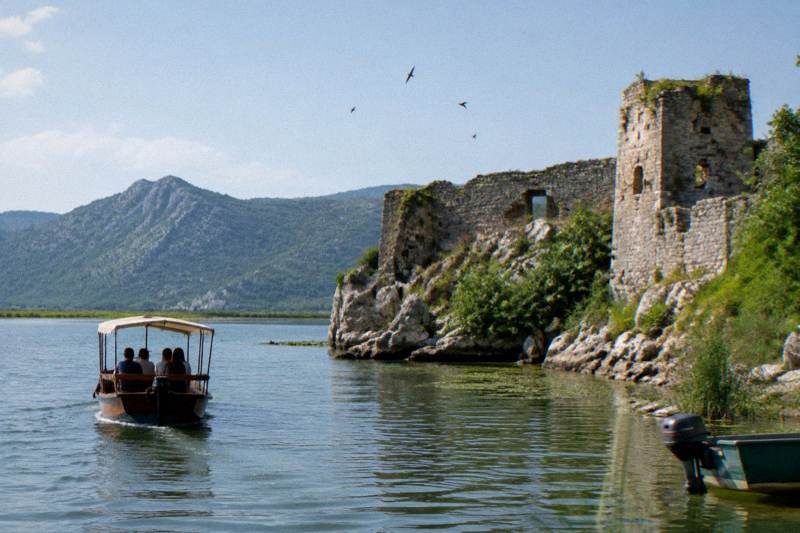
Is It Safe To Swim In Lake Skadar?
Lake Skadar swimming safety explained: where swimming happens on tours, water conditions, park rules, and which Virpazar boat trips include swim stops.
Is It Safe To Swim In Lake Skadar?
Yes, in the right places and the right season. Lake Skadar is a freshwater national park where swimming happens at designated stops on boat tours and from a handful of shoreline spots, not everywhere along the reedy banks. Boat crews on the Virpazar tours hold the local knowledge: where the bottom is clean, where the water is deep enough, and where swimming is off limits to protect the lake's birdlife. Swimming is a listing feature on several tours, and this page lays out the safety picture in full. If you want that swim stop built into your day on the water, this guide to Lake Skadar boat trip prices lays out what the different routes cost.
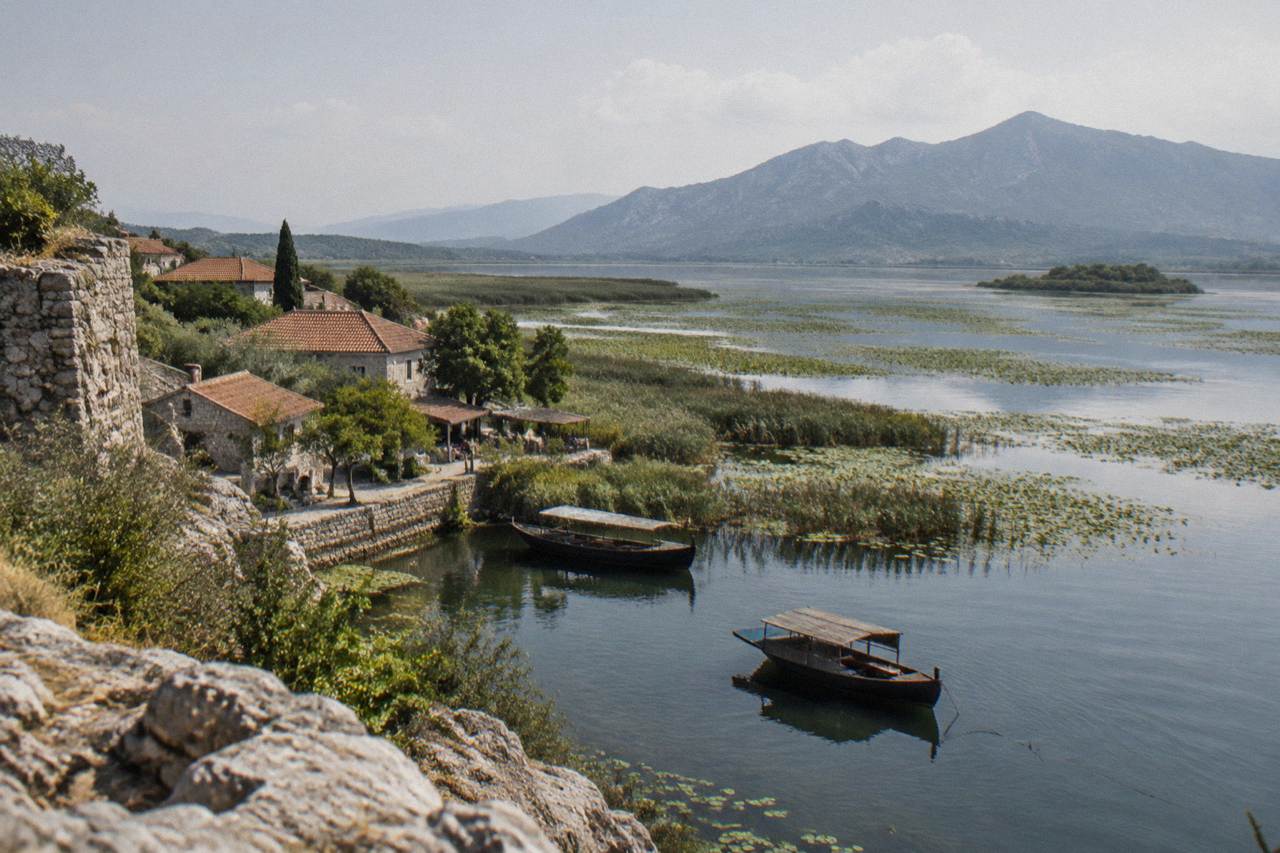
Swimming in a big lake is different from swimming off a Adriatic beach, and that difference is exactly why the question gets asked. Lake Skadar is the largest lake in the Balkans, its surface area swinging between roughly 370 and 530 square kilometres as the water level shifts by up to 5 metres through the year. Parts of it are shallow, silty and fringed with reed beds; other parts, particularly around the rocky northern shore, drop away quickly into clear water. Knowing which is which is the whole game.
The park is managed as a national park with published rules, entry fees and protected zones, and swimming fits inside that framework rather than outside it. On Montenegro Tours this question comes up most often from travellers booked on, or weighing up, a Virpazar boat trip. A good starting point is the basic planning picture in how to visit Skadar Lake from the coast, which covers transport and timing.
Where Do People Actually Swim In Lake Skadar?
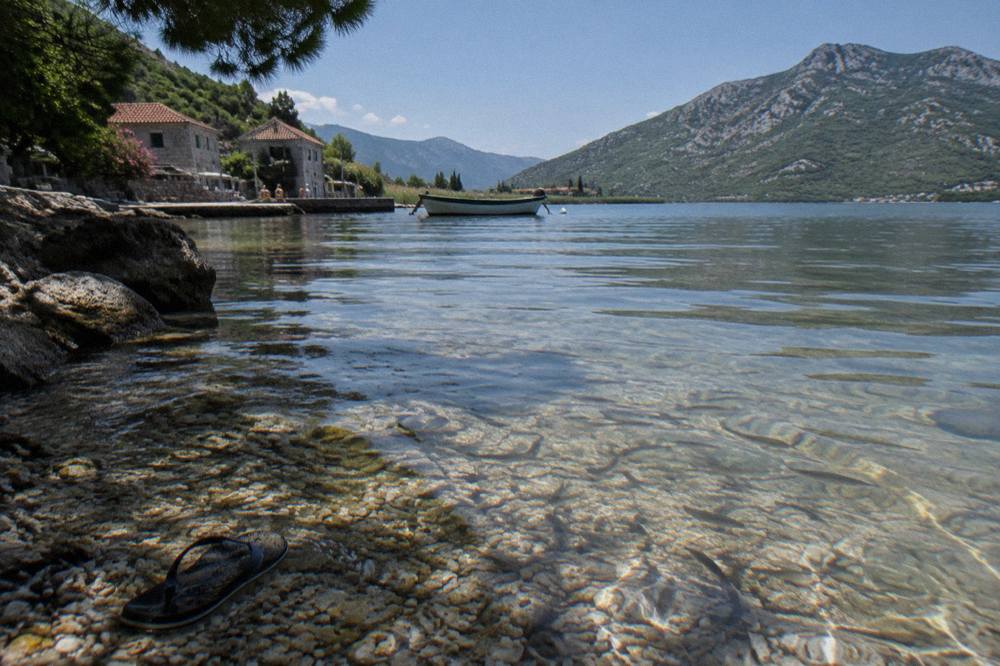
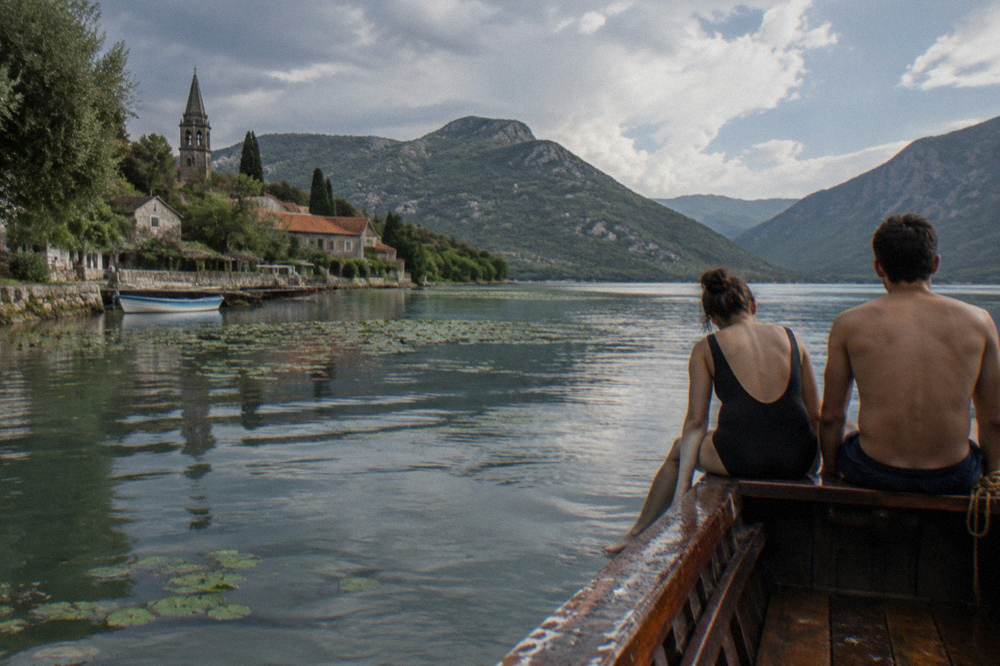
Most swimming in Lake Skadar happens directly from a boat rather than from the shore, with nearly everyone who takes a dip doing so at a stop the crew selects during the trip. If you are hoping to swim, expect to get in the water from the vessel at one of these chosen spots along the route. The wooden boat tours that leave from Virpazar include a swim stop on their itineraries, timed for the deeper, cleaner water away from the reed margins. Shore swimming exists but is concentrated at a few known spots, and access from the banks is complicated by reeds, soft sediment and private land. The boat-based swim is the format the listings sell.
The flagship is the two-hour wooden boat tour operated by Kingfisher from Virpazar, rated 4.8 from 1,887 reviews and priced from $25 per person. Its route crosses the open water toward the lake's islands and fortress ruins, and the swim stop is part of the published itinerary rather than a crew improvisation. The longer three-hour wooden boat tour to Kom Monastery, also from Kingfisher and rated 4.8 from 1,657 reviews at from $36 per person, works the same logic with more distance covered.
Swim stops are listing facts, and they are also conditional. Wind picks up quickly on a lake this size, crews move or shorten stops accordingly, and no operator sells a guaranteed swim. That is standard practice on Montenegro's water, the same principle that governs the Blue Cave swim on the coast, and it is worth reading whether the Blue Cave is worth visiting for a parallel case of a conditional swim sold as a highlight.
For a sense of scale on the decision, here is how the three Virpazar formats compare:
| Tour | Duration | Rating and reviews | From |
|---|---|---|---|
| Wooden boat tour (Kingfisher) | ~2 hours | 4.8 from 1,887 reviews | $25 per person |
| Wooden boat to Kom Monastery (Kingfisher) | ~3 hours | 4.8 from 1,657 reviews | $36 per person |
| Boat tour with drinks included | ~2 hours | 4.9 from 689 reviews | $25 per person |
Is The Water Clean?
No verified number exists to say yes or no: this site's confirmed sources contain no published water-quality figure for Lake Skadar, so a firm answer on cleanliness cannot be given here. Instead of guessing, this answer sticks strictly to what is documented, covering only the facts that can be checked, and being upfront that a formal measurement of the lake's water quality is not among them. The lake is a protected freshwater ecosystem, the largest in the Balkans, and the national park authority regulates activity on it, including a fishing ban from 15 March to 1 June each year and strict buffers around its pelican colonies. What there is not, on official pages, is a routine bathing-water rating of the kind coastal beaches carry.
That absence matters and is worth being straight about. On the coast, swim spots are tested and graded. On the lake, safety is managed through rules and local judgement instead: where boats stop, where swimming is discouraged, and what the weather is doing. The practical read is that the lake is a living, working body of water, with fishing villages, bird colonies and seasonal level swings of up to 5 metres, and it rewards swimmers who treat it as a wild lake rather than a swimming pool.
| Factor | What is documented | Source type |
|---|---|---|
| Park status | Skadar Lake National Park, entry EUR 5 per adult, children under 15 free | Official park price list |
| Fishing ban | 15 March to 1 June annually | Park rules |
| Pelican protection | Stay at least 300 m from colonies; disturbance fine EUR 200 | Park rules |
| Water level swing | Up to 5 metres seasonally, lake 370 to 530 sq km | Fresh research cluster |
The park's own pages are the reference for the rules side of this: the official Skadar Lake park information carries the entry fees and visitor framework. Reports on the lake's management, including its 2026 to 2030 plan, are covered in local coverage such as Vijesti's reporting on Skadar Lake protection and revenue, which shows the park under active, inspected management.
Are There Any Hazards Swimmers Should Know About?
Yes, there are hazards swimmers should know about, but none of them are exotic. The real ones are reeds, depth changes, and weather, in that order of importance. Reeds come first, depth changes second, and weather third, so these familiar risks deserve more attention than anything unusual. The lake's margins are thick with reed beds that hide soft sediment and shallow water; the open lake can be metres deep a short distance from a shelving shore; and wind can flatten the surface into chop within an hour on a lake of this size. There are no tides and no significant currents in the swimming sense. The risk profile is that of a large temperate lake anywhere in Europe.
Depth is the one to respect from shore. Because the lake level swings by up to 5 metres across the year, a spot that was waist-deep in September can be chest-deep after the spring rains, and the reverse. Boat crews see this daily, which is the strongest argument for swimming at a tour stop rather than picking your own point on the bank. Underwater visibility varies too: the northern rocky stretches tend to be clearer than the silty southern shallows near the Albanian border.
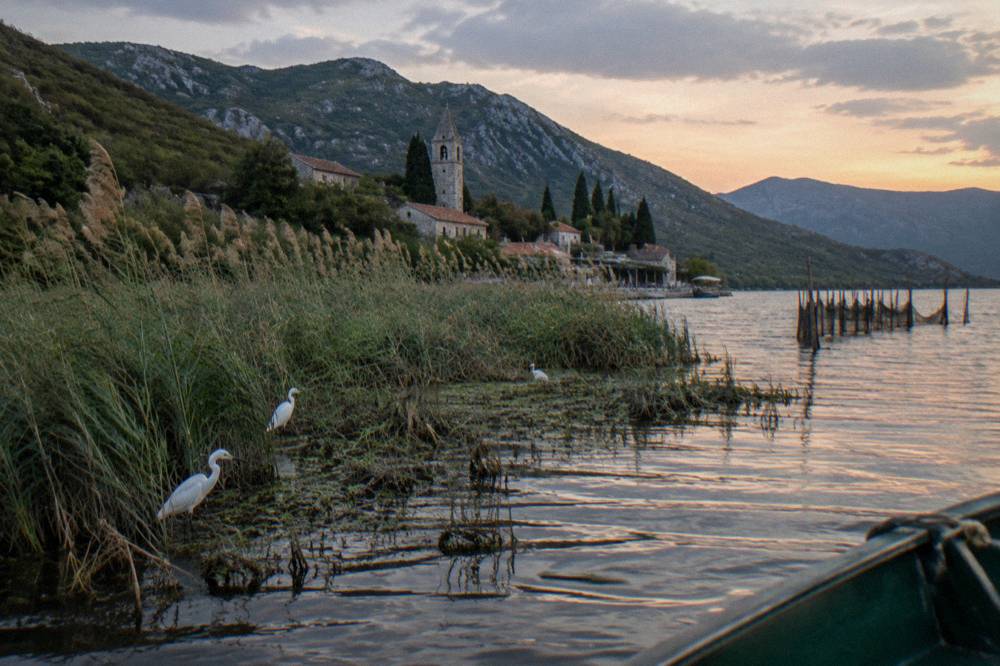
Weather closes the argument. Montenegro's coast and lowlands get hard summer heat, but the shoulder months bring the same bura and scirocco wind patterns that cancel boat trips on the Bay of Kotor, and a lake this wide takes the wind just as personally. Operators cancel or reroute for wind, and the lake's season for both tours and swimming runs primarily April to October from Virpazar. If a swim matters to your day, check the listing's cancellation terms before you book, and be philosophical if the crew shortens the stop. If the lake's weather has you rethinking your plans, our guide to taking a day trip from Kotor to Lake Skadar compares going with a tour against making the trip on your own.
Do The Rules Restrict Swimming Anywhere?
Yes, they do: the one binding restriction is a 300-metre buffer around the pelican colonies, where swimming is off-limits, and anyone who disturbs the birds faces a EUR 200 fine. Beyond that buffer, no other rule comparably limits where you may swim, so the colonies mark the only place the regulations genuinely restrict swimming. Lake Skadar is one of Europe's most important habitats for the Dalmatian pelican, and the park enforces distance rules around the nesting sites. Swimmers, kayakers and boats alike are expected to keep clear. Beyond that, restrictions are about zones and common sense rather than posted swim bans.
The pelican rule deserves its emphasis because it is the one with teeth. The colonies sit on protected islands and gravel banks, and the birds are the reason the lake carries national park status at all. A swimmer drifting toward a colony does more damage than a boat passing at distance, and the fine reflects that. Crews on the wooden boat tours know the boundaries and keep their swim stops well clear of them; independent kayakers are the group most likely to stumble into a buffer by accident.
The other rules are administrative but real. Park entry is EUR 5 per adult, payable at most points in cash, and it applies to kayakers and independent visitors, not just tour passengers. The annual all-parks pass at EUR 13.50 covers Skadar Lake and the four other national parks, which pencils out quickly if Durmitor or Lovcen is also on your itinerary; the planning detail sits in how much Montenegro tours cost. The fishing ban from 15 March to 1 June is about angling, not swimming, but it shapes early-season activity on the water generally.
What Is The Best Season For Swimming There?
The best season for swimming there is July and August, when the water is dependable for regular swims. June and September are also workable months if your dates fall slightly outside peak summer, though the water cools fast beyond those stretches, so aim for midsummer if swimming is your main priority. The lake is at its warmest and calmest in high summer, which is also when the Virpazar departure schedule is fullest. April and May bring high water, fewer boats and cold swimming; October can still deliver a fine swim but stops being dependable. The tour season itself runs primarily April to October.
The comparison that helps is with the coast. Bar, the nearest coastal reference with published climate normals, averages a July daily maximum of 30.1 degrees and August 30.4, and the lake a short drive inland runs warmer than the sea in summer because it is shallow over large areas. Freshwater warms faster. By late season, published coastal sea readings in late September stayed comfortable for swimming along the Montenegro coast, and the lake was cooling on a similar trajectory toward October.
Season also changes the lake itself. The spring high water spreads the lake across its floodplain toward that 530 square kilometre upper bound, submerbing reed margins and shifting where boats can go; late summer draws it back toward 370. Swim stops move with it. If you are planning the whole trip around water activities, the month-by-month detail in the best time to visit Montenegro puts the lake in context with the coast and the mountains. If you're staying on the coast rather than beside the lake, the day trip guide from Kotor to Lake Skadar shows how to reach the water without changing hotels.
| Period | Water and weather | Swimming verdict |
|---|---|---|
| April to May | High water from rains, cool lake, quieter tours | Short swim at most, bring a layer |
| June | Warming water, tour season fully running | Workable, less predictable |
| July to August | Warmest water, calmest mornings, busiest boats | Best swimming window |
| September | Cooling gradually, fewer crowds | Good, check the day |
| October | Season tailing off, weather-dependent | Possible, do not plan around it |
Can Children And Weak Swimmers Swim Safely?
Yes, children and weak swimmers can swim safely on these trips, provided the usual conditions are met: life jackets are worn on the boat, swimming takes place at the tour stop rather than from shore, and an adult stays in the water right beside them for supervision. The wooden boat tours carry life jackets as standard kit, the swim stops sit in water deep enough to swim properly but off the reedy margins, and children under 15 enter the park free, which makes the family maths easy. Weak swimmers should treat the lake like any deep freshwater lake.
The tour format genuinely helps here. A swim stop means a boat, a crew, a ladder and other people in the water, which is a different proposition from a solo dip off an unstaffed bank. The two-hour duration of the main Virpazar tours is also short enough that a nervous child can skip the swim and still have a full morning on the water. Guests who want the water without the depth question at all can look at the kayak and paddleboard side of the lake instead; one Virpazar operator lists single kayaks at EUR 5 per hour, though swimming from a kayak in open water is its own judgement call. If that tour format sounds like the right fit, our guide to what a Lake Skadar boat trip costs sets out the pricing for the standard Virpazar routes and the longer monastery runs.
The honest caveat is that no crew can watch every swimmer at once, and the lake's depth changes mean a child who wanders ten metres can be over their head. The standard rules that apply at any lake apply doubled here: stay near the boat, no swimming alone, and skip the stop if the surface has chop on it. The park's own visitor framework, including the entry system described on the national parks' official price and pass pages, is built around supervised activity at the staffed points.
Should You Swim From Shore Or From A Boat?
For most visitors, the answer is a boat, and the reason is access as much as safety. Getting into the water from shore is not always practical, while a boat puts you in position to swim, so the choice reflects ease of access and safety in equal measure. The lake's shoreline around Virpazar is reedy, and the genuinely pleasant shore swim spots are limited and not always obvious to a first-time visitor. A boat gets you to the clear, deep water in the middle of the lake's northern basin, adds a crew and a life jacket, and folds the swim into a tour of the lake's islands and fortresses. It is the format the local industry has settled on for good reason.
The counterargument is cost and independence. Kayak rental at Virpazar runs from EUR 5 per hour for a single, and a confident paddler can reach swim water under their own steam, paying only the EUR 5 park entry in cash. That suits travellers who want to avoid a schedule. What it trades away is the crew's knowledge of where the clean bottom and the protected zones sit, and on a lake with pelican buffers and level swings, that knowledge is the safety margin.
The middle path is the combined day trip. The 13-hour Skadar and Biograd tour from Kotor, rated 4.9 from 269 reviews at from $119 per person, packages the lake boat ride with a second national park, which suits visitors staying on the coast without a car. For anyone weighing the lake against other water days, is Lake Skadar worth visiting makes the fuller case, and what a Lake Skadar boat trip costs breaks down the price ladder across formats.
What Should You Bring For A Swim Stop?
For a swim stop, wear your swimwear under your clothes before the boat departs, bring a towel for drying off afterward, and pack water shoes if you already have a pair. Most importantly, leave nothing valuable on the boat deck, because belongings can shift, get wet, or go missing while everyone is in the water. Swim stops are usually 15 to 30 minutes, the water entry is from the boat, and the lake bottom at the stops is a mix of weed and soft patches that rewards foot protection. Sunscreen matters more than people expect: summer heat at the lake can match the coast, and there is no shade in the middle of the water.
The packing logic is the same as for the coast's water tours, and the fuller kit list lives in what to wear and bring on Montenegro tours. The lake-specific additions are a dry bag for phones, since the wooden boats are open, and a layer for the ride back if you are swimming in the shoulder months, when wet skin plus boat speed equals cold fast. Cash for the EUR 5 park entry belongs in the plan if you are visiting independently of a bundled ticket.
One thing not to bring is expectation of a beach-style setup. The stops are in open water or at wild corners of the shoreline, not at managed bathing areas: no lifeguard, no facilities, no snack kiosk. That is a fair part of the appeal. It does mean the safety responsibility sits with the swimmer and the crew, in roughly equal parts, and preparation is the half you control.
Common Questions About Swimming In Lake Skadar
Is It Safe To Swim In Lake Skadar?
Yes, in the places swimming normally happens: at the crew-chosen stops on Virpazar boat tours or a few known shore spots, in the April to October season, respecting the 300-metre pelican buffers. The hazards are ordinary lake hazards, reeds, depth changes and wind, and a boat stop manages all three.
Can you swim from the Virpazar boat tours?
Yes. The two-hour wooden boat tour and the three-hour Kom Monastery tour, both from Kingfishar operator listings out of Virpazar, include a swim stop on their published itineraries. Stops are weather-dependent and never guaranteed; check the listing's terms before booking.
Is Lake Skadar water clean enough to swim in?
No routine bathing-water rating is published for the lake in this site's verified sources, so no figure is claimed here. The lake is a managed national park with enforced wildlife rules and active tourism inspections. Swimming is a normal, advertised activity on the lake's tours.
When is the lake warm enough for swimming?
July and August are the dependable months, with June and September workable and the water cooling quickly either side. The tour and swimming season runs primarily April to October from Virpazar.
Is it safe for children to swim in the lake?
Yes with conditions: life jackets on the boat, an adult in the water alongside, and swimming at the tour stop rather than from an unstaffed bank. Children under 15 enter the park free, and the two-hour tour format is short enough for nervous swimmers to skip the stop.
Are there parts of the lake where swimming is not allowed?
The documented restriction is the 300-metre buffer around the pelican colonies, with a EUR 200 fine for disturbance. Elsewhere, swimming is governed by park zones and crew judgement rather than posted bans, which is another reason the boat format is the safe default.