Is Lake Skadar Worth It?
An honest verdict on Lake Skadar: what the park entry fee buys, which boat tours earn their price, and who should skip it.
Is Lake Skadar Worth It?
Yes, for most travellers, provided you go with a plan. Lake Skadar is the largest lake in the Balkans, shared with Albania, and its national park charges EUR 5 per adult per day, with children under 15 free. Travellers who take a boat from Virpazar consistently rate the outing highly; travellers who just drive to a shoreline viewpoint often leave underwhelmed. The lake rewards time on the water. If you're staying in Kotor, our guide to taking a day trip from Kotor to Lake Skadar compares joining a tour with making your own way to Virpazar.
The honest answer depends on what you want from a day out. The coast of Montenegro is dramatic but busy: stone towns, cruise crowds, pebble beaches. Lake Skadar is the opposite register. It is flat water, reed beds, fishing villages, fortress ruins and, for much of the year, one of the great bird populations of Europe. The park spans a lake whose surface area swings between roughly 370 and 530 square kilometres because the water level fluctuates by up to 5 metres across the seasons. That single fact explains a lot of the mixed reviews: the lake you get in August is a different lake from the one you get in March. If you're staying on the coast and wondering whether the lake fits into one outing, our guide to day-tripping from Kotor to Lake Skadar compares joining an organised tour with making the trip on your own.
This site's coverage of Montenegro Tours treats Skadar as one of the country's three or four genuinely essential experiences, alongside the Bay of Kotor and the Tara canyon. But it is essential in a specific way. If your checklist is swimming, nightlife and walled towns, the lake is a half-day detour at best. If you want quiet, wildlife, wine and a landscape most of the Adriatic coast cannot offer, it can be the best day of your trip.
The featured option for a first visit is the Wooden Boat Tour from Virpazar, about 2 hours with a guide, rated 4.8 from 1,887 reviews and priced from $25 per person. It is the format that shows you the lake's two faces, the open water and the narrow channels, in a single morning. If you're budgeting for the day, our guide to Lake Skadar boat trip prices breaks down what each route costs and where the money goes.
What Makes Lake Skadar Different From The Montenegrin Coast?
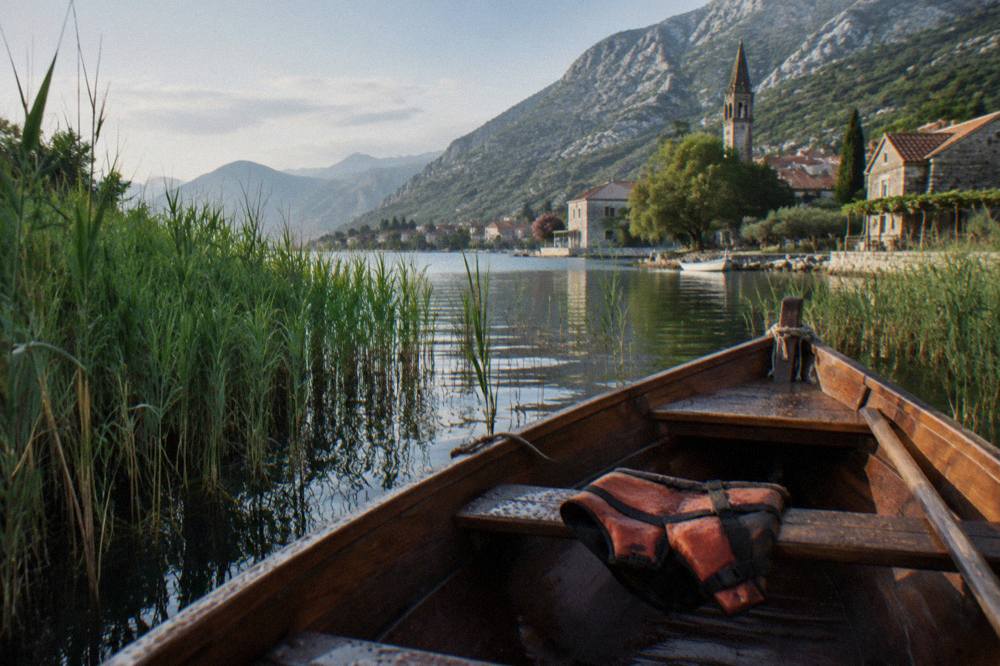
Scale and stillness. The lake is the largest in the Balkans, its area shifting between roughly 370 and 530 square kilometres as the water level moves up to 5 metres seasonally. It is a freshwater wetland of reed islands, water chestnut beds and submerged river channels, nothing like the steep stone shores of the Bay of Kotor, and that contrast is exactly why many visitors rank it so highly.
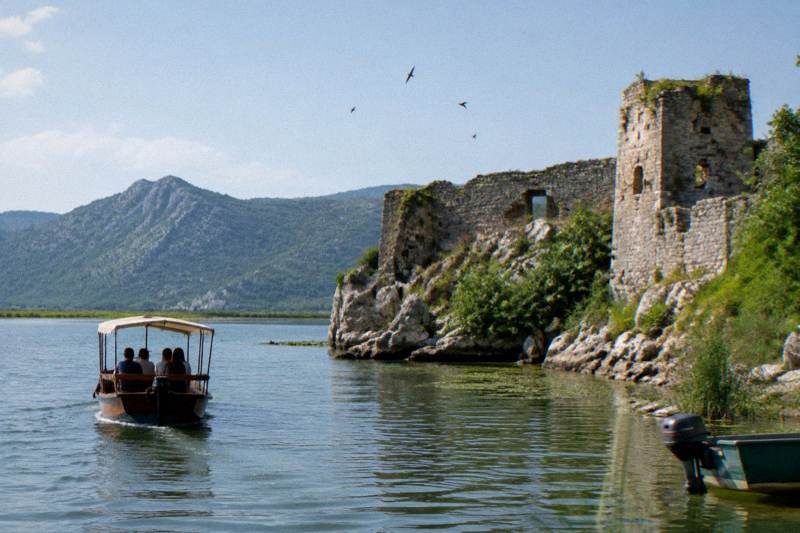
The coast gives you vertical drama. Skadar gives you horizontal space. From the water you pass Grmozur island, once a prison during the Montenegrin-Ottoman wars and nicknamed the Montenegrin Alcatraz, plus Lesendro Fortress at the mouth of the Crnojevic River, built to guard the trading route to Cetinje. These are ruins you look at from a boat deck, not museums you queue for, and that low-effort sightseeing suits a hot afternoon well.
The lake is also a Ramsar wetland of international importance, and the national park manages it primarily as a biodiversity site rather than a beach destination. Practically, that means your day is structured around boats, kayaks, birdwatching and lakeside wine, not swimming infrastructure. If you are deciding between a second boat day in the bay and a day at Skadar, the guide to visiting Skadar from the coast compares the logistics, drive times and departure points side by side.
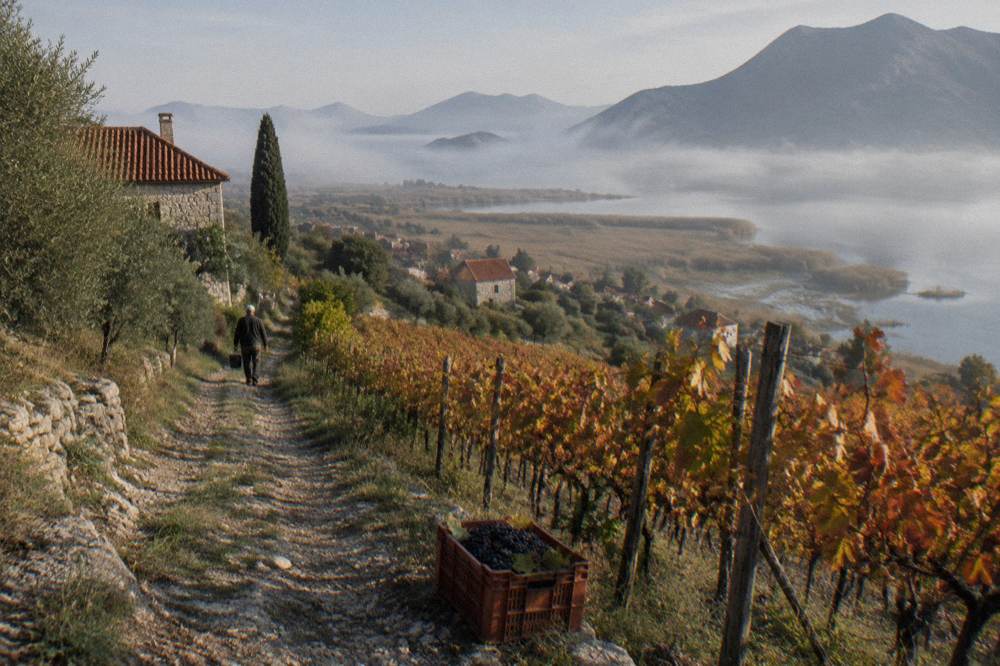
There is a cultural layer too. The Crmnica valley around Virpazar is Montenegro's core wine region, and family wineries pour vranac and krstac a short drive from the shore. Few first-time visitors expect vineyards beside a bird lake, and it is the reason a Skadar day can stretch comfortably from morning to evening.
Is A Boat Tour On Lake Skadar Worth The Money?
Yes, and it is close to mandatory. The lake's best scenery, its channels, islands and fortress ruins, is only reachable by water, and guided tours from Virpazar start at $22 to $25 per person for about two hours. Against a EUR 5 park entry and the cost of getting there, the boat is the part of the day that delivers the experience you came for.
You do not need to spend much. The Boat Tour with Drinks Included, about 2 hours from Virpazar and rated 4.9 from 689 reviews, is priced from $25 per person and includes a drink on board. At the other familiar format, the Wooden Boat Tour to Kom Monastery runs about 3 hours from $36 per person, rated 4.8 from 1,657 reviews, and reaches the old monastery on its own islet at the northwestern end of the lake. If you want the full picture of what each route and departure point charges before you book, our guide to Lake Skadar boat trip prices and what affects them covers it all.
Kom is the trip for photographers and anyone who wants a destination, not just a circuit. The monastery's isolation, water on every side, mountains behind, is the single most photographed scene on the lake. The shorter circuits are better for families with small children or anyone pairing the lake with a winery lunch afterwards.
One thing worth deciding before you book: group boat or private. Local operators rent whole boats from around EUR 55 per hour for up to 12 people plus the EUR 5 park entry per adult, so a family of six can come out ahead with a private hire for two or three hours. Solo travellers and couples will find the group tours better value. Whichever you take, the park fee is separate from the tour price and is usually collected in cash at the departure point, so carry euros.
| Tour format | Duration | From (USD) | Rating and reviews | Best for |
|---|---|---|---|---|
| Wooden Boat Tour | ~2 hours | $25 per person | 4.8 from 1,887 reviews | First visit, classic circuit |
| Boat Tour with Drinks Included | ~2 hours | $25 per person | 4.9 from 689 reviews | Relaxed short outing |
| Wooden Boat to Kom Monastery | ~3 hours | $36 per person | 4.8 from 1,657 reviews | Photographers, monastery stop |
| Historical Nature Boat Adventure | 2 to 3.5 hours | $22 per person | 4.7 from 286 reviews | Small groups, history focus |
| Private boat hire (local operator) | Flexible | from EUR 55 per hour | Whole boat, up to 12 | Families and groups |
What Birds And Wildlife Will You Actually See?
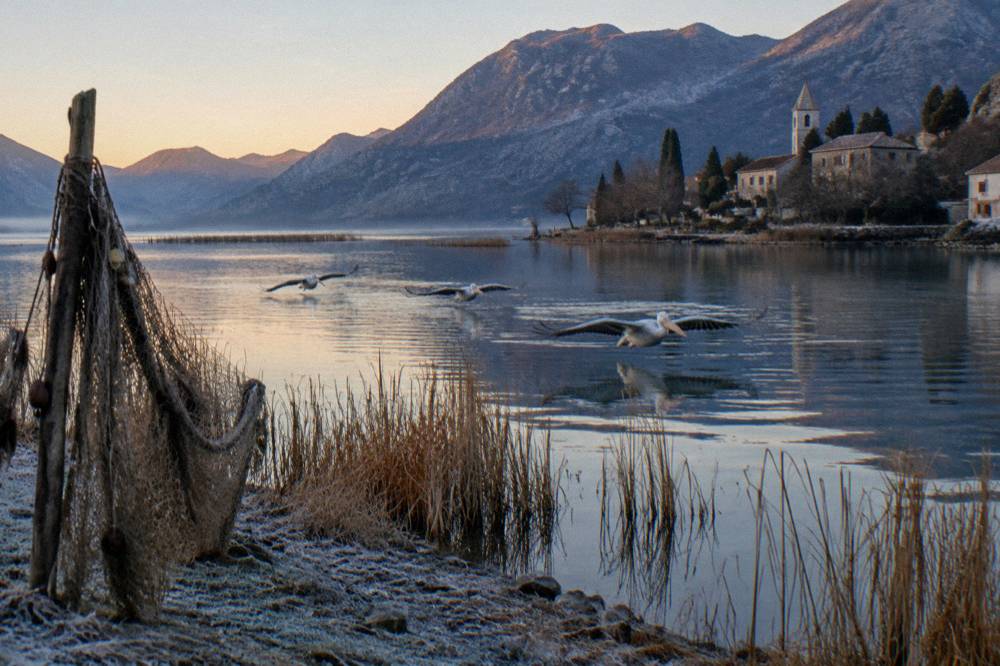
The lake is one of Europe's richest freshwater bird habitats, home to a significant colony of curly (Dalmatian) pelicans and a major stopover on the Adriatic flyway in spring and autumn. Rules are strict by design: boats and kayaks must stay at least 300 metres from pelican colonies, and disturbing them carries a EUR 200 fine.
The pelicans are the headline, and they are the reason the lake's international protected status exists. The colonies sit on floating reed islands that shift position with the water level, so sightings depend on season, weather and which arm of the lake your route takes. Guides on the water know where the birds have been feeding, which is a real advantage over going independently.
Beyond pelicans, the lake holds pygmy cormorants in significant numbers, herons, egrets, grebes and, in winter, large flocks of migratory waterfowl. Birders rate autumn through early spring as the richest window, ironically the months when beach travellers are absent. If birds are your main reason for visiting, mention it when you book: some Virpazar skippers run slower, quieter routes aimed at photographers.
Fish are the other story. The lake's signature species is ukljeva, a small endemic bleak served grilled in the villages around the shore. Note the closed season: fishing is banned in the lake from 15 March to 1 June each year, which is why the lake's own wine and fish festival in Virpazar, held at the end of February, pours wine but serves no fresh ukljeva during that window. The 2026 edition ran 28 February to 1 March with 26 exhibitors.
Is Virpazar Worth Visiting, Or Just A Departure Point?
Virpazar is a village of a few hundred people at the end of a narrow causeway, and it earns a couple of hours on its own. It has a historic bridge, a fortress ruin above town, lakeside restaurants grilling ukljeva, and it is the walking hub for the Crmnica wine villages. As a place it is modest; as a base for the lake it is the best there is.
Arrive early and Virpazar is genuinely pleasant: mist on the water, fishermen checking nets, the smell of coffee from the restaurants strung along the channel. By late morning in July it is a car park with a boat queue. The village's whole economy is now lake departures, and the difference between a calm start and a crowded one is often just the departure time you choose.
For the independent angle, the Historical Nature Boat Adventure is a small-group option from $22 per person, rated 4.7 from 286 reviews, running 2 to 3.5 hours with a narrative focus on the lake's history. Small groups suit Virpazar's shallow channels better than full-size boats.
Wine is the second reason to linger. The Crmnica valley behind the village is dense with family wineries pouring from their own cellars, and a tasting with rakija at one established producer near the lake is listed around EUR 36.50 per person. A realistic strong day: morning boat, long lakeside lunch, afternoon tasting, drive back to the coast at dusk.
Can You Swim In Lake Skadar?
Yes, in principle and in places, but it is not the lake's strength. Skadar is freshwater and warm in summer, yet swimming zones are limited, the reedy shoreline is silty underfoot, and the water level swings by up to 5 metres across the year, which changes where swimming is even possible. Most visitors treat it as a boat and bird lake, not a swimming lake.
The full comparison of water quality, leech concerns, safe spots and season belongs to the dedicated piece on swimming safely in Lake Skadar. The short version for a worth-it decision: if swimming is your top priority for a day trip, the coast beaches will serve you better, and there is no shame in a Skadar day built entirely around boats and lunch.
If you do want to get wet, kayaking is the better format than swimming from shore. A single kayak rents from around EUR 5 per hour at Virpazar operators, a double from EUR 10 per hour, plus the EUR 5 park entry paid in cash. Kayaks may reach corners the motorboats skip, and from the water the reed islands look exactly as they must have looked a century ago.
How Much Does A Day At Lake Skadar Really Cost?
A budget day lands near EUR 30 to 40 per person: EUR 5 park entry, a $22 to $25 group boat tour, and lunch. A comfort day with a private boat, winery tasting and a long lunch runs three to four times that. The park's own numbers show what visitors spend: entrance tickets brought in EUR 615,000 from January to September 2026, so this is a well-used park, not a hidden one.
| Item | Typical cost | Notes |
|---|---|---|
| Park entry, adult | EUR 5 per day | Children under 15 free; cash at most points |
| Annual all-parks pass | EUR 13.50 | Covers all five Montenegrin national parks for a year |
| Group boat tour | $22 to $36 per person | 2 to 3 hours from Virpazar, guided |
| Private boat hire | from EUR 55 per hour | Whole boat, up to 12 people, plus park entry |
| Kayak rental | EUR 5 to 10 per hour | Single or double, plus park entry |
| Lakeside lunch | EUR 15 to 25 | Grilled ukljeva when in season |
| Winery tasting | from about EUR 36.50 | Family cellar in the Crmnica valley |
Two savings are worth knowing. The annual pass at EUR 13.50 pays for itself on the third park visit, useful if Durmitor or Lovcen is also on your itinerary. And the park entry is per person per day regardless of how many activities you do, so a boat plus kayak combination does not double the fee. For a fuller cost breakdown against other Montenegro day trips, see what a Montenegro trip costs.
When Is The Best Time Of Year To Visit Lake Skadar?
April to June and September to October are the strongest windows: mild heat, active birdlife, fewer boats and greener hills. Summer is the busiest and hottest period but perfectly workable with an early start. The water level story matters too: spring snowmelt and autumn rain raise the lake, opening channels and islands that shallow late-summer water closes off.
Spring is the connoisseur's pick. The hills around the lake are green, the pelicans are breeding, and the flyway traffic of herons and cormorants is at its peak. The fishing ban from mid-March to the start of June also means the water is at its quietest. Early autumn brings the first rains, rising levels and the grape harvest in Crmnica, which makes October a lake-plus-wine month.
Midsummer works if you adjust expectations. Book the first departure of the day, expect the water to be at its lowest and some channels to be dry, and treat the afternoon as wine country rather than lake country. Winter is quiet and atmospheric, and the birding is excellent, but boat schedules thin out and village restaurants keep short hours, so check availability before committing to the drive.
Is Lake Skadar Worth It Without A Boat?
Partly. The viewpoints, Lesendro Fortress, Rijeka Crnojevica village and the causeway at Virpazar can be reached by car and are genuinely scenic, and a drive around the southern shore makes a good half day. But the lake's defining scenery, the reed islands, channels and monastery islet, sits offshore, so a boatless visit shows you the frame without the picture.
The best land-only stop is the Pavlova Strana viewpoint above the bend in the Crnojevic River, the horseshoe meander that appears in nearly every Montenegro tourism photo. From there, Rijeka Crnojevica is a small stone village with a bridge and a couple of riverside restaurants, and it connects back toward Cetinje, which pairs naturally with the lake on a full-day Lovcen and Cetinje tour such as the Lovcen Full Day trip, 12 hours from $109 per person and rated 4.9 from 1,204 reviews.
What you lose on land is scale. Standing at a viewpoint, the lake reads as a wide blue plain. From a boat among the reeds, it reads as a maze, and that maze is the experience. If sea conditions, motion sickness or budget rule out a tour, kayaking is the cheapest way to get onto the water, and Virpazar's rental operators make it a spontaneous decision rather than a booking.
The honest hierarchy: boat tour first, viewpoint drive second, shore-only visit a distant third. Travellers who report the lake as "just a big lake" are, almost without exception, travellers who never got off the road.
Who Should Skip Lake Skadar Altogether?
Travellers with under four days on the coast, anyone whose holiday is built around beaches and swimming, and visitors pinned to Kotor by cruise schedules with a single day ashore should think twice. The lake needs most of a day door to door, its payoff is quiet rather than dramatic, and squeezing it between two coastal activities turns it into an expensive drive instead of the slow day it is meant to be.
The cruise-passenger case is the clearest skip. If your ship is in Kotor for a morning, the bay itself, Perast and the Old Town will fill it better, and the six hours from a cruise ship plan exists for exactly that constraint. Skadar rewards unhurried movement, a long lunch, a second glass of vranac, and a ship schedule does not permit any of those.
The beach-first traveller is the second skip. There is no meaningful beach culture on the lake, the swimming is limited, and every hour there is an hour not spent on the Adriatic. Families with teenagers who want jetskis and beach bars will be bored by reeds and pelicans, and that is a legitimate preference.
Everyone else, the verdict stands. For a week or more on the coast, or any trip that touches Cetinje, the lake is a change of register that the rest of the country cannot supply, and at EUR 5 entry plus a $25 boat it is one of the cheaper big experiences in the region. A final planning note: ticket revenue and inspection reports for 2026 show the park actively managing visitor pressure, so book boats ahead in July and August rather than gambling on a jetty-space walk-up.
Common Questions About Visiting Lake Skadar
Is Lake Skadar Worth It?
For most travellers with five or more days in Montenegro, yes. The lake offers birds, wine and quiet water that the coast cannot match, and a good day costs EUR 30 to 40 per person including the EUR 5 park entry and a group boat tour. It is a poor fit for beach-first trips and tight cruise stopovers.
How much does it cost to visit Lake Skadar?
Park entry is EUR 5 per adult per day, children under 15 free, paid separately from any tour. Group boat tours from Virpazar run $22 to $36 per person, private boats from around EUR 55 per hour for the whole vessel, and kayak rental from EUR 5 per hour for a single.
Can you see pelicans on Lake Skadar?
Yes. The lake holds a significant colony of curly (Dalmatian) pelicans and large numbers of herons, cormorants and migratory waterfowl across the year. Boats and kayaks must stay at least 300 metres from the colonies and disturbing the birds carries a EUR 200 fine.
Do you need a boat to enjoy Lake Skadar?
A boat makes the visit. The lake's key scenery, reed islands, channels, Grmozur island and Kom Monastery, is offshore and reachable only from the water. Land-based visitors can still enjoy the Pavlova Strana viewpoint and Rijeka Crnojevica village on a scenic drive.
When is the best time to visit Lake Skadar?
April to June and September to October, for birds, green hills and fewer crowds. Summer works with an early-morning departure; the water is at its lowest and busiest then. The annual pass covering all five national parks costs EUR 13.50 and pays off from a third park visit.
Is Virpazar worth stopping in?
Yes, for a couple of hours. The village has a historic bridge, lakeside restaurants grilling the local ukljeva fish and easy access to Crmnica valley wineries. Go early: by late morning in high season the departure point is crowded and parking is tight.